What Are Computers For Stores?
Computers for stores, often referred to as Point of Sale (POS) or retail systems, are specialized computing solutions designed to handle the unique demands of a retail environment. These systems manage critical operations like transaction processing, inventory management, customer relationship management (CRM), and employee scheduling. Unlike standard office computers, they prioritize reliability, compact form factors, and seamless integration with peripherals like barcode scanners, receipt printers, and cash drawers.
Key Specifications and Technical Details
An effective store computer must balance performance with durability. Key specifications include:
-
Processor: Modern, efficient processors like Intel's N-series (e.g., N100) provide ample power for POS software without excessive heat or power consumption.
-
Memory (RAM): 8GB to 16GB of RAM is standard, ensuring smooth multitasking between the POS application, web browser for inventory lookups, and other store management tools.
-
Storage: Solid State Drives (SSDs) with 128GB to 256GB capacity offer fast boot times, quick application launches, and improved reliability over traditional hard drives.
-
Form Factor: Compact Mini PCs or All-in-One (AIO) systems are ideal, saving valuable counter space. Fanless designs are highly desirable for silent operation and improved longevity by eliminating dust-clogged fans.
-
Connectivity: Multiple USB ports (including USB 3.2) are essential for connecting peripherals. Reliable Gigabit Ethernet ensures stable network connectivity for processing payments and syncing data to the cloud.
Use Cases and Applications
Store computers are versatile and serve multiple functions beyond just checkout.
-
Point of Sale Terminal: The primary function, running POS software to process sales, returns, and payments.
-
Inventory Management Station: Used in back offices or stockrooms for receiving shipments, updating stock levels, and generating purchase orders.
-
Digital Signage/Kiosk: Powering customer-facing displays for promotions, menus, or self-service information kiosks.
-
Back-Office Management: Handling payroll, scheduling, sales reporting, and analytics.
Comparison: Mini PC vs. All-in-One for Retail
| Feature | Mini PC | All-in-One (AIO) |
|---|---|---|
| Space Saving | Excellent; tiny footprint. | Excellent; integrates display. |
| Flexibility | High; use with any monitor/TV. | Low; display is fixed. |
| Peripheral Setup | Requires separate monitor, keyboard, mouse. | All-inclusive; often includes touchscreen. |
| Ideal For | Adding terminals, retrofitting existing counters, digital signage. | New setups, kiosks, environments needing a clean, integrated look. |
| Upgradability | Moderate; some allow RAM/SSD upgrades. | Low; typically sealed units. |
Thinvent Solutions for Retail Environments
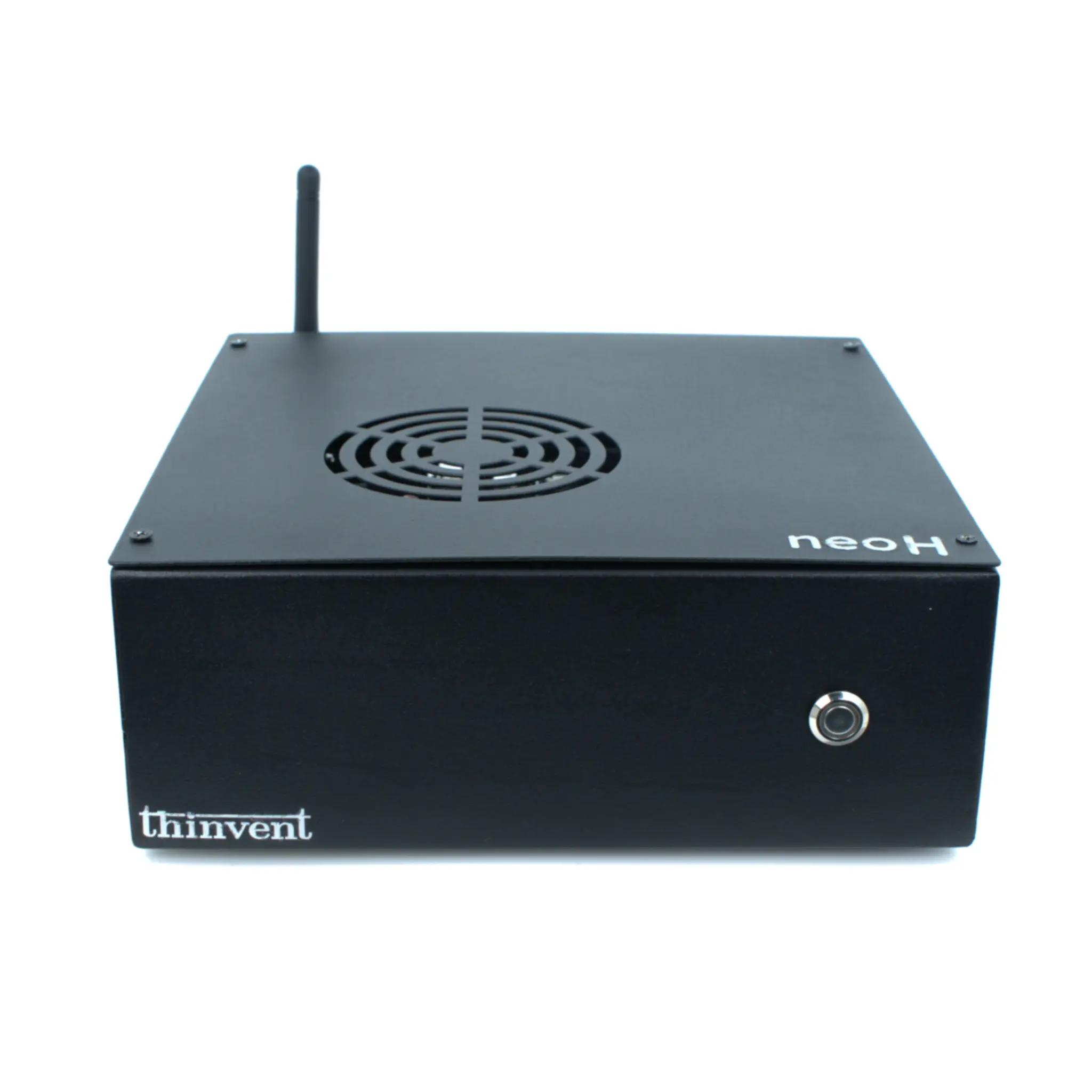
Thinvent offers a robust range of industrial-grade computing solutions perfectly suited for the demanding 24/7 nature of retail operations. Our products, like the featured Aero Mini PC series, are built with reliability at their core. They feature fanless, solid-state designs for silent and maintenance-free operation, crucial for customer-facing areas. With support for various operating systems—from Windows 11 and IoT to Linux distributions—Thinvent computers provide the flexibility to run any specialized retail software. Their compact size allows for discreet placement under counters or behind monitors, while robust connectivity options ensure seamless integration with all essential retail peripherals, creating a dependable backbone for your store's technology infrastructure.