Thin vs. Thick Client Computing: Architecture and Use Cases
The choice between thin and thick client computing architectures significantly impacts how an organization manages its IT infrastructure, application delivery, and user experience. Understanding their fundamental differences, strengths, and weaknesses is crucial for selecting the right model for specific business needs.
Thin Client Architecture
Thin clients are designed to be minimal, relying heavily on a central server for processing power, data storage, and application execution. These devices typically have limited local processing capabilities and storage, acting primarily as terminals to access resources hosted on a server. They often run lightweight operating systems and dedicated client software to connect to the server environment. This centralized approach offers robust security, simplified management, and easier updates, as all critical data and applications reside on the server.
Key Specifications:
-
Processing: Minimal local processing power, often ARM-based or low-power Intel processors.
-
Storage: Limited onboard storage (e.g., eMMC) primarily for the OS and client software.
-
Operating System: Lightweight OS (e.g., embedded Linux, dedicated client OS).
-
Connectivity: Requires a constant and reliable network connection to the server.
-
Management: Centralized management from the server.
Use Cases: Thin clients are ideal for environments where security, centralized control, and ease of management are paramount. This includes:
-
Call Centers & Customer Service: Consistent user experience and data security.
-
Education Institutions: Standardized computing environments for students.
-
Point-of-Sale (POS) Systems: Secure transaction processing.
-
Kiosks & Public Terminals: Controlled access to specific applications.
Thick Client Architecture
Thick clients, also known as fat clients, are more self-sufficient. They possess significant local processing power, ample storage, and run full desktop operating systems with applications installed directly on the device. While they can connect to a network for file sharing or data synchronization, they can often function independently or with less reliance on a central server for core operations. This architecture offers greater performance for demanding applications and better offline capabilities but requires more individual device management.
Key Specifications:
-
Processing: Robust local processors (e.g., Intel Core i3, i5, i7), substantial RAM.
-
Storage: Significant local storage (e.g., SSD, HDD) for OS, applications, and user data.
-
Operating System: Full-fledged desktop OS (e.g., Windows, Linux).
-
Connectivity: Can operate with intermittent network connectivity.
-
Management: Decentralized management, requiring updates and maintenance on each device.
Use Cases: Thick clients are best suited for scenarios requiring high performance, flexibility, and the ability to work offline. This includes:
-
Design & Engineering Workstations: Running complex CAD/CAM software.
-
Video Editing & Content Creation: Handling large media files and demanding software.
-
Field Operations: Devices that need to function reliably without constant network access.
-
General Office Desktops: Providing a full computing experience for productivity tasks.
Thinvent Solutions for Thin and Thick Client Computing
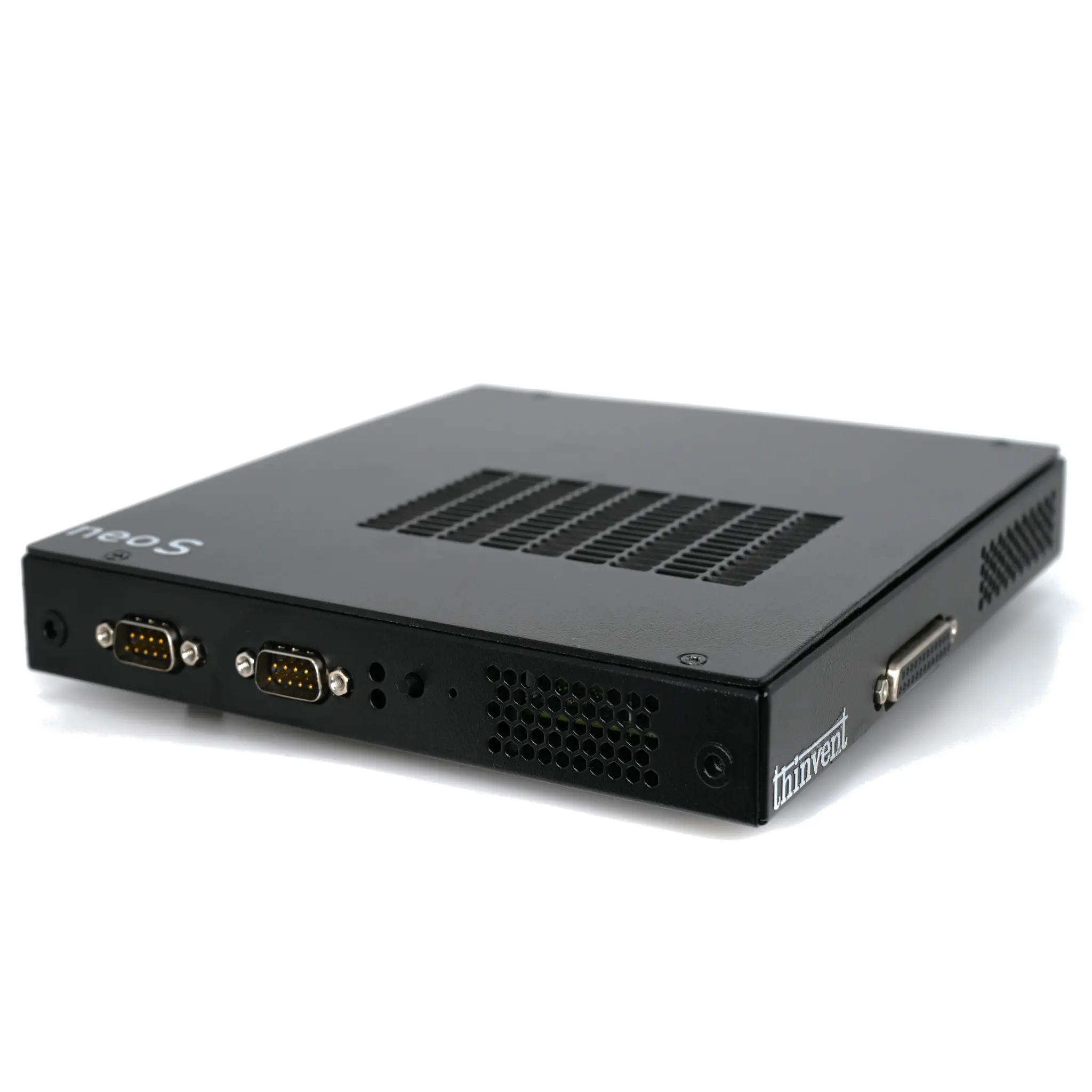
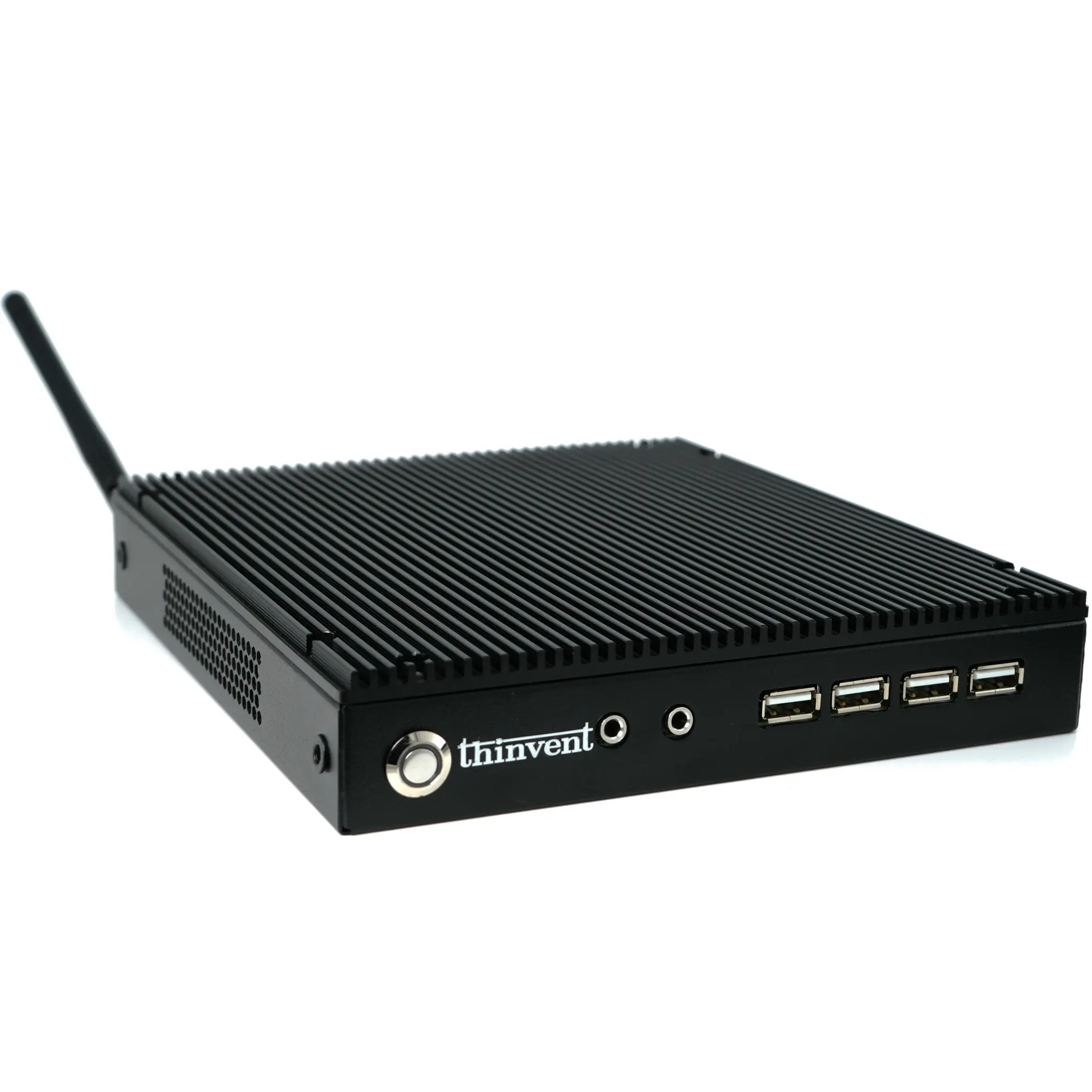
Thinvent offers a comprehensive range of computing solutions that cater to both thin and thick client architectures, ensuring businesses can optimize their IT strategy. For thin client deployments, our ARM-based Micro series and select Mini PCs provide cost-effective, energy-efficient terminals with robust connectivity options and specialized embedded operating systems like Thinux™. These are perfect for centralized computing environments where simplicity and security are key.
For thick client needs, Thinvent's Industrial PCs and higher-end Mini PCs and All-in-One PCs leverage powerful Intel processors, ample RAM, and fast SSD storage. These devices are engineered to handle demanding applications, complex workflows, and provide a full desktop experience, whether for industrial automation, professional workstations, or general business use. Our Intel Core™ i3, i5, and even higher-tier processors, combined with flexible OS options like Windows 11 Pro and Ubuntu Linux, empower users with the performance and versatility they require, while still offering the manageability and reliability Thinvent is known for.