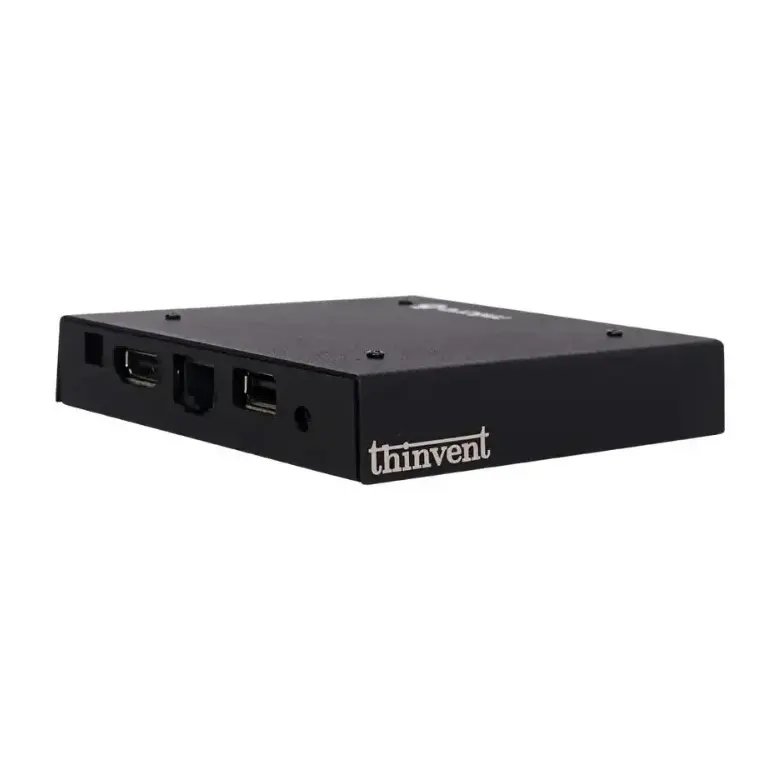
What is a Portable CPU?
In the context of industrial computing, a "portable CPU" typically refers to a compact, low-power, and highly integrated System-on-a-Chip (SoC) or processor designed for embedded and mobile applications. These processors are the core of portable and miniaturized computing devices like thin clients, mini PCs, and industrial panel PCs. They prioritize energy efficiency, thermal management, and a small physical footprint, enabling the creation of fanless, rugged systems that can operate reliably in diverse environments. Unlike traditional desktop CPUs, portable CPUs often integrate graphics, memory controllers, and I/O interfaces directly onto the chip.
Key Specifications and Architecture
Portable CPUs are characterized by specific technical attributes that differentiate them from standard processors. Key specifications include:
-
Processor Architecture: Dominated by ARM-based designs (like Cortex-A series) for ultimate power efficiency and x86 architectures (Intel Core, Intel Processor N-series) for broader software compatibility.
-
Core Count and Frequency: Ranging from efficient 4-core ARM chips (1.5-1.9 GHz) to more powerful Intel configurations with up to 12 cores and boost frequencies reaching 5 GHz.
-
Thermal Design Power (TDP): Typically very low, often between 5W and 28W, allowing for passive cooling and silent operation.
-
Integrated Features: Often include integrated graphics, support for soldered LPDDR or DDR4 memory, and eMMC or NVMe storage controllers on-chip.
Use Cases and Applications
The efficiency and compact nature of portable CPUs make them ideal for a wide array of applications:
-
Digital Signage & Kiosks: Powering content playback in retail, hospitality, and public information displays.
-
Thin Client & VDI Endpoints: Providing secure, managed access to virtualized desktop environments in offices and call centers.
-
Industrial Automation: Serving as the brain for HMI (Human-Machine Interface) panels, machine vision systems, and IoT gateways on the factory floor.
-
Edge Computing: Processing data locally in smart retail, transportation, and healthcare applications where low latency and reliability are critical.
-
Compact Office Workstations: Enabling full desktop functionality in a tiny form factor for space-constrained environments.
Comparison of Common Portable CPU Types
| Feature | ARM-based SoC (e.g., Cortex-A55) | Intel Processor N-series (e.g., N100) | Intel Core U-series (e.g., i3-1215U) |
|---|---|---|---|
| Primary Strength | Ultra-low power, cost-effective | Excellent balance of x86 compatibility & efficiency | High performance for compact form factors |
| Typical Core/Thread Count | 4 Cores | 4 Cores / 4 Threads | 6 Cores / 8 Threads |
| Power Consumption | Very Low (~5W) | Low (~6W) | Moderate (15-28W) |
| Ideal For | Basic thin clients, simple displays | General-purpose mini PCs, industrial IoT | Advanced thin clients, mini workstations |
| Software Ecosystem | Linux, Android, web apps | Full x86 Windows & Linux support | Full x86 Windows & Linux support |
Thinvent's Range of Portable CPU Solutions
Thinvent leverages a broad spectrum of portable CPU technologies to deliver tailored solutions for every industrial need. Our Micro Series utilizes ultra-efficient ARM processors, perfect for lightweight thin client and digital signage deployments where power draw and heat are primary concerns. For more demanding general-purpose computing, the Treo and Aero Mini PC lines feature Intel's efficient N-series and Core i3 processors, offering a robust x86 platform in a pocket-sized format. For high-performance embedded applications, our Industrial PC (IPC) series incorporates powerful Intel Core i5 and i7 processors, delivering desktop-grade performance in rugged, fanless designs suitable for harsh environments. This comprehensive portfolio ensures that whether your project requires maximum efficiency, software compatibility, or raw processing power in a small package, Thinvent has a reliable, industrial-grade solution.