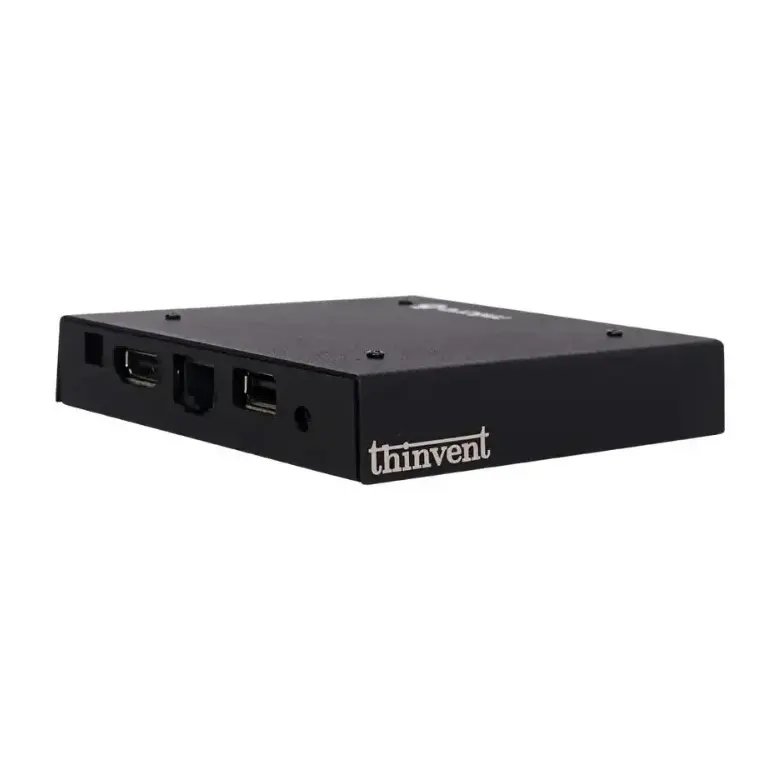
Understanding Your Industrial Computing Needs
Selecting the right industrial computer is a critical decision that impacts operational efficiency, reliability, and long-term costs. The primary goal is to match the hardware specifications and form factor to the specific demands of your application environment. Key considerations include the required processing power for your software, environmental factors like temperature and dust, connectivity needs, and the desired operating system for software compatibility.
Key Specifications and Technical Details
When evaluating industrial computers, focus on these core components:
-
Processor (CPU): Determines overall performance. For basic digital signage or kiosks, an efficient Intel N-series processor (like the N100) is sufficient. For data acquisition or edge computing, more powerful Core i3/i5/i7 processors are recommended.
-
Memory (RAM): Affects multitasking capability. 4-8GB is standard for lightweight applications, while 16GB or more is needed for data-intensive tasks.
-
Storage (SSD): Impacts boot times and data access speed. 128GB is adequate for the OS and core applications; 256GB or more is better for local data logging.
-
Form Factor: Choose based on installation space. Mini PCs and Thin Clients save space, All-in-Ones integrate display, and modular Industrial PCs offer expansion for specialized I/O.
-
Cooling: Fanless designs are crucial for dusty environments as they prevent internal dust accumulation and have no moving parts to fail.
-
Operating System: Select based on software requirements—Windows for broad compatibility, or a lightweight Linux OS for stability and security in embedded applications.
Common Use Cases and Applications
-
Digital Signage & Kiosks: Require reliable, always-on operation with support for multiple displays. Fanless Mini PCs or All-in-Ones are ideal.
-
Factory Automation & Machine Control: Demand rugged, fanless systems with wide temperature tolerance and robust connectivity (multiple Ethernet, serial ports).
-
Edge Computing & IoT Gateways: Need a balance of processing power (for data aggregation) and low power consumption, often fulfilled by compact Industrial PCs.
-
Thin Client / VDI Environments: Prioritize network connectivity and manageability over local processing power, making dedicated Thin Clients the most cost-effective choice.
Comparison of Common Form Factors
| Feature | Mini PC | Thin Client | All-in-One | Industrial PC |
|---|---|---|---|---|
| Best For | Space-constrained, general computing | Virtual Desktop Infrastructure (VDI) | Integrated display solutions | Harsh environments, custom I/O |
| Typical CPU | Intel N-series, Core i3/i5 | ARM, Intel Celeron | Intel Core series | Intel Core series (various) |
| Expandability | Limited | Very Limited | Limited | High (expansion slots) |
| Ruggedness | Good (often fanless) | Good | Standard | Excellent (wide temp, shock/vibe) |
| Installation | Easy (VESA mount) | Easy | Easy (stand included) | May require DIN-rail or panel |
Thinvent Industrial Computing Solutions
Thinvent offers a comprehensive range of industrial computers engineered for reliability across diverse sectors. Our product lines include robust Mini PCs with fanless cooling for 24/7 operation, energy-efficient Thin Clients for secure desktop virtualization, sleek All-in-One panels with integrated touchscreens, and fully customizable Industrial PCs built for the most demanding factory floor conditions. Each system is designed with a focus on durability, long-term availability, and global support to ensure your operations run smoothly for years to come.