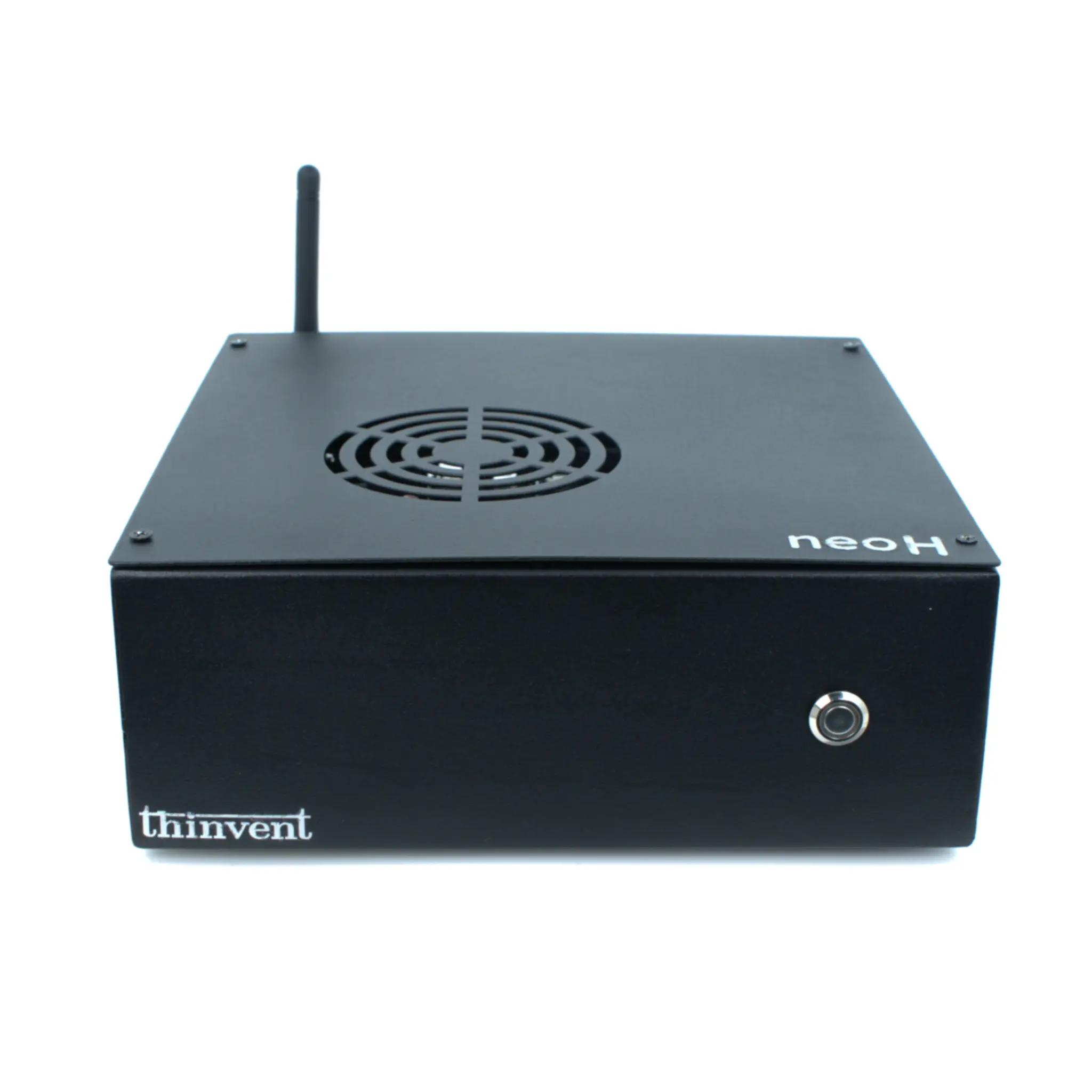
What is an AMD EPYC Mini Server?
An AMD EPYC Mini Server is a compact, high-density computing platform designed to deliver enterprise-grade server performance in a small form factor. It leverages AMD's EPYC processors, which are renowned for their high core counts, massive memory bandwidth, and advanced security features. These mini servers are engineered for environments where space, power efficiency, and thermal management are critical, but where traditional rackmount servers are impractical. They provide a powerful solution for edge computing, virtualization, and dedicated application hosting.
Key Specifications and Technical Details
True AMD EPYC-based servers are characterized by their server-class architecture. Key specifications typically include:
-
Processor: AMD EPYC CPUs with core counts ranging from 8 to over 64 cores per socket, supporting simultaneous multithreading (SMT).
-
Memory: Support for high-capacity ECC (Error-Correcting Code) DDR4 or DDR5 RAM, often across 8 or more DIMM slots, enabling terabytes of memory for demanding workloads.
-
Storage: Multiple high-speed NVMe M.2 and SATA/SAS drive bays for RAID configurations, ensuring fast data access and redundancy.
-
Connectivity: Dual or quad high-speed Gigabit or 10GbE LAN ports, often with remote management capabilities (like IPMI), and abundant USB ports for peripherals.
-
Form Factor: Typically built in a compact, rugged chassis (1L to 5L volume) with fanless or actively cooled designs for silent and reliable 24/7 operation.
Use Cases and Applications
These powerful mini servers are ideal for a variety of demanding scenarios:
-
Edge Computing & IoT Gateways: Processing data locally in factories, retail spaces, or smart cities before sending insights to the cloud.
-
Virtualization Hosts: Running multiple virtual machines for development, testing, or light production environments.
-
Network Attached Storage (NAS) & Media Servers: Serving as a high-performance, compact hub for file sharing and media streaming.
-
Dedicated Application Servers: Hosting databases, web servers, or business applications that require consistent, reliable compute power.
-
Remote Office/Branch Office (ROBO) Infrastructure: Providing local server resources without the need for a dedicated server room.
Comparison: EPYC Mini Server vs. High-Performance Mini PC
| Feature | AMD EPYC Mini Server | High-Performance Intel/AMD Mini PC |
|---|---|---|
| Primary Use Case | Server workloads, virtualization, high-density compute | Desktop workloads, digital signage, light office tasks |
| Processor Type | Server-grade (EPYC) with ECC support | Consumer/Commercial grade (Core, Ryzen) |
| Memory Support | High-capacity ECC RAM (8+ DIMMs) | Standard non-ECC RAM (1-2 SO-DIMMs) |
| Storage Options | Multiple bays for RAID (NVMe/SATA/SAS) | Typically 1-2 M.2 NVMe/SATA slots |
| Remote Management | Common (IPMI, iDRAC, iLO) | Rare or limited |
| Reliability & Uptime | Designed for 24/7 operation with redundancy | Designed for standard business hours |
Thinvent's High-Performance Computing Solutions
While Thinvent's current product portfolio focuses on robust industrial and commercial mini PCs powered by Intel processors, we understand the demand for compact, high-reliability computing. Our range of fanless and ruggedized Mini PCs, such as those in the Aero series, are engineered for continuous operation in challenging environments. They offer excellent performance for edge computing, digital signage, and kiosk applications. For customers requiring server-like density and performance in a mini form factor, we recommend exploring our most powerful configurations with Intel Core i5 and i7 processors, high memory capacity (up to 64GB), and multiple storage options to meet demanding computational needs.