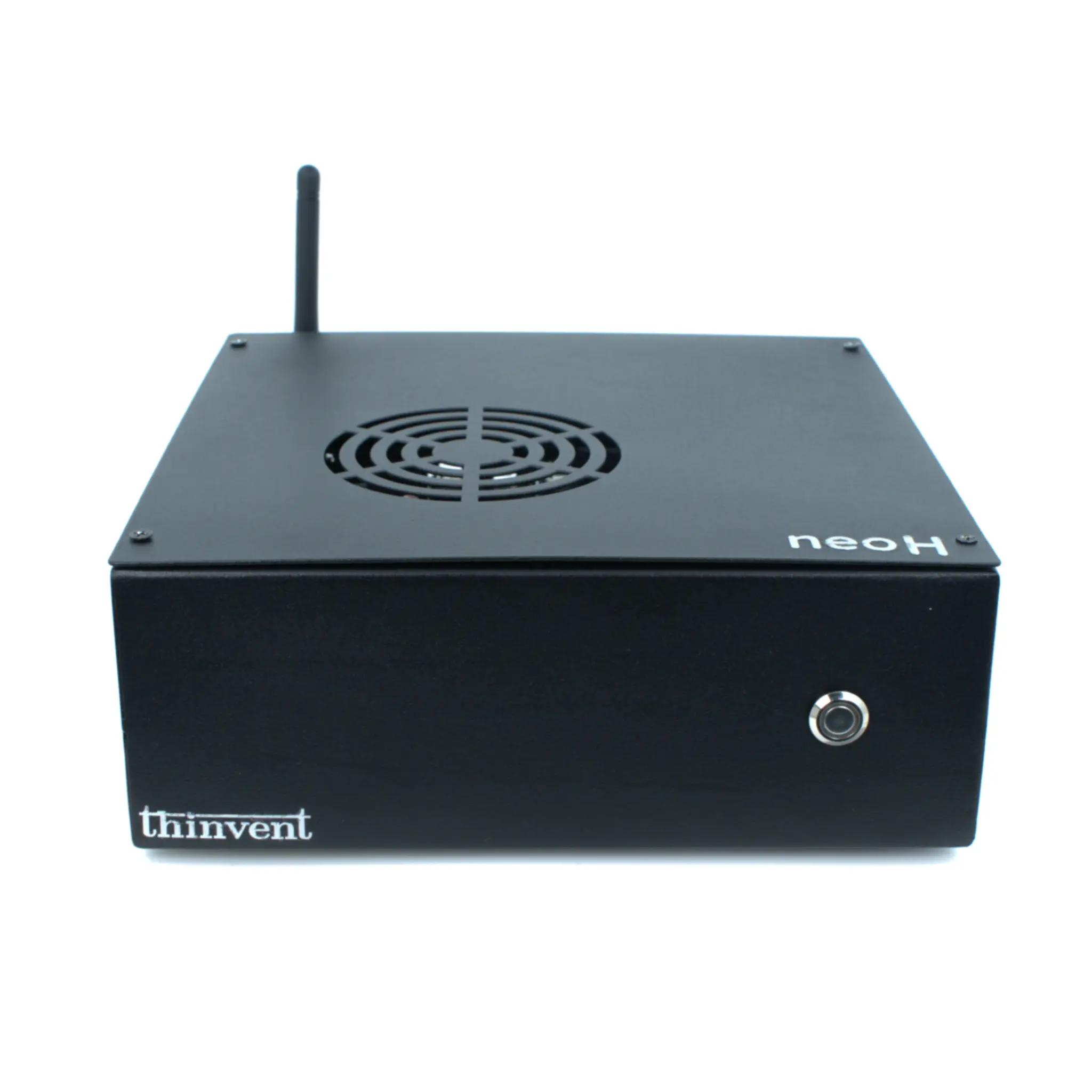
What Are AMD EPYC Industrial Computers?
AMD EPYC Industrial Computers are high-performance computing systems built around AMD's EPYC server-grade processors. These systems are engineered for demanding workloads that require exceptional multi-core performance, massive memory bandwidth, and advanced I/O capabilities. Unlike standard desktop PCs, EPYC-based industrial computers are designed for 24/7 operation, offering enterprise-grade reliability, security features like AMD Infinity Guard, and support for vast amounts of ECC (Error-Correcting Code) memory. They are the cornerstone for data-intensive and mission-critical applications across various industries.
Key Specifications and Technical Advantages
The defining feature of these systems is the AMD EPYC processor architecture. Key advantages include:
-
High Core & Thread Count: EPYC processors feature a high number of CPU cores and threads, enabling exceptional parallel processing for virtualization, data analytics, and complex simulations.
-
Massive Memory Support: Support for 8-channel DDR4 memory and capacities often exceeding 1TB, crucial for in-memory databases and large datasets.
-
PCIe Lane Abundance: A vast number of PCIe lanes (up to 128 in a single socket) provides unparalleled expansion for GPUs, NVMe storage arrays, and high-speed networking cards.
-
Enhanced Security: Integrated hardware security with AMD Infinity Guard, including Secure Memory Encryption and Secure Encrypted Virtualization.
-
Platform Reliability: Designed for industrial environments, these systems often feature ruggedized construction, wide operating temperature ranges, and fanless or advanced cooling solutions for silent and dust-resistant operation.
Primary Use Cases and Applications
AMD EPYC Industrial Computers are deployed in scenarios where raw computational power, data integrity, and uptime are non-negotiable.
-
Edge Computing & AI: Processing AI inference and large datasets at the network edge, close to the source of data generation.
-
Industrial Automation & Control: Acting as powerful controllers for complex manufacturing lines, robotics, and SCADA systems.
-
Telecommunications & Networking: Serving as high-performance network function virtualization (NFV) platforms and 5G core network nodes.
-
Digital Signage & Media: Driving multiple 4K/8K video walls and demanding digital signage installations in public spaces.
-
Research & Development: Powering engineering simulations, financial modeling, and scientific research that requires heavy computational resources.
Comparison: EPYC vs. Other Industrial Platforms
| Feature | AMD EPYC Industrial PCs | High-End Intel Xeon Industrial PCs | Standard Industrial Mini PCs |
|---|---|---|---|
| Core Architecture | High core density (up to 64 cores/128 threads) | Competitive core counts | Lower core count (e.g., 4-8 cores) |
| Memory Bandwidth | 8-channel DDR4, extremely high bandwidth | 6 or 8-channel DDR4 | Dual-channel, lower bandwidth |
| PCIe Lanes | Very high (up to 128 lanes) | High | Limited |
| Ideal For | Data centers at the edge, heavy virtualization, big data | Enterprise servers, demanding databases | IoT gateways, kiosks, thin clients |
| Security | AMD Infinity Guard (hardware-based) | Intel SGX, TME | Software-based/standard |
Thinvent's AMD EPYC Industrial Computing Solutions
Thinvent leverages the power of AMD EPYC architecture to build robust industrial computing solutions for global clients. Our EPYC-based systems are engineered for resilience, featuring fanless or actively cooled designs to withstand harsh environments, extended temperature operation, and support for high-speed storage and networking interfaces. We offer customizable configurations to match specific application needs, from edge server appliances to powerful workstations for design and simulation. Partner with Thinvent for a reliable, high-performance computing foundation that scales with your most demanding industrial and enterprise challenges.