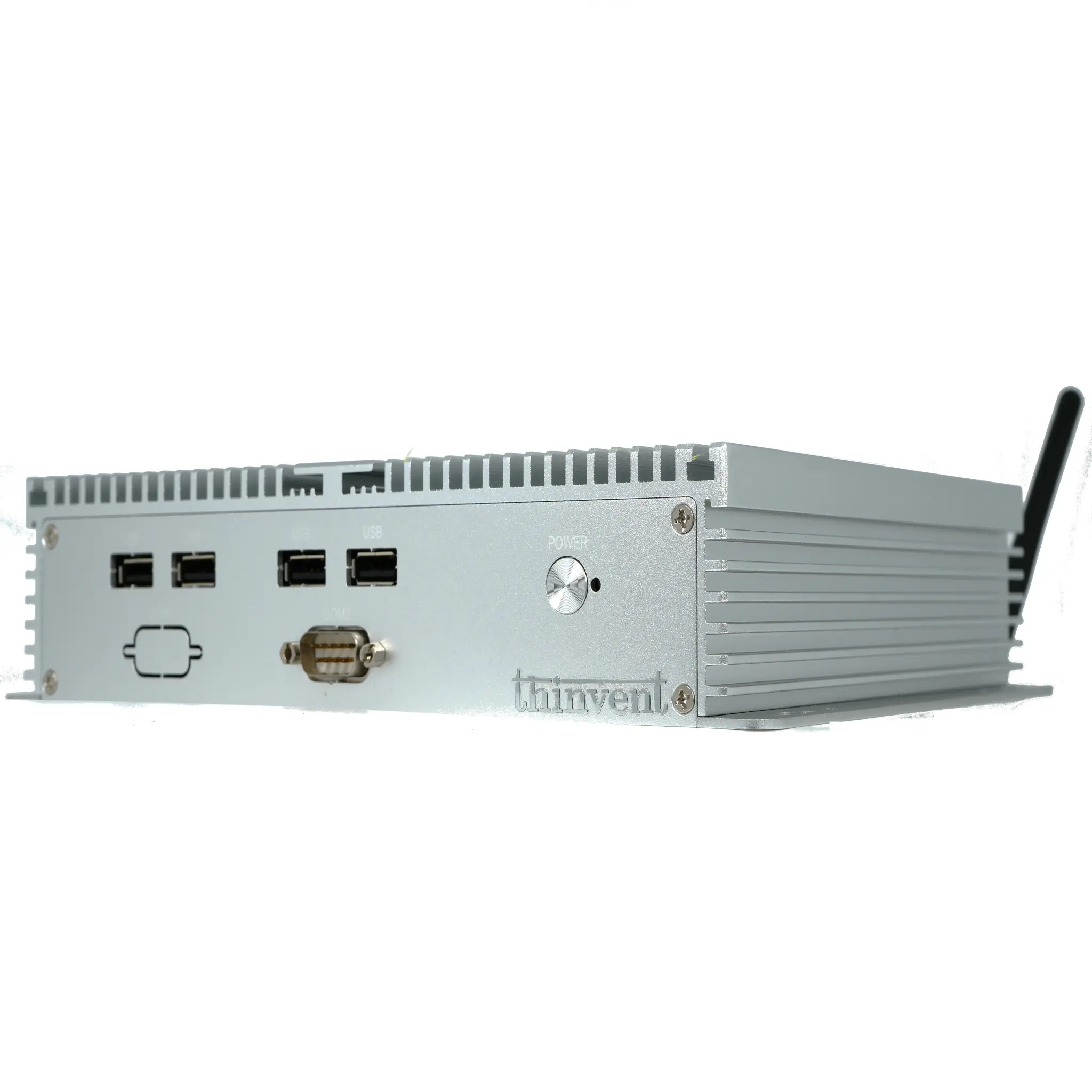
What Are Industrial Computers?
Industrial computers are specialized computing systems engineered for reliability and durability in demanding, non-office environments. Unlike standard commercial PCs, they are built to withstand extreme temperatures, dust, moisture, vibration, and continuous 24/7 operation. They are the backbone of automation, providing the processing power and connectivity needed for mission-critical industrial applications.
Key Specifications and Technical Details
These systems prioritize robustness and longevity over raw consumer-grade performance. Key features include:
-
Fanless Cooling: A core design element that eliminates moving parts, preventing dust ingress and reducing points of failure. This allows for silent operation and deployment in dirty environments.
-
Wide Operating Temperature Range: Certified to function reliably in temperatures from well below freezing to high heat (e.g., -20°C to 60°C), unlike standard PCs.
-
Ruggedized Construction: Often feature all-metal chassis, shock-mounted components, and conformal coating on circuit boards to protect against physical shock, vibration, and corrosive atmospheres.
-
Industrial-Grade Connectivity: Include a robust set of I/O ports such as multiple Gigabit Ethernet (often with PoE), serial ports (RS-232/485), and isolated digital I/O for connecting to machinery, sensors, and PLCs.
-
Extended Product Lifecycle: Components and platforms are available for much longer periods (5-10+ years) compared to rapidly changing consumer hardware, ensuring system stability and long-term supply.
Industrial Computer Use Cases and Applications
Their rugged design makes them ideal for a vast array of industrial and embedded applications:
-
Factory Automation & Control: Acting as HMIs (Human-Machine Interfaces), machine vision systems, and controllers for PLCs and robotics on the factory floor.
-
Digital Signage & Kiosks: Powering information displays, interactive kiosks, and menu boards in public spaces, requiring 24/7 uptime.
-
Transportation & Logistics: Used in fleet management, railway systems, and automated warehouses where vibration and temperature fluctuations are common.
-
Energy & Utilities: Monitoring and controlling equipment in power substations, oil & gas facilities, and renewable energy installations.
-
Thin Client & VDI: Serving as durable endpoints for virtual desktop infrastructure in industrial settings, hospitals, and call centers.
Comparison: Industrial vs. Commercial Computers
| Feature | Industrial Computer | Commercial/Office PC |
|---|---|---|
| Operating Temperature | Wide range (e.g., -20°C to 60°C) | Narrow range (typically 5°C to 35°C) |
| Cooling System | Fanless (passive) or ruggedized fans | Active cooling with fans |
| Durability | High; resistant to shock, vibration, dust | Low; designed for stable, clean environments |
| Component Lifespan | 5-10+ years (long-term availability) | 1-3 years (rapid refresh cycle) |
| Primary Use Case | Harsh environments, 24/7 operation | Office productivity, general computing |
| Mean Time Between Failures (MTBF) | Very High (often 50,000+ hours) | Standard |
Thinvent's Rugged Industrial Computing Solutions
Thinvent offers a comprehensive range of industrial-grade computing hardware designed for reliability. Our product lines include compact Industrial PCs (IPCs) and Fanless Mini PCs built with robust, all-metal chassis for passive cooling in dusty environments. For space-constrained or digital signage applications, our All-in-One PCs integrate a durable display with a powerful computing unit. We also provide versatile Thin Clients optimized for secure and stable VDI deployments in industrial settings. All Thinvent systems are engineered for long-term performance in challenging conditions, supporting a wide array of operating systems to fit your specific application needs.