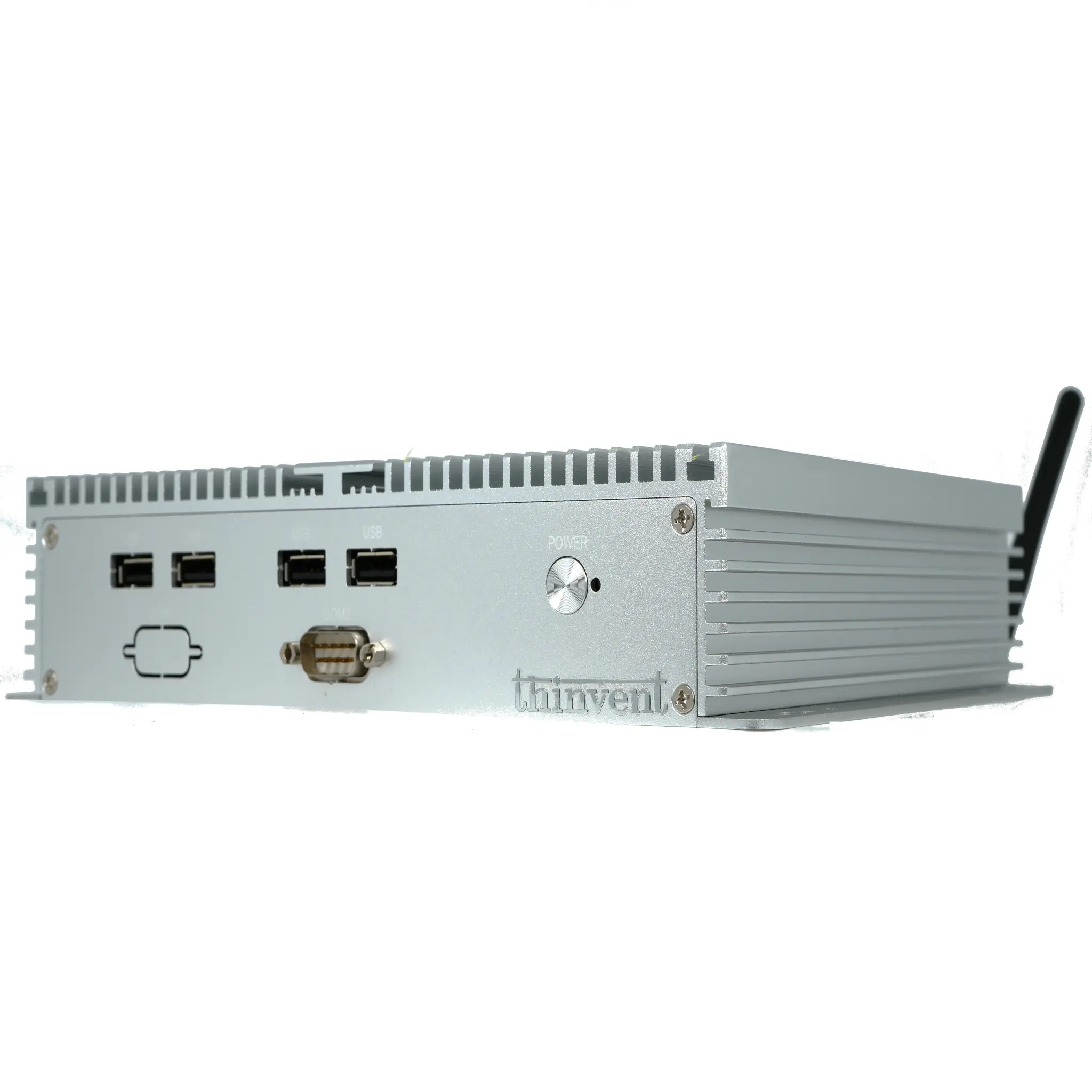
What Are ARM-Based Industrial PCs?
ARM-based Industrial PCs are computing systems built around ARM (Advanced RISC Machine) processors, designed specifically for demanding industrial environments. Unlike traditional x86 architectures, ARM processors are known for their Reduced Instruction Set Computing (RISC) design, which emphasizes power efficiency, lower heat generation, and often a smaller physical footprint. This makes them ideal for embedded applications where reliability, longevity, and minimal energy consumption are critical.
Key Specifications and Technical Advantages
The core technical benefits of ARM architecture directly translate to industrial-grade performance. Key specifications and advantages include:
-
Power Efficiency: ARM CPUs consume significantly less power than their x86 counterparts, enabling fanless, passively cooled designs that eliminate moving parts—a major point of failure in dusty or volatile environments.
-
Thermal Management: Low thermal design power (TDP) allows for compact, sealed enclosures that are resistant to dust, moisture, and wide temperature fluctuations.
-
Long-Term Reliability: With fewer components prone to wear (like fans), ARM-based systems offer enhanced mean time between failures (MTBF), crucial for 24/7 operations.
-
Integrated Features: Many ARM System-on-Chip (SoC) designs integrate graphics, memory controllers, and I/O interfaces on a single chip, simplifying board design and improving reliability.
Ideal Use Cases and Applications
ARM Industrial PCs excel in applications where small size, low power, and silent operation are paramount. Common use cases include:
-
Digital Signage & Kiosks: Powering displays in retail, hospitality, and public transportation.
-
IoT Gateways: Collecting and processing data from sensors at the edge of networks.
-
Thin Clients & VDI: Providing secure, centralized desktop access in corporate and industrial settings.
-
Embedded Control Systems: Managing machinery, automation, and process control on factory floors.
-
Transportation & In-Vehicle Computing: Withstanding vibrations and temperature extremes in buses, trains, and fleet vehicles.
Comparison: ARM vs. x86 for Industrial Use
| Feature | ARM-Based Industrial PC | Traditional x86 Industrial PC |
|---|---|---|
| Power Consumption | Very Low (often <15W) | Moderate to High |
| Thermal Output | Low, enables fanless design | Higher, often requires active cooling |
| Processing Focus | Efficiency, dedicated tasks | Raw compute power, versatility |
| Typical OS Support | Linux, Android, RTOS | Windows, Linux |
| Hardware Cost | Generally Lower | Generally Higher |
| Ideal For | Embedded, fixed-function, edge IoT | High-performance computing, complex workloads |
Thinvent's ARM-Based Industrial Computing Solutions
While Thinvent offers a comprehensive range of industrial computers, our expertise extends to designing robust systems for diverse architectures. For projects requiring the specific benefits of ARM processors—such as ultra-low power embedded systems, custom IoT gateways, or specialized edge computing devices—Thinvent provides engineering and customization services. We work with leading ARM silicon providers to develop solutions that meet exacting standards for reliability, performance, and environmental hardening, ensuring your industrial application runs efficiently and reliably for years to come.