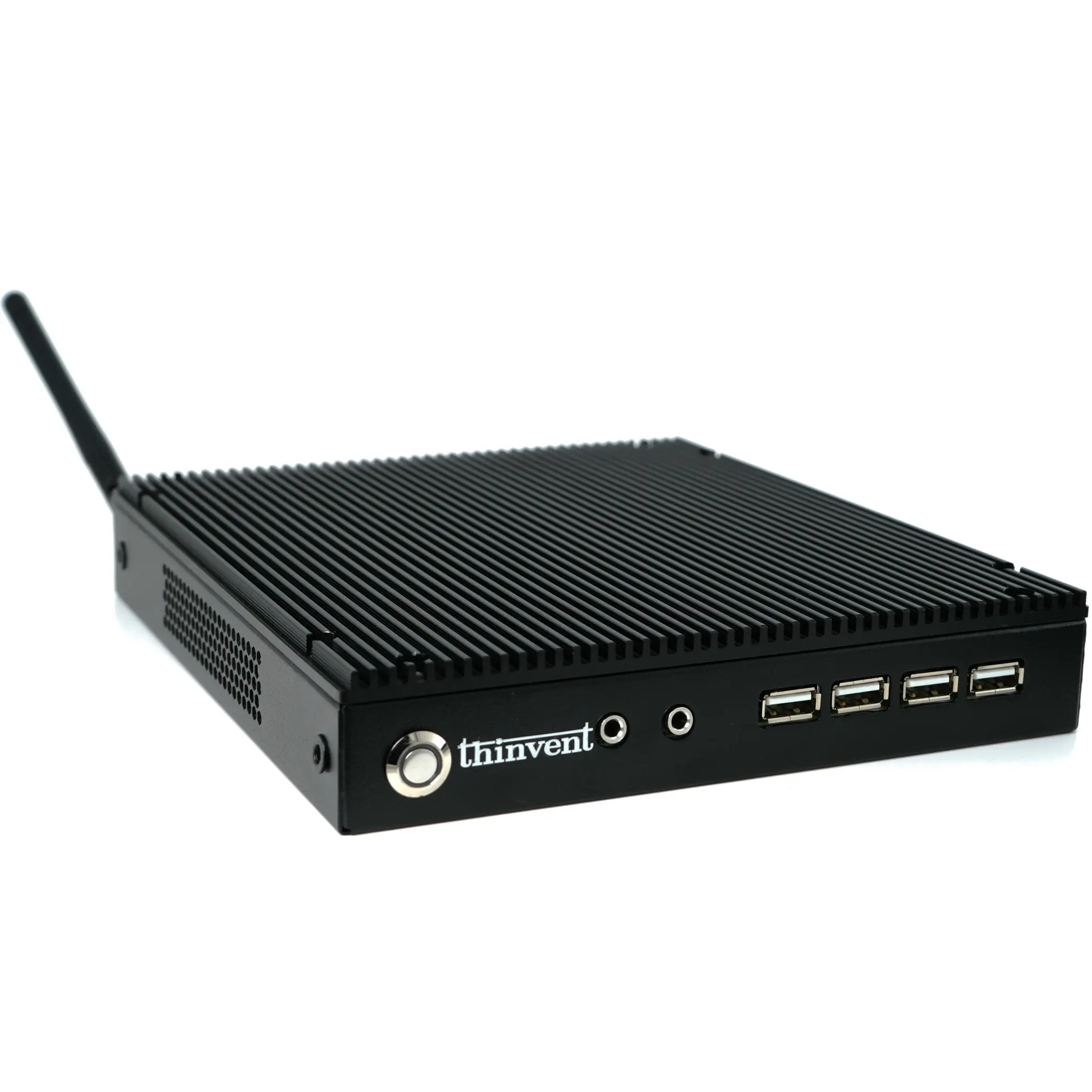
A small desktop, often referred to as a mini PC or compact desktop, is a complete computer system built into a significantly smaller form factor than a traditional tower. These devices are designed to save space, reduce power consumption, and offer versatile mounting options while delivering sufficient performance for a wide range of computing tasks. They typically feature modern, low-power processors, integrated graphics, and solid-state storage, making them ideal for environments where a full-sized PC is impractical.
Key Specifications and Technical Details
Modern small desktops are built around efficient system-on-a-chip (SoC) or mobile-class processors from Intel or ARM. Key specifications to consider include:
-
Processor: Intel's N-series (e.g., N100, N95) or Celeron processors are common, offering 4 cores and sufficient power for everyday tasks. Higher-performance models may feature Intel Core i3, i5, or i7 processors.
-
Memory (RAM): Configurations typically range from 4GB to 16GB of DDR4 or DDR5 RAM, with 8GB being a standard for smooth multitasking.
-
Storage: Most models use M.2 NVMe or SATA SSDs, with capacities from 128GB to 1TB, ensuring fast boot times and responsive application loading.
-
Connectivity: They include multiple USB ports (including USB-C), HDMI or DisplayPort outputs for dual monitors, Gigabit Ethernet, and often built-in Wi-Fi and Bluetooth.
-
Cooling: A major advantage is fanless, silent operation, made possible by passive cooling designs that eliminate dust intake and moving parts, enhancing reliability.
Use Cases and Applications
The compact size and robust design of small desktops make them suitable for numerous professional and commercial applications:
-
Digital Signage & Kiosks: Perfect for driving displays in retail, hospitality, and public information points.
-
Office Productivity: An excellent choice for general office work, web browsing, and video conferencing, freeing up desk space.
-
Light Industrial & Embedded Systems: Used in manufacturing, logistics, and thin client setups due to their durability and low maintenance.
-
Home Entertainment: Can serve as a compact media center or home server.
-
Education: Ideal for computer labs and interactive whiteboards where space is limited.
Comparison: Small Desktop vs. Traditional Tower
| Feature | Small Desktop / Mini PC | Traditional Tower PC |
|---|---|---|
| Size | Extremely compact (often palm-sized) | Large and bulky |
| Power Consumption | Very low (10W-65W) | Moderate to High (65W+ ) |
| Noise | Typically silent (fanless) or very quiet | Can be noisy under load |
| Upgradability | Limited (often RAM/SSD only) | Highly upgradable |
| Mounting Options | VESA mount, behind monitor, hidden | Desk or floor only |
| Ideal For | Space-constrained, commercial, embedded use | Gaming, high-performance workstations, extensive upgrades |
Thinvent Compact Desktop Solutions
Thinvent specializes in industrial-grade compact desktops designed for reliability in demanding environments. Our Aero series of fanless Mini PCs, like the models featured here, exemplify this approach. They are built with robust Intel processors, offer a range of memory and storage configurations, and support multiple operating systems including Windows, Linux, and embedded options. Engineered for 24/7 operation with silent, fanless cooling, Thinvent mini PCs are a dependable choice for business, digital signage, and industrial computing applications where space, silence, and durability are paramount.