What Is The Best Computer Processor For A Desktop?
The "best" desktop processor depends entirely on your specific workload, performance requirements, and system constraints. For industrial and commercial desktop applications, the ideal processor balances raw computing power with reliability, energy efficiency, and thermal management, often within compact, fanless designs. Key factors include core count for multitasking, clock speed for single-threaded performance, and integrated graphics capabilities for display-intensive tasks.
Key Specifications and Technical Details
Modern industrial desktop processors are defined by several critical specifications:
-
Core Count: Determines parallel processing capability. Quad-core processors (like the Intel N100) are excellent for general office tasks, digital signage, and light-duty applications. For demanding workloads like CAD, data analysis, or virtualization, processors with 6, 10, or 12 cores (e.g., Intel Core i5 12th/13th Gen) are necessary.
-
Generation: Newer processor generations (e.g., 12th, 13th, 14th Gen Intel® Core) offer significant improvements in performance-per-watt, integrated graphics, and support for faster memory and I/O standards compared to older generations.
-
Thermal Design Power (TDP): Lower TDP processors (e.g., Intel N-series) generate less heat, enabling silent, fanless operation which is critical for dusty environments or 24/7 reliability. Higher-performance chips require more robust cooling solutions.
-
Integrated Graphics: For applications without a discrete GPU, the processor's integrated graphics (Intel UHD Graphics, Iris® Xe) handle display output. Newer generations provide better support for multiple high-resolution monitors.
Use Cases and Application Matching
Matching the processor to the application ensures optimal performance and value.
-
General Office & Point-of-Sale: Energy-efficient quad-core processors (Intel Celeron, N-series) are perfectly capable, offering a balance of performance and low operating costs.
-
Digital Signage & Kiosks: Processors with capable integrated graphics (Intel Core i3/i5, newer generations) can drive multiple high-resolution displays smoothly.
-
Engineering Workstations & Data Processing: High-core-count processors (Intel Core i5/i7, 12th Gen+) are essential for software compilation, simulation, and complex calculations.
-
Industrial Automation & Edge Computing: Reliable, fanless processors (Intel N-series, low-power Core series) that can operate in wide temperature ranges are ideal for factory floors and remote locations.
Processor Comparison for Common Scenarios
| Application Scenario | Recommended Series | Key Features | Ideal For |
|---|---|---|---|
| Basic Computing & Thin Client | Intel Celeron / N-series | Low power, fanless, cost-effective | Web browsing, terminal access, simple POS |
| General Business & Productivity | Intel Core i3 | Good single-thread performance, modern I/O | Office suites, CRM software, dual displays |
| Advanced Multitasking & Design | Intel Core i5 (12th/13th Gen+) | High core/thread count, powerful iGPU | Graphic design, light CAD, multi-app workflows |
| High-Performance Workstation | Intel Core i5/i7 (13th/14th Gen) | Maximum cores & threads, high clock speeds | Data analysis, software development, virtualization |
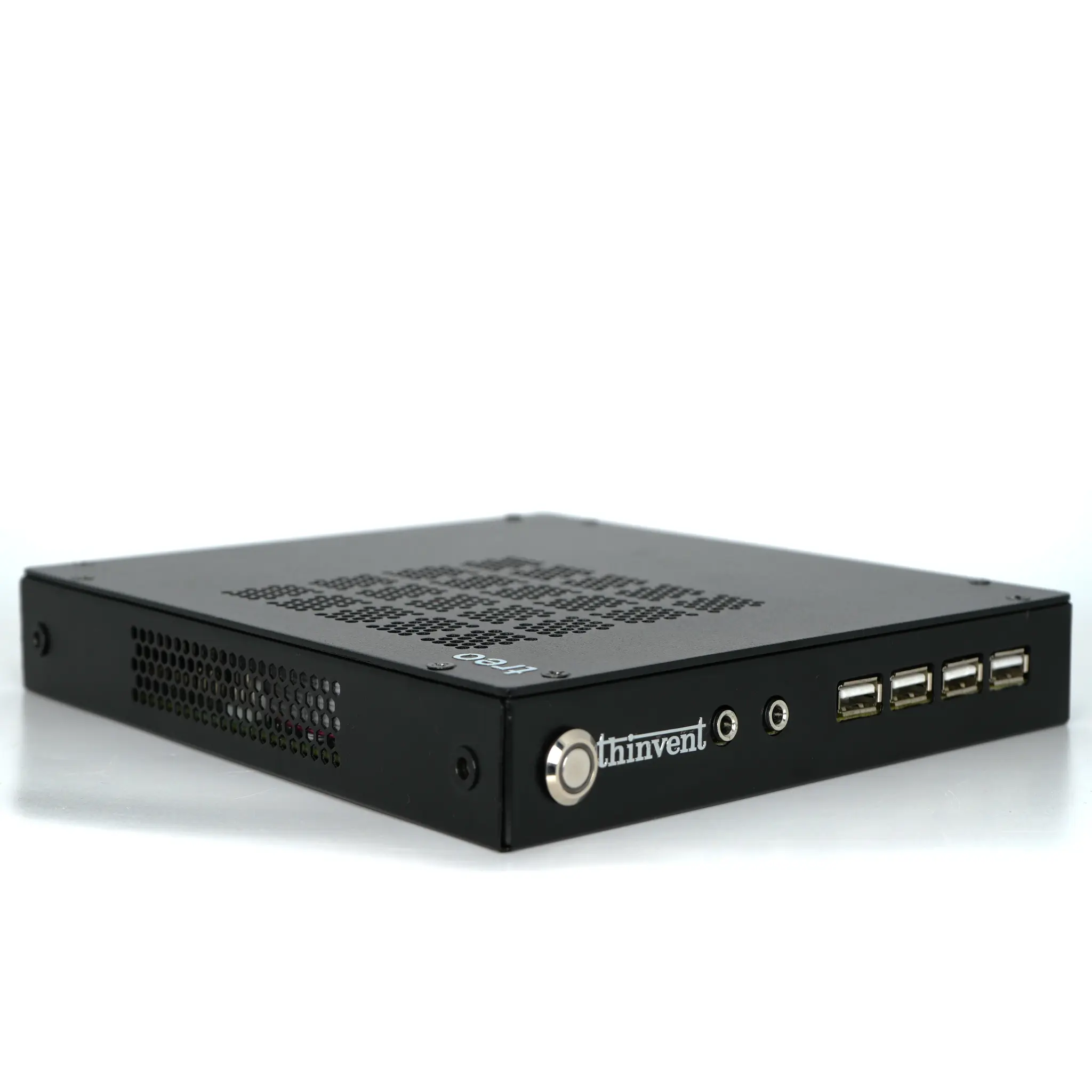
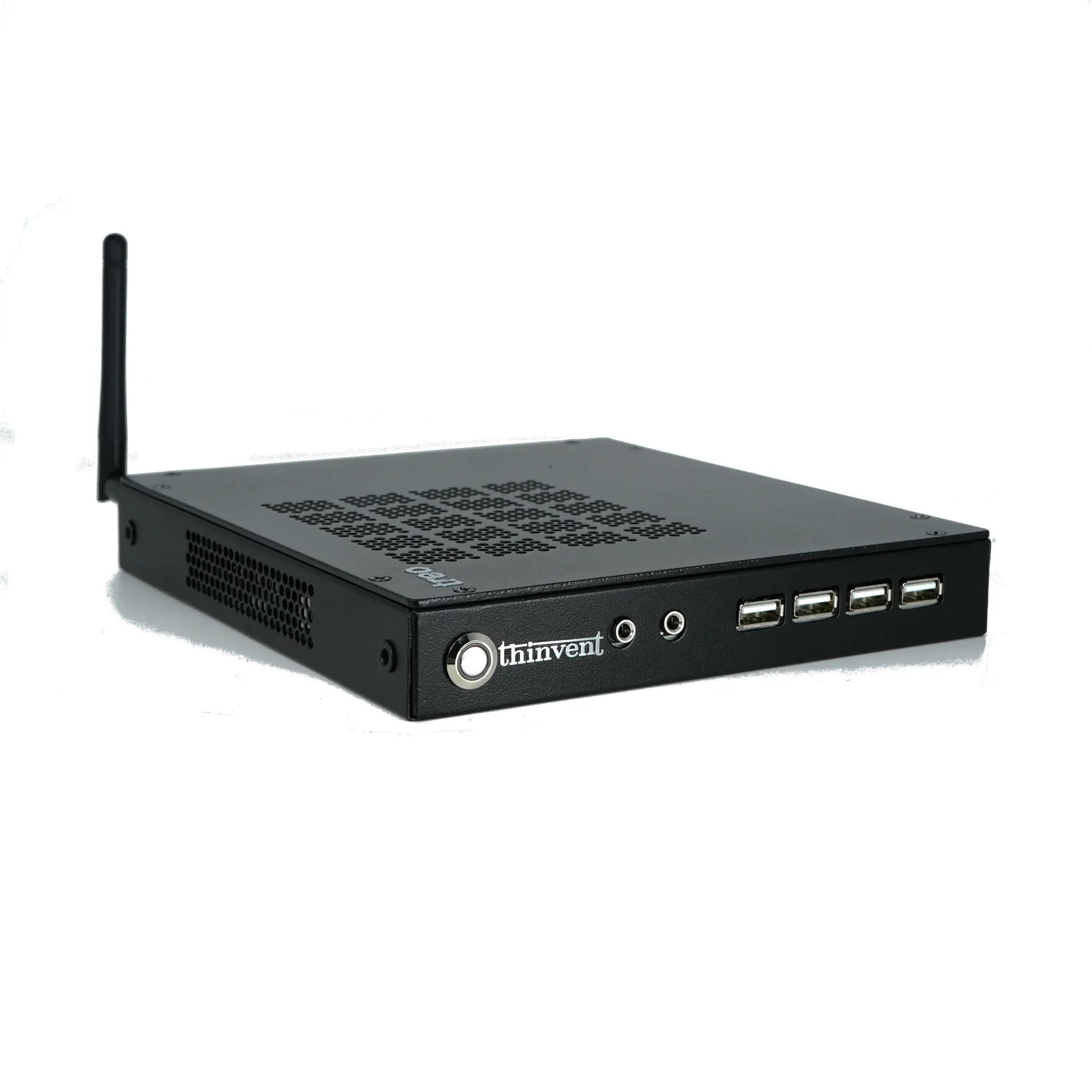
Thinvent Industrial Desktops Featuring Advanced Processors
Thinvent integrates a range of modern processors into robust industrial computing solutions. Our product lines cater to diverse performance needs, from the ultra-efficient Intel N100 for space-constrained, fanless deployments to the powerful 12th and 13th Generation Intel Core processors for demanding workstation applications. All Thinvent systems are built for durability in commercial environments, featuring wide voltage input, extended temperature operation, and stable performance for 24/7 uptime. Explore our mini PCs, thin clients, and all-in-one systems to find the perfect balance of processing power and industrial reliability for your project.