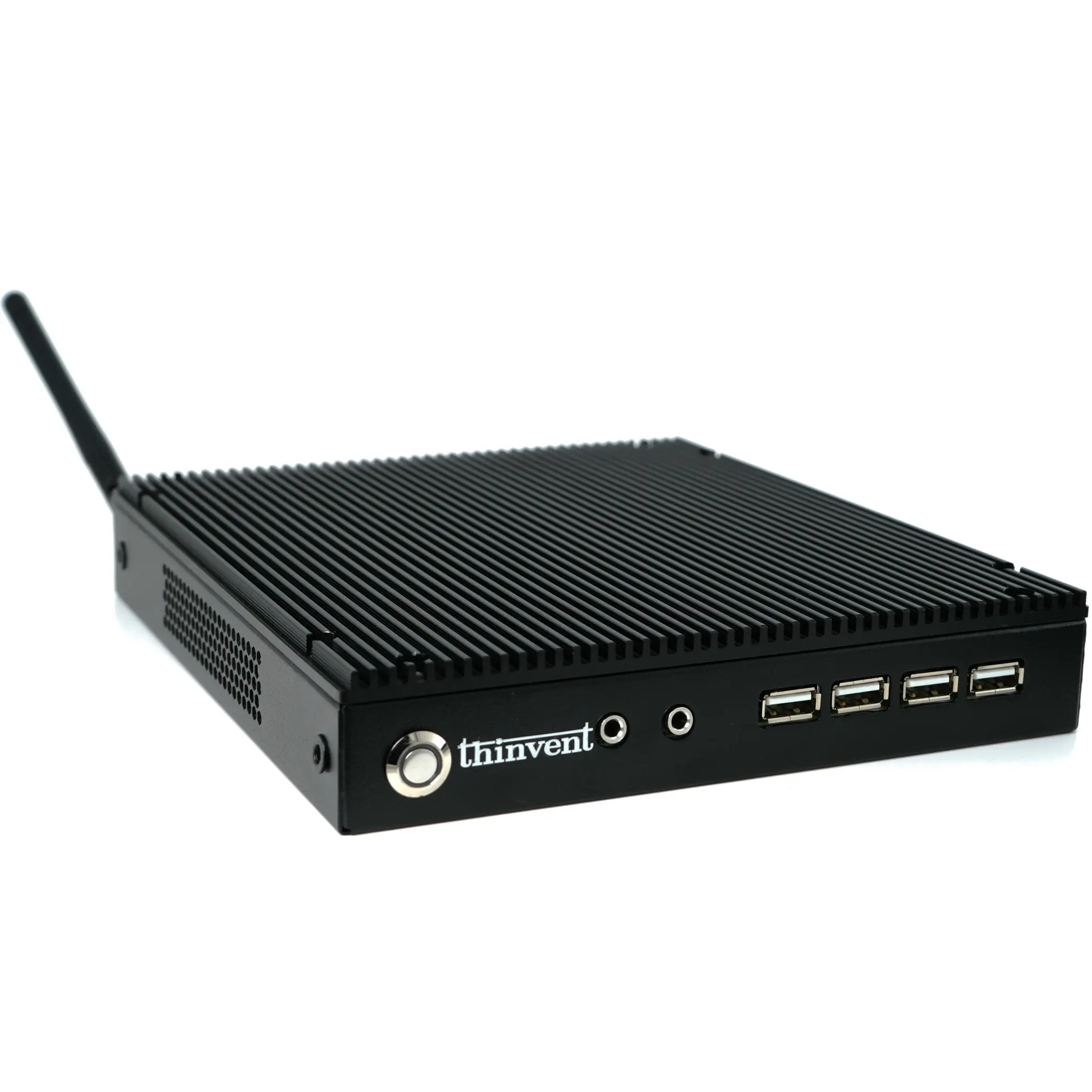
Choosing the best CPU for your industrial PC is a critical decision that impacts performance, power efficiency, reliability, and total cost of ownership. Unlike consumer PCs, industrial applications demand processors that can deliver consistent performance in harsh environments, support long-term availability, and often operate fanlessly for silent and maintenance-free operation. The "best" CPU is not a single model but the one that best matches your specific workload requirements, from basic digital signage to complex edge computing and machine vision.
Key CPU Specifications for Industrial Use
When evaluating CPUs, focus on these core specifications:
-
Core Count & Threads: Determines multitasking capability and parallel processing power. More cores are beneficial for multi-threaded applications.
-
Clock Speed (Frequency): Measured in GHz, it affects the speed of single-threaded tasks. Higher turbo frequencies are crucial for burst performance.
-
Cache Memory: A small, fast memory pool on the CPU die. Larger cache (e.g., 12MB vs 1MB) significantly improves data access speed for repetitive tasks.
-
Thermal Design Power (TDP): Indicates heat generation and power consumption. Lower TDP CPUs (common in ARM and Intel N-series) enable fanless, compact designs ideal for space-constrained or dusty environments.
-
Instruction Set Architecture (ISA): The fundamental difference lies between x86 (Intel, AMD) and ARM. x86 offers broad software and OS compatibility (Windows, Linux). ARM architectures are renowned for exceptional power efficiency and are dominant in embedded Linux applications.
Matching CPU to Industrial Application
Your application dictates the ideal processor tier:
| Application Scenario | Recommended CPU Type | Key Considerations |
|---|---|---|
| Thin Client / Digital Signage / Kiosk | ARM Cortex-A Series (e.g., A53, A55) or Intel N-series (e.g., N100) | Low power, fanless, cost-effective. Sufficient for displaying content and running lightweight OS. |
| Edge Gateway, IoT Hub, Basic Control | Intel N-series, Intel Core i3, or higher-clocked ARM | Balanced performance for data aggregation, protocol conversion, and running containerized services. |
| Machine Vision, Automation, Advanced HMI | Intel Core i5/i7 or equivalent | High single-thread performance for real-time image processing, PLC communication, and complex GUI. |
| Industrial AI, Edge Analytics, Server | Intel Core i7/i9 or Xeon | Maximum multi-core performance for running inference models, databases, and virtualized environments. |
Thinvent Industrial PCs: Engineered for Your Needs
Thinvent offers a comprehensive range of industrial computers with CPUs meticulously selected for specific market segments. Our product portfolio ensures you find the perfect balance of performance, efficiency, and reliability.
-
For Ultra-Efficient Embedded Tasks: The Thinvent Micro series utilizes ARM Cortex processors (A53, A55), delivering exceptional performance-per-watt in a fanless design. Ideal for digital signage, thin clients, and kiosks.
-
For Balanced Performance & Value: The Thinvent Treo and IPC1 series feature the Intel Processor N100, a modern efficiency-core CPU that provides capable performance for edge computing and control tasks without active cooling.
-
For Demanding Industrial Applications: The Thinvent IPC3, Aero, and IPC5 series are powered by Intel Core i3, i5, and i7 processors (12th & 14th Gen). These systems offer high turbo frequencies, larger caches, and more cores to handle demanding workloads like factory automation, vision systems, and ruggedized computing.
Every Thinvent industrial PC is built with industrial-grade components, wide-temperature operation support, and long-term product lifecycle management, ensuring your investment is protected for years to come.