Choosing the Best PC for Engineering Students
The best PC for an engineering student balances performance for demanding software, reliability for long project hours, and value. While consumer laptops are common, industrial-grade mini PCs and compact workstations offer superior durability, connectivity, and thermal management, making them excellent for CAD, simulation, programming, and lab environments. The ideal choice depends on the specific engineering discipline and software requirements, such as Autodesk AutoCAD, MATLAB, SolidWorks, or code compilation.
Key specifications to prioritize include a multi-core processor (Intel Core i5/i7 or equivalent), a minimum of 8GB RAM (16GB+ recommended), and fast SSD storage. A robust GPU is often integrated into these CPUs, but for intensive 3D modeling, a system with dedicated graphics or a high-performance Intel Iris Xe architecture is beneficial. Connectivity for multiple monitors, reliable Wi-Fi, and robust I/O (USB, Ethernet) are also crucial for peripherals like external drives, microcontrollers, and development boards.
Use Cases by Discipline:
-
Mechanical/Civil/Aerospace Engineering: Running CAD (SolidWorks, AutoCAD), FEA, and CFD software requires strong single-thread and multi-thread CPU performance, ample RAM, and good integrated graphics. A system like an Intel Core i5-1250P is well-suited.
-
Computer/Electrical Engineering: For programming, circuit simulation (SPICE), embedded systems development, and running virtual machines, multi-core performance and RAM are key. An Intel Core i3 or i5 with 8-16GB RAM is effective.
-
General Studies & Lightweight Computing: For documentation, web-based tools, light coding, and remote access to university lab computers, an energy-efficient Intel N100 or ARM-based system provides ample power with low noise and power consumption.
Comparison of Sample Configurations
| Model Series | Example Processor | Cores/Threads | Max Freq. | RAM | Storage | Ideal For |
|---|---|---|---|---|---|---|
| Entry-Level / Thin Client | ARM Cortex A55 | 4 Cores | 1.9 GHz | 2-4 GB | 16-64 GB eMMC | Remote access, web tools, lightweight Linux dev |
| Efficient Mini PC | Intel Processor N100 | 4 Cores/4 Threads | 3.4 GHz | 4 GB | 128 GB SSD | Programming, documentation, light CAD viewing |
| Balanced Performance | Intel Core i3-1215U | 6 Cores/8 Threads | 4.4 GHz | 8 GB | 256 GB SSD | Mid-level CAD, MATLAB, simulation, multitasking |
| High Performance | Intel Core i5-1250P | 12 Cores/16 Threads | 4.4 GHz | 16 GB | 512 GB SSD | Advanced 3D CAD, complex simulations, VM workloads |
| Latest Gen Performance | Intel Core 5 120U | 10 Cores/12 Threads | 5.0 GHz | 16 GB | 512 GB SSD | Demanding engineering software, future-proofing |
Thinvent Products for Engineering Students
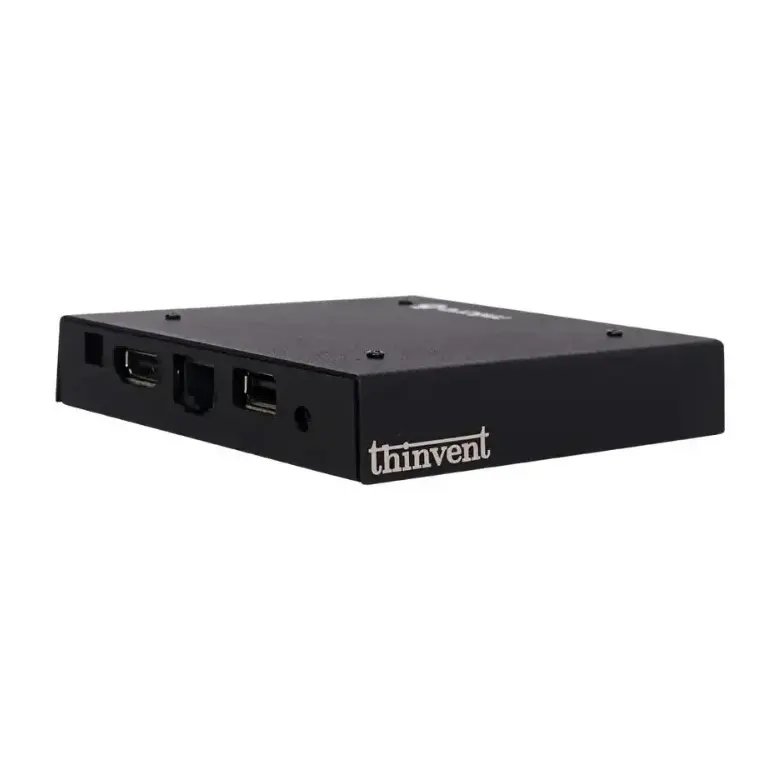
Thinvent's range of industrial mini PCs and compact workstations provides robust, reliable computing solutions perfectly suited for the rigors of engineering education. For students in computer or electrical engineering, the Treo Mini PC with an Intel N100 or Core i3-1215U offers a perfect balance of performance and efficiency for coding, simulation, and running Linux distributions like Ubuntu. The Aero Mini PC series, featuring latest-generation Intel Core processors like the 120U, delivers exceptional power for demanding mechanical design and analysis software on Windows 11 Pro.
For capstone projects and advanced research requiring uncompromised performance, the Industrial PC IPC5 with a 12-core Intel Core i5-1250P, 16GB RAM, and 512GB SSD is a desktop-class powerhouse in a compact form factor. All Thinvent systems are built for 24/7 reliability, feature extensive connectivity for multiple monitors and peripherals, and run cool and quiet—ideal for dorm rooms or home labs. By choosing Thinvent, engineering students invest in durable, professional-grade technology that can handle both academic challenges and future professional workloads.