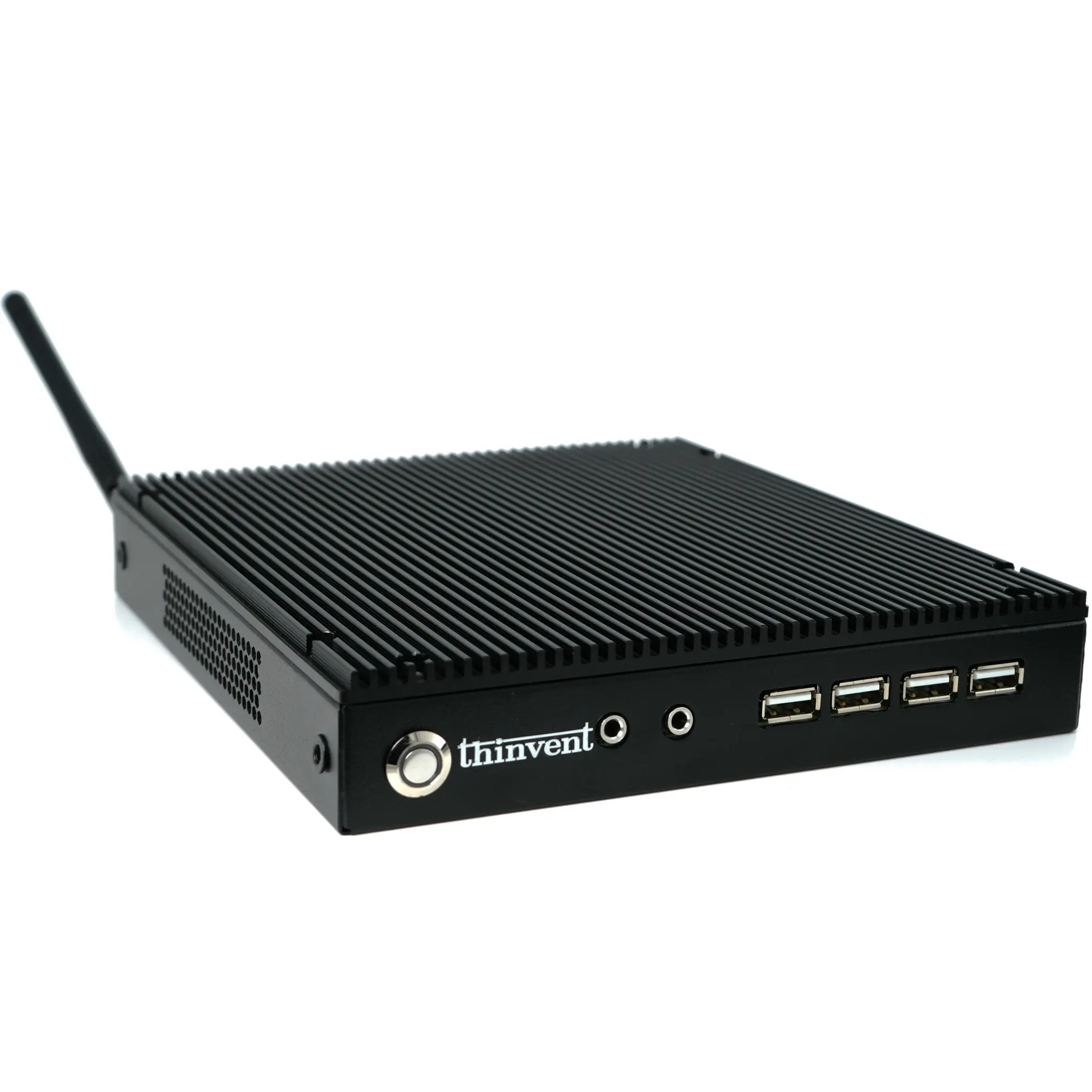
Compact mini PCs represent the perfect fusion of small form factor design and substantial computing power, primarily driven by modern Intel processors. These devices pack the performance of a desktop into a chassis often no larger than a book, making them ideal for space-constrained environments. The key to their capability lies in Intel's efficient processor architectures, such as the energy-efficient N-series, the balanced U-series, and the high-performance P-series. This allows for a wide range of compact PCs, from fanless, low-power models for digital signage to powerful, multi-core systems capable of handling demanding industrial applications, all while maintaining a minimal physical footprint.
Key Specifications and Technical Details
The performance of a compact mini PC is defined by its processor. Current models feature Intel processors from the 12th to 14th generations, offering a significant leap in efficiency and power. Key specifications to consider include:
-
Processor Cores and Threads: Ranging from 4-core (e.g., Intel N100) to 12-core (e.g., Intel Core i5-1250P) configurations, enabling parallel task handling.
-
Clock Speed: Turbo frequencies up to 5.0 GHz (e.g., Intel Core 5 120U) ensure responsive performance for single-threaded applications.
-
Cache Memory: Larger cache sizes (e.g., 12MB on i5 models) improve data retrieval speeds and overall system responsiveness.
-
Thermal Design: Many compact designs utilize fanless cooling or advanced thermal management to ensure silent, reliable operation in industrial settings.
-
Memory and Storage: Configurations typically include DDR4 RAM and SSD storage, with options scaling from 4GB/128GB for basic tasks to 16GB/512GB for intensive workloads.
Ideal Use Cases and Applications
The versatility of compact Intel-powered mini PCs makes them suitable for a diverse array of applications:
-
Digital Signage & Kiosks: Their small size and fanless options allow for discreet installation behind displays.
-
Industrial Automation & IoT Gateways: Rugged designs and reliable performance support machine control and data aggregation.
-
Thin Client & VDI Endpoints: Efficient processors provide a smooth experience for virtual desktop infrastructures.
-
Office Productivity & Point-of-Sale: Powerful enough for everyday business software while saving valuable desk space.
-
Edge Computing: Local data processing in retail, manufacturing, or smart city deployments.
Comparison of Compact Mini PC Processors
| Processor Model | Cores/Threads | Max Turbo Frequency | Cache | Typical Use Case |
|---|---|---|---|---|
| Intel Processor N100 | 4 Cores / 4 Threads | Up to 3.4 GHz | 6 MB | Entry-level computing, digital signage, basic thin clients. |
| Intel Core i3-1215U | 6 Cores / 8 Threads | Up to 4.4 GHz | 10 MB | General office productivity, advanced kiosks, light graphic tasks. |
| Intel Core i5-1250P | 12 Cores / 16 Threads | Up to 4.4 GHz | 12 MB | Industrial computing, multi-tasking, demanding edge applications. |
| Intel Core 5 120U | 10 Cores / 12 Threads | Up to 5.0 GHz | 12 MB | High-performance compact workloads, engineering software, dense virtualization. |
Thinvent's Range of Compact Intel-Powered Mini PCs
Thinvent offers a comprehensive portfolio of compact mini PCs engineered around powerful Intel processors to meet various performance and reliability demands. Our Treo and IPC1 series feature the efficient Intel N100 processor, perfect for fanless operation in entry-level and industrial environments. For balanced performance, the Aero and IPC3 series are built with Intel Core i3 and i5 U-series processors, delivering robust power for business and automation tasks. At the high end, the Industrial PC IPC5 with an Intel Core i5-1250P processor provides exceptional multi-core performance for the most demanding industrial and edge computing scenarios. All Thinvent mini PCs are designed for 24/7 reliability, feature flexible mounting options, and support multiple operating systems, including Windows IoT, Ubuntu Linux, and our proprietary Thinux™ Embedded Linux.