What Are Data Center Physical and Environmental Controls?
Data center physical and environmental controls are the systems, designs and operational practices that protect IT equipment from physical threats and keep its operating environment within safe limits. The physical layer covers access control, fire suppression, rack security and structural protection, while the environmental layer covers temperature, humidity, airflow, power quality and monitoring. Together they form the foundation on which uptime, hardware lifespan and data integrity depend.
Industry guidance such as ANSI/TIA-942, ISO/IEC 22237 and ASHRAE's thermal guidelines frames most of these controls. ASHRAE's recommended envelope for Class A1 equipment is roughly 18–27 °C at the inlet with a dew point between 5.5 °C and 15 °C and a maximum relative humidity of 60%, while allowable ranges are wider. Humidity matters as much as heat: too dry invites electrostatic discharge, too damp risks condensation and corrosion. Airflow design — hot aisle/cold aisle separation, blanking panels, sealed cable openings and containment — determines whether cooling capacity actually reaches the equipment intakes.
Key Physical Controls
| Control Area | Purpose | Typical Measures |
|---|---|---|
| Access control | Prevent unauthorised entry | Biometrics, card readers, mantraps, audit logs |
| Fire detection & suppression | Stop fire before damage spreads | VESDA smoke detection, clean-agent or inert gas systems |
| Rack & cabinet security | Protect individual assets | Locking doors, tamper sensors, cable locks |
| Structural protection | Resist seismic and water events | Bracing, raised floors, leak detection, sump pumps |
| Surveillance | Deter and investigate incidents | CCTV with retention policies, motion analytics |
Key Environmental Controls
| Parameter | Recommended Range | Risk If Uncontrolled |
|---|---|---|
| Inlet temperature | 18–27 °C (ASHRAE A1) | Thermal shutdown, reduced component life |
| Relative humidity | 40–60% RH | ESD (low), condensation (high) |
| Airflow | Front-to-rear, contained aisles | Hot spots, fan over-speed, throttling |
| Power quality | Regulated UPS-backed supply | Crashes, corrupted writes, PSU failure |
| Particulate/dust | Filtered, positive pressure | Blocked heatsinks, fan wear |
| Monitoring | Continuous sensors + alerts | Undetected drift, delayed response |
Cooling approaches range from room-level CRAC/CRAH units to in-row and rear-door heat exchangers, direct-to-chip liquid cooling and full immersion. Whatever the method, the control loop is the same: sense temperature, humidity and pressure; compare against setpoints; act through cooling, humidification or airflow adjustment; and log everything for trend analysis and compliance.
Where Edge and Industrial Computers Fit
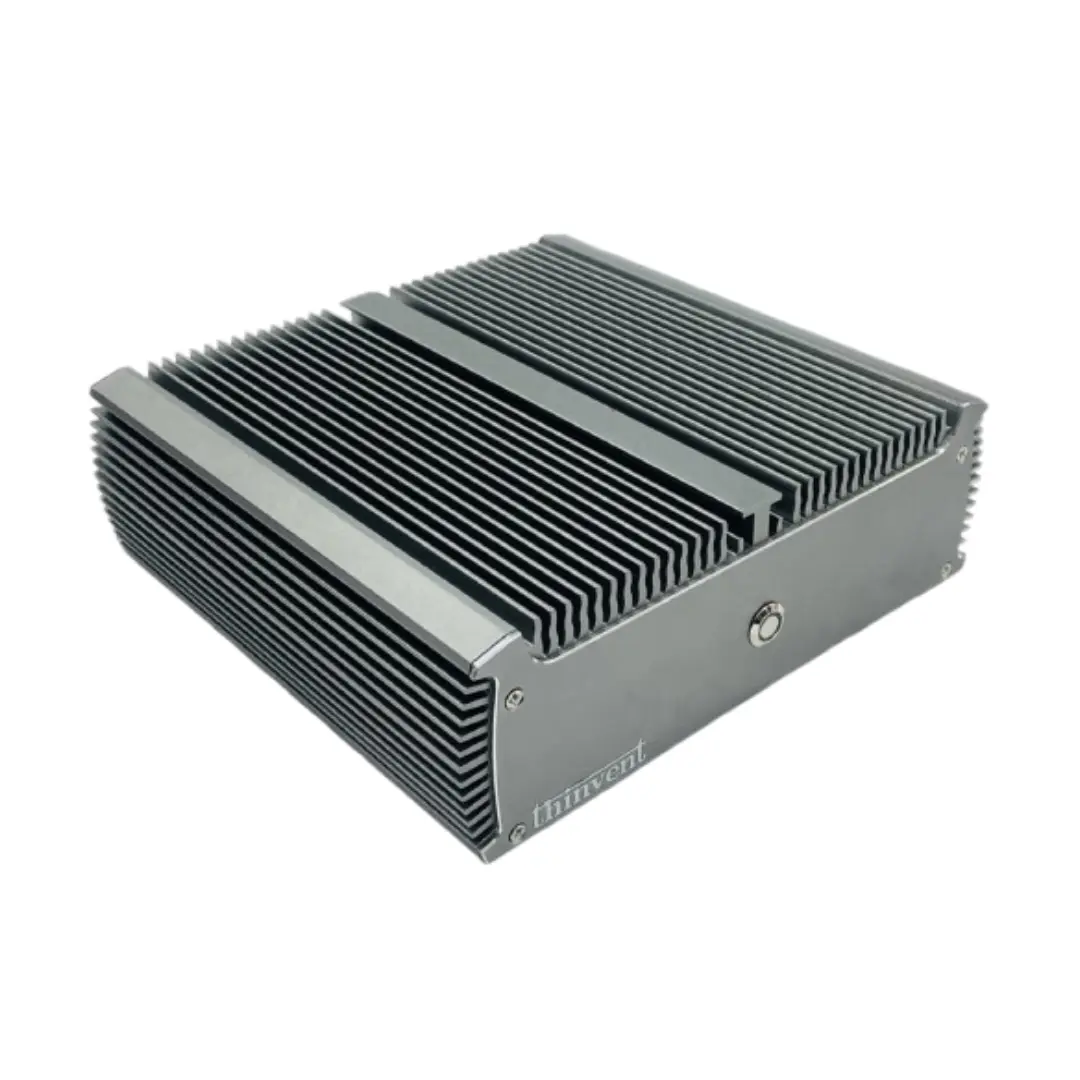
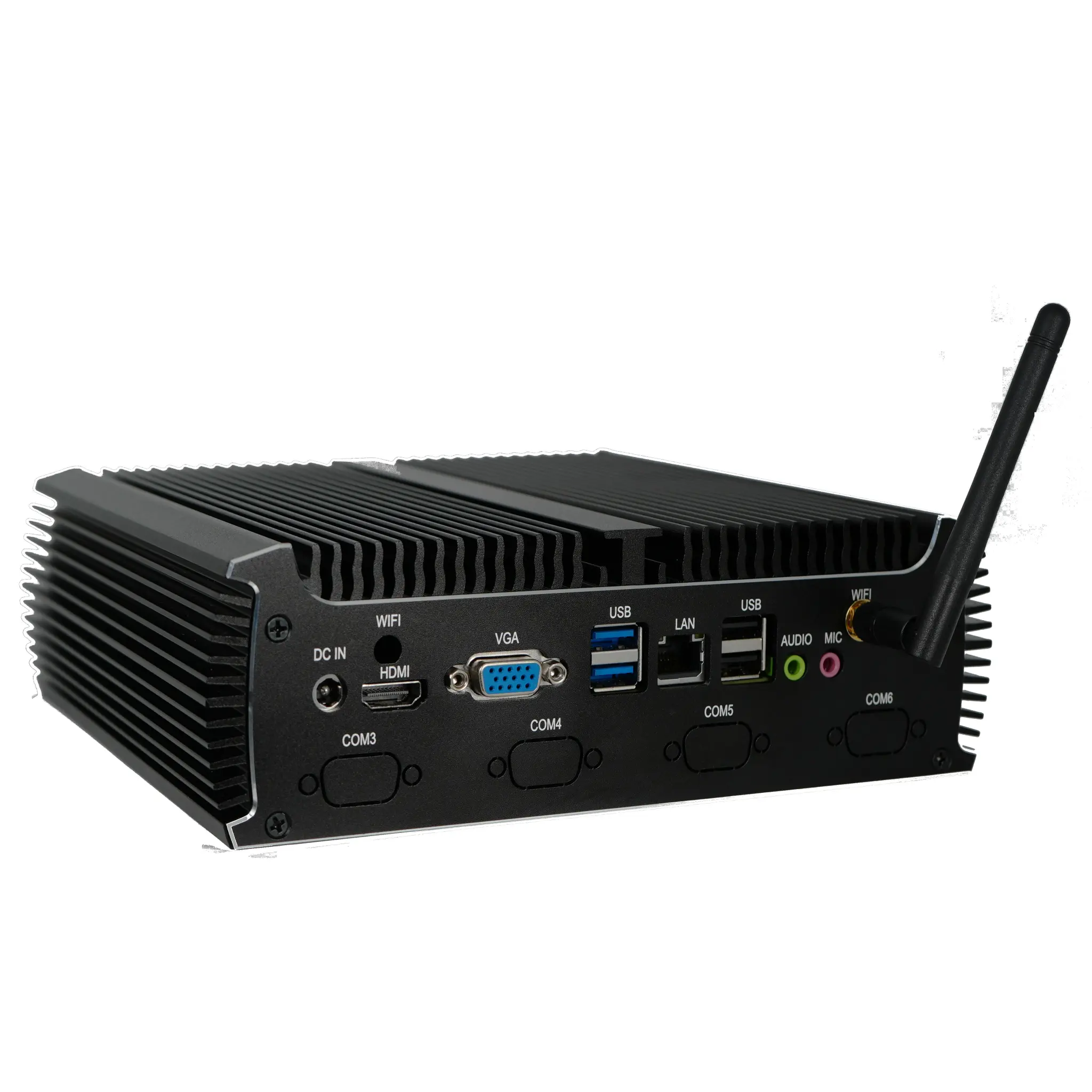
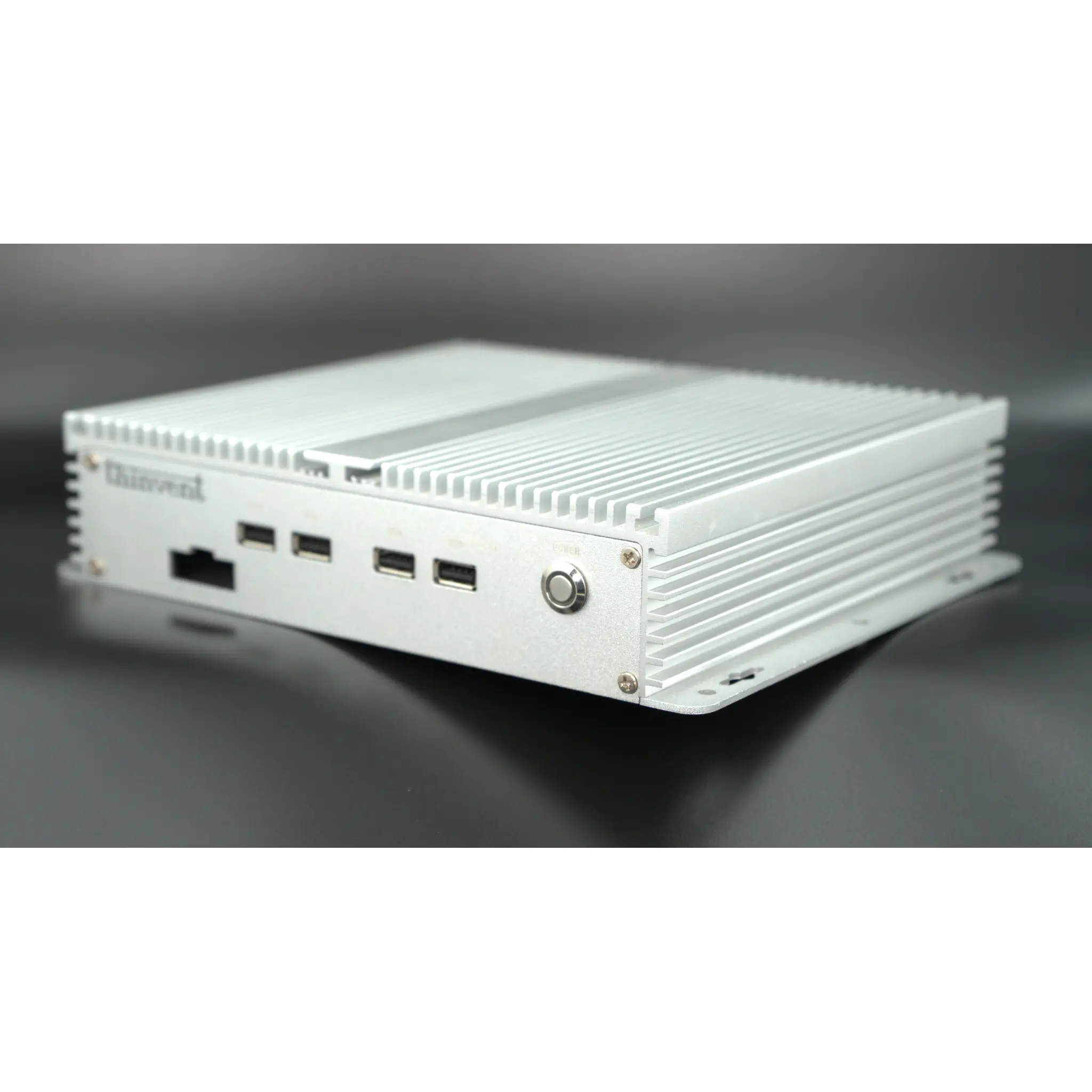
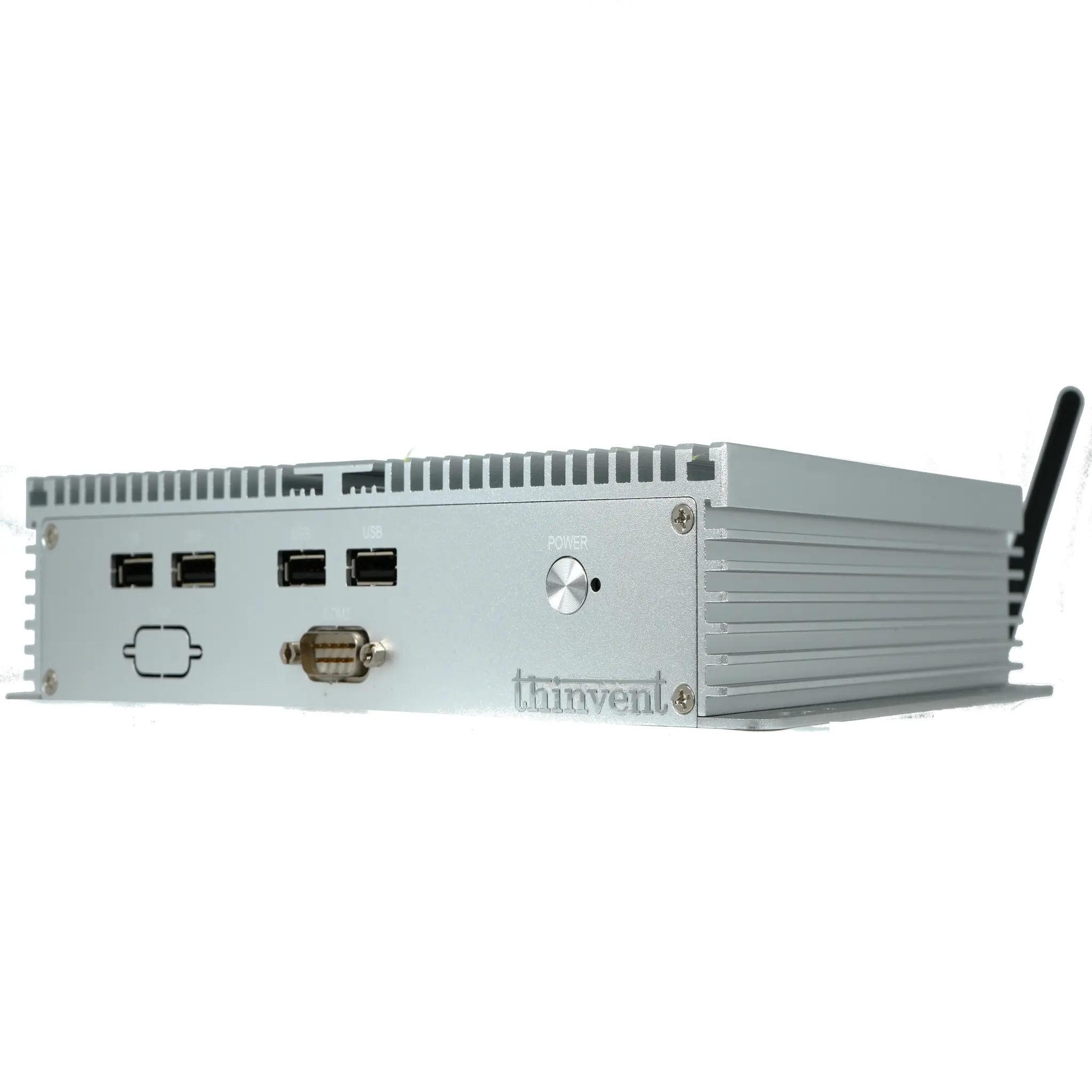
Modern data centers increasingly push compute to the edge — plant floors, telecom cabinets, retail back offices and remote shelters. These sites rarely have the raised floors, precision cooling or clean-room filtration of a core facility. That places the burden of environmental resilience on the computer itself: wide-temperature tolerance, dust-resistant enclosures, fanless heat dissipation, wide-range DC inputs and protection against vibration and electrical noise. Choosing hardware designed for these conditions reduces the need for expensive site upgrades and keeps monitoring or control workloads running through heat, dust and unstable power.
Thinvent's Products for Data Center and Edge Environments
Thinvent builds industrial computers, mini PCs, thin clients and all-in-one PCs suited to controlled facilities and uncontrolled edge sites alike. The Thinvent® Industrial PC IPC3, for example, pairs an Intel® Core™ i3-1215U processor (6 cores, up to 4.4 GHz, 10 MB cache) with 16GB DDR4 RAM and a 1TB SSD, and can be specified with Windows 11 Professional, Windows 11 IoT Value, DOS or Thinux™ Embedded Linux. Options such as quad DB9 serial ports support legacy monitoring, building-management and industrial equipment, while a 12V 7A adapter and no-WiFi configuration suit wired, security-conscious deployments. Fanless and compact designs across the Thinvent range help keep compute stable where cooling, dust and power quality cannot be guaranteed.