What Is a Xeon Desktop Processor?
Xeon is Intel's brand of server and workstation processors. The Xeon name was added to Intel processors from the P6 generation onward, and all models since 2001 have used the Xeon name on its own. Xeon processors generally have more cache and more cores than their desktop counterparts, and they add multiprocessing capability. Intel sells Xeon processors for data centers, networks, edge systems and workstations.
Key Xeon Specifications
Xeon processors are built for sustained, heavy workloads. Compared with standard desktop chips, they typically offer:
-
More cores and more cache per processor
-
Multiprocessing support for systems with several CPUs
-
Professional-grade reliability and security features
Current Intel Xeon lines include Xeon 6, Xeon 6+ and Xeon CPU Max, each aimed at a different workload.
Use Cases for Xeon Workstations
Xeon processors suit demanding professional tasks such as large-scale data processing, engineering simulation, content creation and multi-user server work. Workstation systems built on Xeon CPUs, such as the HP Z8 G5, offer up to 64 cores across two next-generation Intel Xeon processors.
Xeon Compared with Thinvent Mini PCs
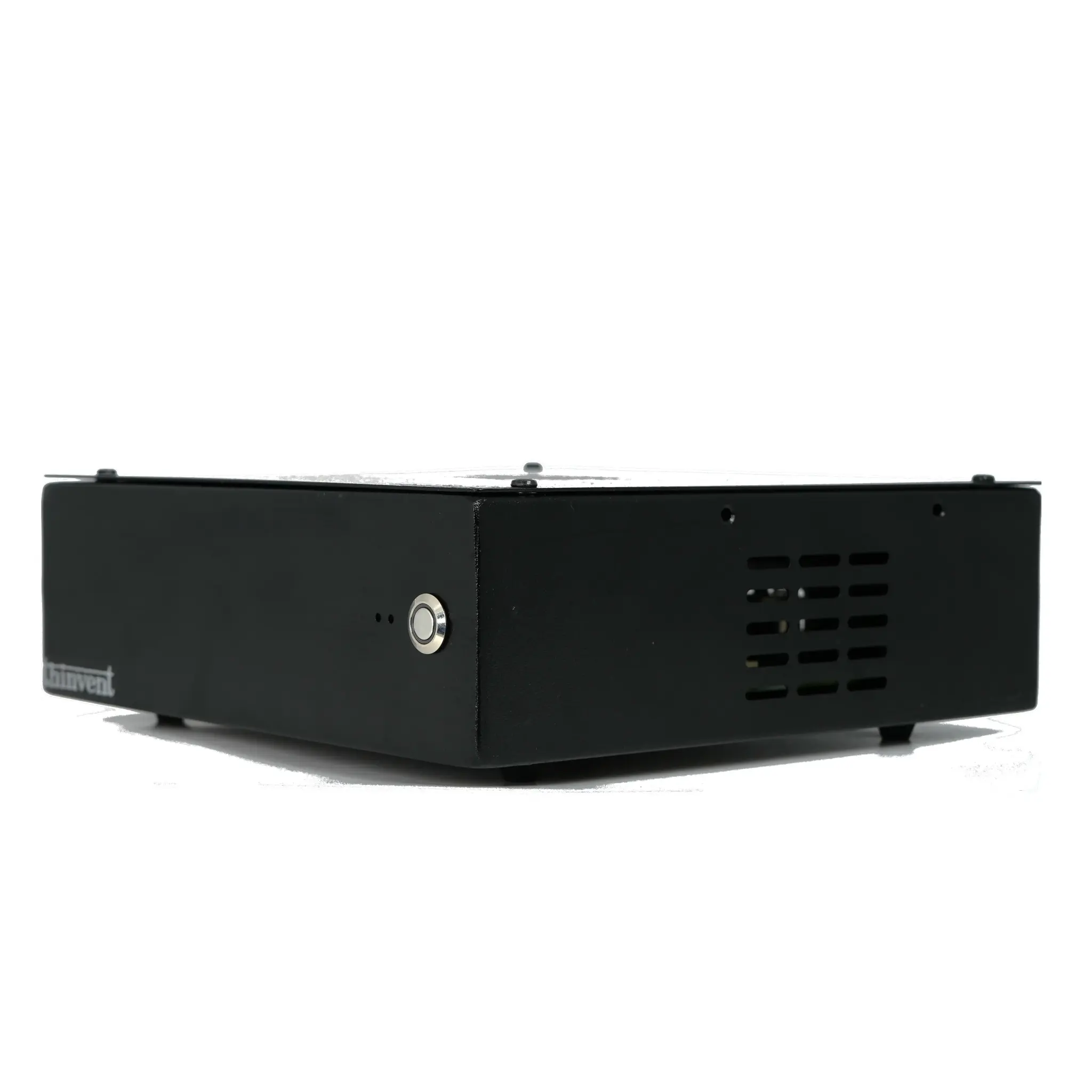
The Thinvent range does not include a Xeon processor. Thinvent Aero Mini PCs use the Intel Celeron N5095A processor, which has 4 cores, a maximum frequency of 2.9 GHz and 4 MB of cache. Each Aero model has 16 GB of DDR4 RAM and a 128 GB SSD. For tasks that need a compact, low-power system rather than a multi-socket workstation, the Aero Mini PC is the Thinvent option.
Thinvent Products with an Intel Processor
The Thinvent® Aero Mini PC uses the Intel® N5095A processor (4 cores, up to 2.9 GHz, 4 MB cache) with 16 GB DDR4 RAM and a 128 GB SSD. It is supplied with a 12V 10A adapter and no WiFi. Operating system options include Windows 11 IoT, Windows 11 Pro, DOS, Thinux™ Embedded Linux and Ubuntu Linux. Each version can be bought with or without a Thinvent® Keyboard and Mouse set.