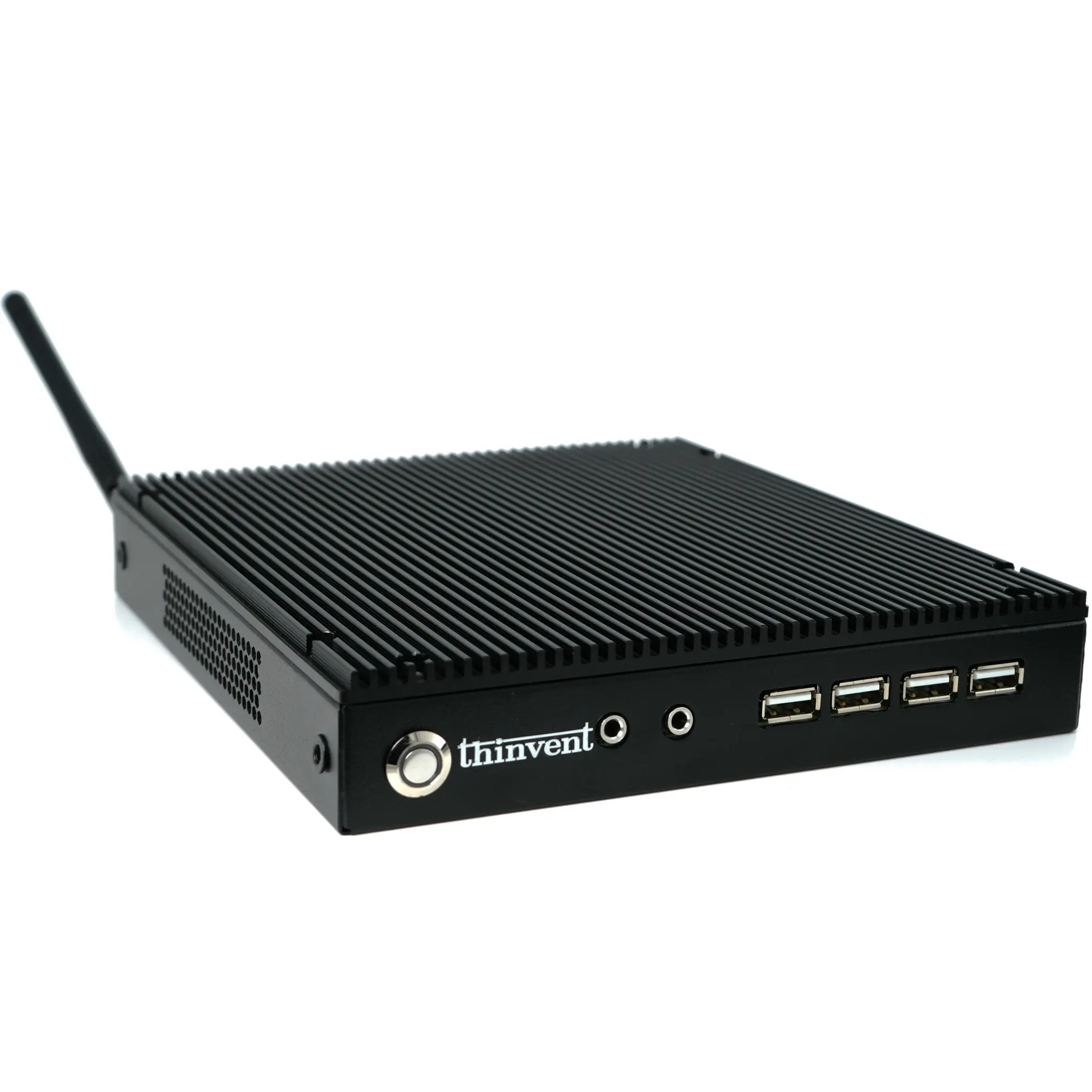
What is an Embedded Vision Bundle?
An Embedded Vision Bundle is a pre-configured computing solution designed for machine vision and image processing tasks in industrial environments. It typically combines a compact, robust industrial computer with the necessary software and often includes peripherals or specific I/O configurations optimized for connecting to cameras, sensors, and lighting systems. These bundles provide a reliable, out-of-the-box platform for deploying vision-based automation, inspection, and analysis.
Key Specifications for Vision Systems
For effective embedded vision, systems require specific hardware capabilities. A capable processor with integrated graphics (like Intel's UHD Graphics) is essential for handling image data and running vision algorithms. Sufficient RAM (typically 8GB or more) ensures smooth processing of high-resolution image streams, while fast SSD storage allows for quick boot times and local logging of image data. Critical I/O includes multiple USB ports (preferably USB 3.2 Gen 2 or USB-C) for high-speed camera connections, Gigabit Ethernet for network connectivity, and display outputs like HDMI for local monitoring. Many industrial applications also benefit from fanless, rugged designs for reliability in harsh conditions.
Applications and Use Cases
Embedded vision systems are pivotal across numerous industries. In manufacturing, they perform automated optical inspection (AOI) on assembly lines, checking for defects, measuring components, and verifying assembly. In logistics, they power barcode and QR code reading for sorting and inventory management. They are also used in intelligent transportation systems for license plate recognition, traffic monitoring, and in agricultural technology for sorting and quality assessment of produce. Their compact size allows for direct integration into machinery and kiosks.
Choosing the Right Vision System
Selecting a bundle depends on your specific vision task complexity. For basic reading and presence detection, an efficient quad-core processor like an Intel N-series may suffice. For more demanding tasks involving high-resolution cameras or complex AI-based image analysis, a more powerful processor (e.g., Intel Core i3/i5) with higher core counts is recommended. The operating system is also a key choice; while Windows is common for its software compatibility, Linux distributions like Ubuntu or embedded OS options offer stability and customization for dedicated vision applications.
| Feature | Basic Vision Tasks | Advanced/AI Vision Tasks |
|---|---|---|
| Processor | Intel N-series (e.g., N100) | Intel Core i3/i5 (e.g., 1215U, 1335U) |
| RAM | 8GB - 16GB | 16GB - 32GB+ |
| Storage | 128GB - 256GB SSD | 256GB - 512GB+ SSD |
| I/O Focus | Multiple USB 3.2, Gigabit Ethernet | USB 3.2 Gen 2, USB-C, Dual Ethernet |
| OS | Windows IoT, Linux | Windows Pro, Linux |
Thinvent Solutions for Embedded Vision
Thinvent offers a range of industrial computing products perfectly suited for embedded vision applications. Our fanless Mini PCs, like the Aero series, provide the compact, reliable, and powerful foundation needed for vision systems. They feature modern Intel processors, ample memory and storage options, and a rich set of I/O ports for connecting cameras and peripherals. Available with a choice of operating systems—including Windows 11 IoT/Pro, Ubuntu Linux, and our own Thinux™ Embedded Linux—these systems can be tailored to your specific vision software requirements. Thinvent's robust build quality ensures continuous operation in challenging industrial environments, making them an ideal core component for any vision bundle.