Understanding Freight Train Running Status Systems
Freight train running status tracking relies on a combination of real-time data acquisition, GPS positioning, and centralized monitoring software. Modern systems use track circuiting, GPS modules on locomotives, and wayside sensors to determine a train's exact location, speed, and estimated arrival time. This data is transmitted to control centers and made available to logistics operators and customers via web portals or mobile apps.
The hardware at the heart of these tracking systems must process data from multiple inputs, communicate over networks, and operate reliably in demanding railway environments. Key hardware requirements include sufficient processing power to handle real-time data, stable memory for caching location updates, and reliable storage for logs and configuration. Additionally, the system should support long-term operation without frequent maintenance, as railway assets are often deployed in remote or harsh locations.
Technical Specifications for Railway Tracking Computers
For a freight train tracking application, the computer must balance performance with power efficiency and durability. The Intel N100 processor, with its 4 cores and 6 MB cache, offers ample capability for running tracking software, parsing GPS data, and managing network communications. With a maximum frequency of 3.4 GHz, it can handle real-time processing tasks without excessive power draw.
A minimum of 16 GB DDR4 RAM is recommended to support multitasking and smooth operation of tracking databases or visualization tools. Storage of at least 128 GB SSD ensures fast boot times and reliable data logging. Fanless cooling is highly advantageous in railway environments to prevent dust ingress and reduce mechanical failure points. The system should also feature multiple USB ports for connecting GPS receivers or cellular modems, and at least one Ethernet port for network connectivity.
Use Cases and Applications
Freight train tracking systems are used by railway operators, logistics companies, and freight customers to monitor shipment progress. Typical applications include:
-
Real-time location monitoring: Displaying train position on a map interface for dispatchers and customers.
-
Estimated time of arrival (ETA) calculations: Using speed and route data to predict arrival times at yards or delivery points.
-
Asset utilization analysis: Tracking locomotive and wagon usage to optimize fleet management.
-
Exception alerts: Notifying operators of delays, route deviations, or unscheduled stops.
A rugged, reliable mini PC can serve as an onboard data concentrator or as a wayside processing unit in these systems, providing the computing backbone for continuous operation.
Thinvent Products for Freight Train Tracking
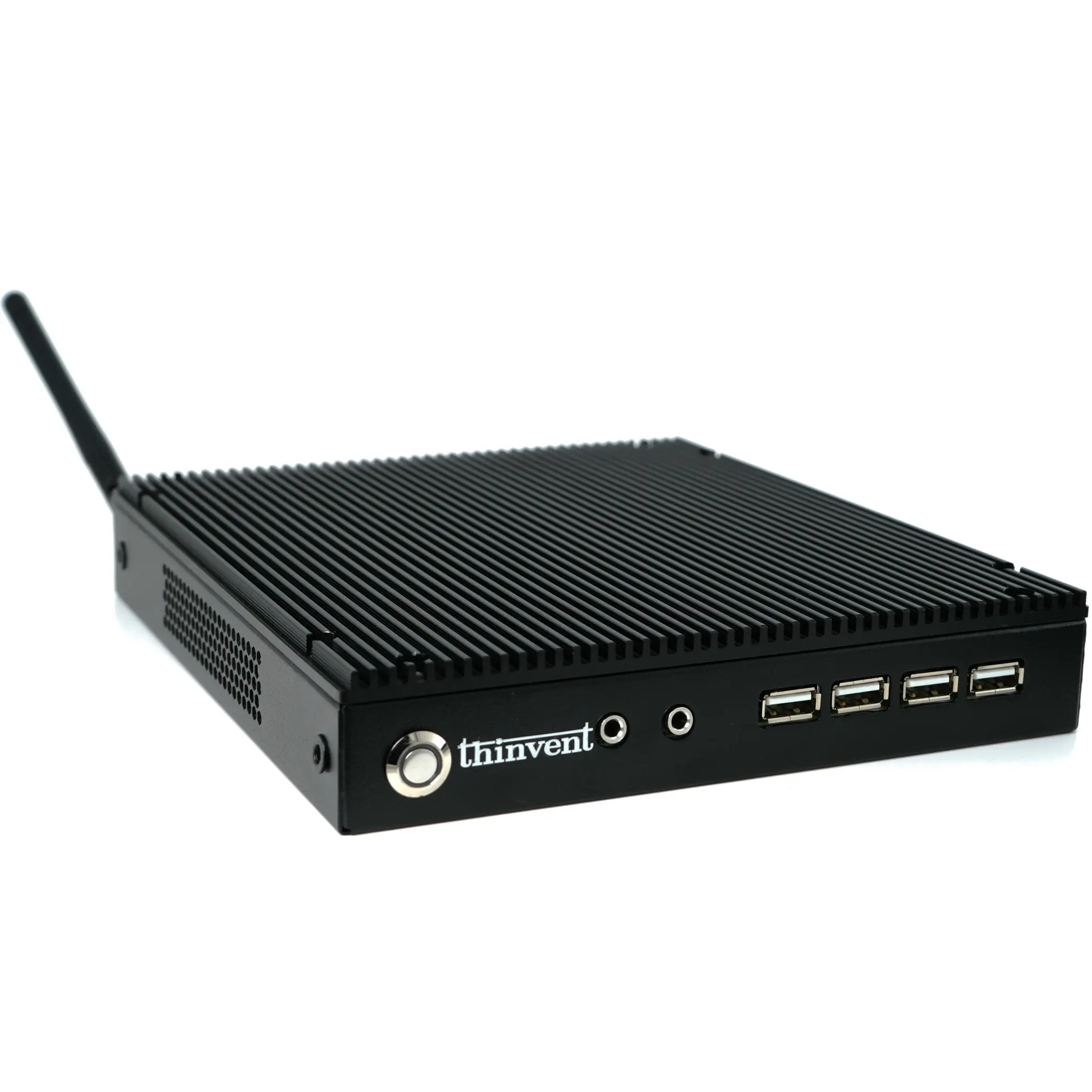
Thinvent offers the Aero Mini PC series, powered by the Intel N100 processor, which is well-suited for freight train running status tracking systems. These fanless, compact computers provide the processing power, memory, and storage needed to run tracking software reliably. With options for Windows 11 IoT, Windows 11 Pro, Ubuntu Linux, or DOS, they can be integrated into various railway IT environments. The 16 GB RAM and 128 GB SSD configuration ensures smooth operation, while the 12V DC input and low power consumption make them ideal for onboard or wayside deployment where space and power are limited.