What Are Hard and Soft Computers?
In industrial computing, the terms "hard" and "soft" refer to the fundamental nature of a computer's configuration and functionality. A Hard Computer typically describes a system with a fixed, dedicated hardware and software configuration designed for a specific, unchanging task. Its operation is "hard-wired" into its design. A Soft Computer, in contrast, is a more flexible, general-purpose system where the software and functionality can be easily changed or updated without altering the physical hardware. This flexibility is key for adapting to new processes, software updates, or varying operational demands.
Key Specifications and Technical Details
Industrial computers designed for both hard and soft computing paradigms share several critical technical attributes. They are built for reliability with fanless, solid-state designs to operate in harsh environments with wide temperature ranges, dust, and vibration. Key specifications include:
-
Rugged Construction: Metal chassis, wide voltage input (e.g., 9-36V DC), and operation from -20°C to 60°C.
-
Efficient Processors: Modern, low-power Intel processors (like the N-series) that deliver adequate performance without active cooling.
-
Reliable Storage: Industrial-grade SSDs with high endurance for constant read/write cycles.
-
Rich I/O Connectivity: Multiple Ethernet ports (often with PoE), USB, serial ports (COM), and display outputs for connecting to sensors, HMIs, and legacy machinery.
-
Flexible OS Support: Compatibility with various operating systems, from lightweight embedded Linux for "hard" dedicated tasks to full Windows 11 for "soft," programmable applications.
Applications and Use Cases
The choice between a hard or soft computing approach depends entirely on the application's requirements for stability versus flexibility.
| Use Case | Recommended Paradigm | Typical Requirements |
|---|---|---|
| Digital Signage / Kiosk | Primarily Hard | Fixed application, 24/7 operation, compact size, multiple display outputs. |
| Machine Vision Inspection | Soft | High I/O bandwidth for cameras, programmable logic, capable processor for real-time analysis. |
| IoT Gateway / Edge Controller | Soft | Multiple network interfaces (Ethernet, optional WiFi), ability to run containerized apps, data preprocessing. |
| Process Control Panel | Can be Both | Rugged design, touchscreen capability (if AIO), reliable operation with specific control software. |
| Thin Client / VDI | Primarily Hard | Low power, network-centric, runs a remote desktop client consistently. |
Thinvent's Hard and Soft Computing Solutions
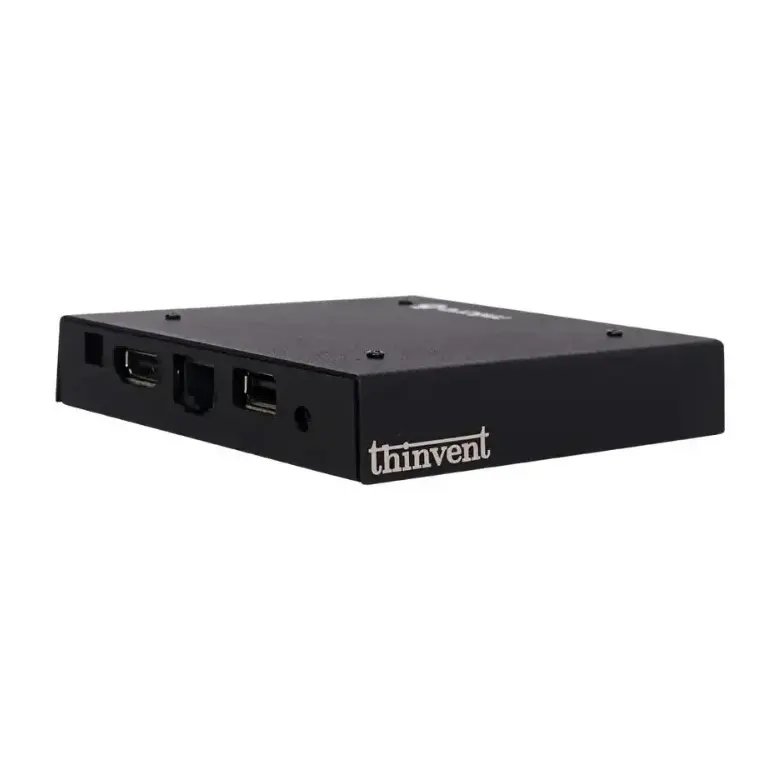
Thinvent specializes in manufacturing industrial computers that excel in both hard and soft computing roles. Our product range includes compact Mini PCs and Industrial PCs built with fanless cooling for silent and reliable 24/7 operation in demanding settings. For example, our Aero Mini PC series, powered by efficient Intel processors, is an ideal platform. It can be deployed as a "hard" computer running a single, dedicated application on a lightweight OS, or as a "soft" computer with a full-featured OS like Windows 11 Pro to host a variety of software. With configurable memory, storage, and operating systems, Thinvent systems provide the durability for industrial environments and the adaptability needed for evolving technological landscapes.