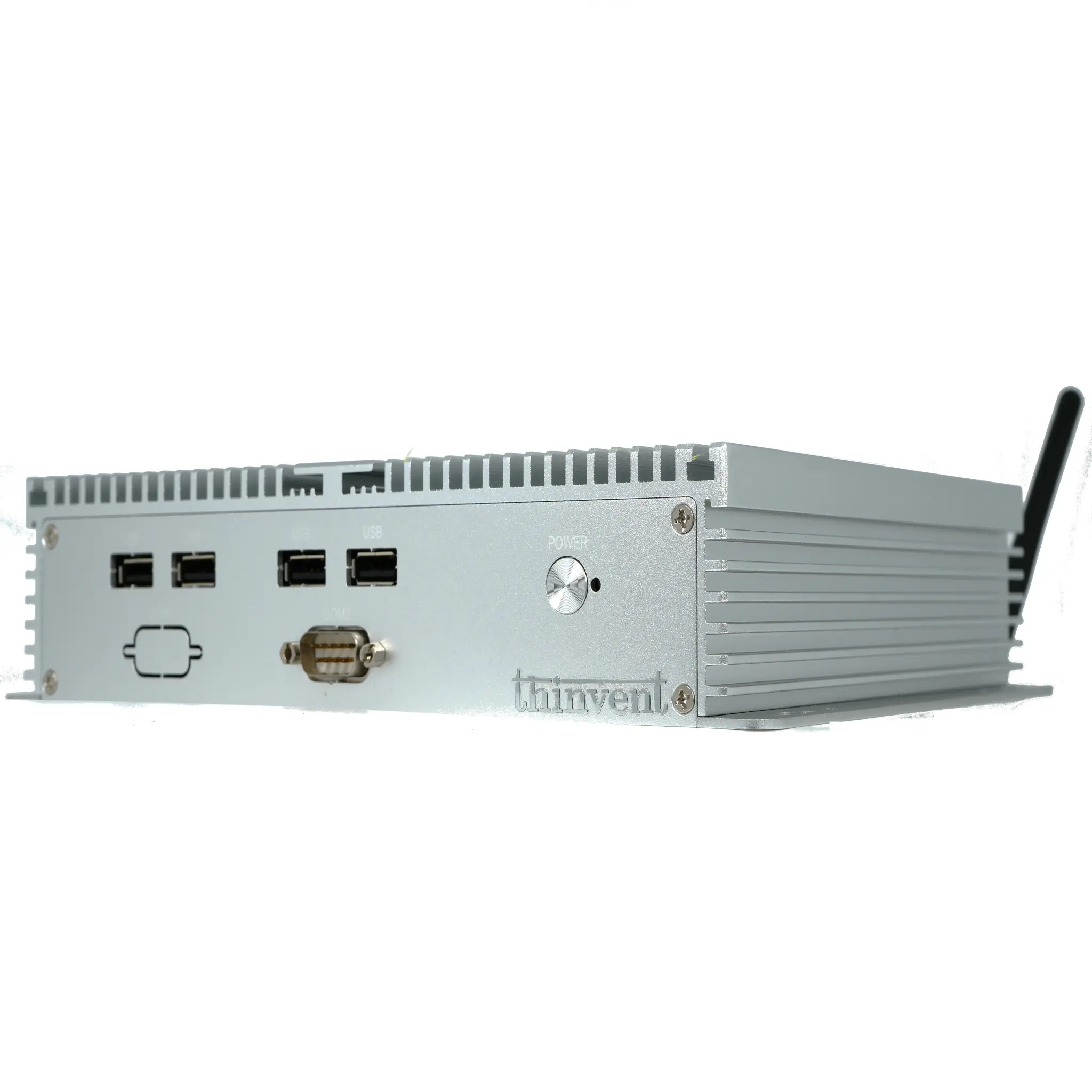
What is an Industrial Computer?
An industrial computer is a specialized computing system engineered for reliable operation in demanding, non-office environments. Unlike standard commercial PCs, these systems are built with durability, extended lifecycle support, and resilience to factors like extreme temperatures, dust, moisture, vibration, and electromagnetic interference as core design principles. They are the backbone of automation, process control, and data acquisition in sectors where system failure is not an option.
Key Specifications and Technical Details
Industrial PCs (IPCs) are defined by their robust construction and specialized components. Key specifications include:
-
Ruggedized Enclosures: Typically feature fanless, sealed metal casings for passive cooling, eliminating moving parts that can fail and preventing ingress of contaminants (rated IP65 or higher).
-
Wide Operating Temperature Range: Certified to operate reliably in temperatures from -20°C to 70°C or beyond.
-
Extended Component Lifecycle: Use industrial-grade components with longer availability and support cycles, crucial for long-term projects.
-
Shock and Vibration Resistance: Mounting points and internal designs mitigate physical stress.
-
Industrial I/O: Include legacy ports (COM/Serial, GPIO) alongside modern USB, Ethernet, and display outputs for connecting to machinery and sensors.
-
Power Supply: Support wide-range DC input (e.g., 9-36V DC) to handle power fluctuations common in industrial settings.
Use Cases and Applications
Industrial computers are deployed in mission-critical applications across numerous industries:
-
Factory Automation & Control: Running SCADA, HMI, and PLC systems on the factory floor.
-
Machine Vision & Inspection: Powering cameras and AI algorithms for quality control.
-
Digital Signage & Kiosks: Driving displays in public, outdoor, or high-traffic retail environments.
-
Transportation & Logistics: In-vehicle computing for fleet management, railway systems, and warehouse automation.
-
Energy & Utilities: Monitoring and controlling equipment in power plants, oil & gas, and renewable energy sites.
Comparison: Industrial vs. Commercial Computers
| Feature | Industrial Computer | Commercial Desktop PC |
|---|---|---|
| Operating Temperature | -20°C to 70°C (typical) | 5°C to 35°C (typical) |
| Cooling Method | Fanless, passive cooling | Active fans |
| Durability | High (resists shock, vibration, dust/water) | Low (for stable office use) |
| Component Lifecycle | 5-10+ years of guaranteed supply | 1-2 years (rapidly changing) |
| I/O Ports | Industrial (COM, GPIO) + Standard | Standard consumer ports only |
| Power Input | Wide-range DC (e.g., 9-36V) | Standard AC only |
| Primary Use Case | Harsh, mission-critical environments | Office, home, general computing |
Thinvent Industrial Computing Solutions
Thinvent offers a comprehensive range of industrial-grade computing solutions designed for reliability and performance in challenging conditions. Our product lineup includes compact Fanless Mini PCs built with robust metal enclosures for space-constrained installations, versatile Industrial Panel PCs that combine computing power and a touchscreen display in a single sealed unit, and modular Rackmount Industrial Computers for control cabinet integration. All Thinvent industrial systems feature wide-temperature operation, shock and vibration resistance, and are powered by efficient Intel processors, providing a dependable computing foundation for automation, IoT gateways, and edge computing applications worldwide.