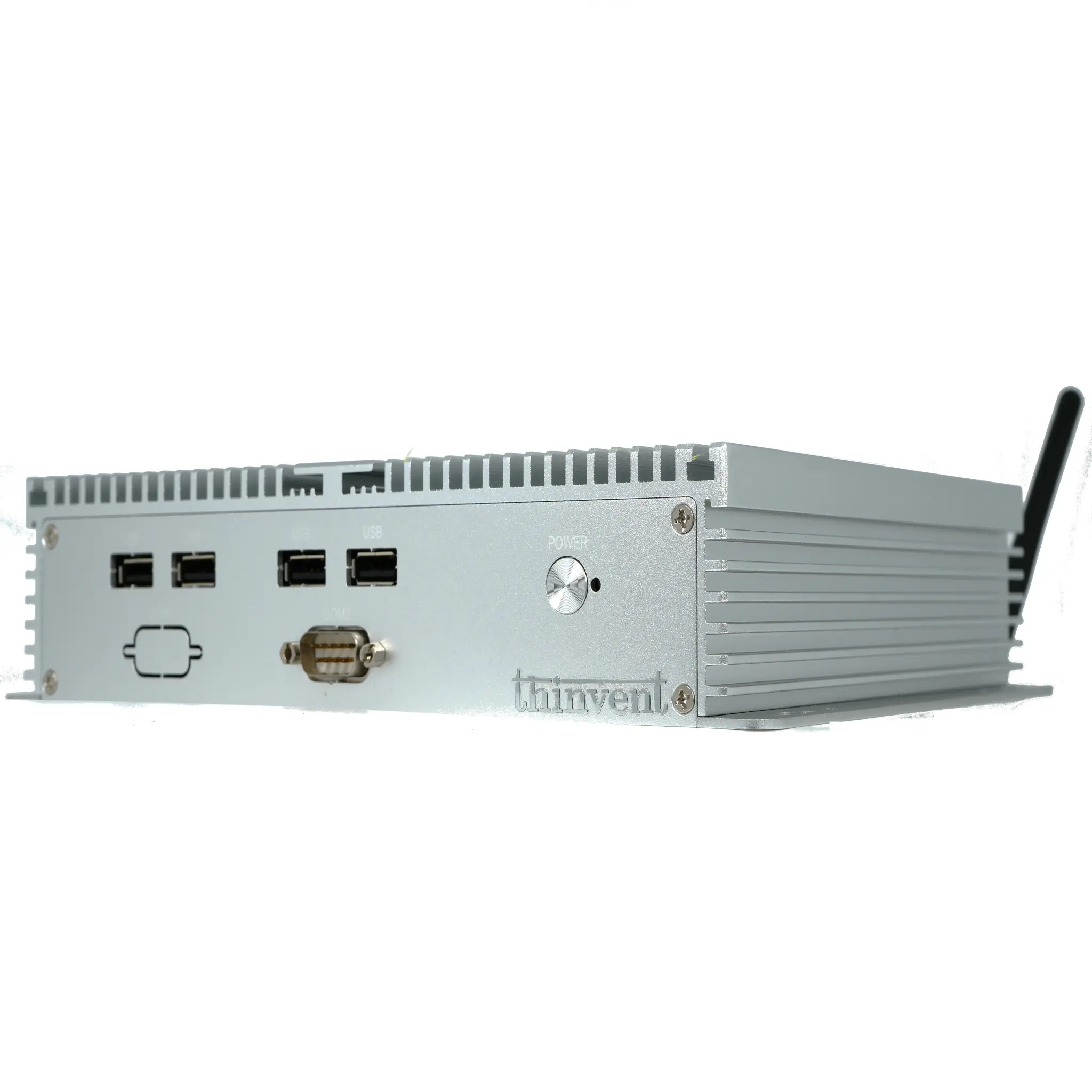
What Are Industrial Computers?
Industrial computers are specialized computing systems engineered for reliability and durability in demanding, non-office environments. Unlike standard commercial PCs, they are built to withstand extreme temperatures, dust, moisture, vibration, and continuous 24/7 operation. They are the backbone of automation, providing the processing power and connectivity needed to control machinery, collect data, and manage complex industrial processes.
Key Specifications and Design Features
The defining characteristics of industrial computers include robust construction, wide operating temperature ranges, and fanless cooling systems. They typically feature industrial-grade components with extended lifecycles, ensuring long-term availability and stability. Key technical details often involve:
-
Rugged Enclosures: Metal casings with IP ratings for dust and water resistance.
-
Wide Voltage Input: Support for 9-36V DC or other industrial power standards to handle voltage fluctuations.
-
Extended Temperature Range: Operation from -20°C to 60°C or beyond.
-
Shock and Vibration Resistance: Mounting options and component securing for mobile or high-vibration settings.
-
Rich I/O Connectivity: Multiple serial ports (RS-232/485), LAN ports, GPIO, and expansion slots for industrial peripherals.
-
Fanless Design: Passive cooling with no moving parts to prevent dust ingress and eliminate a common point of failure.
Common Applications and Use Cases
These computers are deployed across numerous sectors where standard IT equipment would fail. Primary applications include:
-
Factory Automation: PLCs, SCADA systems, machine vision, and robotic control.
-
Digital Signage & Kiosks: Public information displays, interactive terminals, and retail point-of-sale.
-
Transportation: In-vehicle computing for fleet management, railway systems, and maritime navigation.
-
Energy & Utilities: Monitoring and control in power plants, oil & gas refineries, and renewable energy installations.
-
Edge Computing: Processing IoT sensor data locally in smart cities, agriculture, and logistics.
Comparison: Industrial vs. Commercial Computers
| Feature | Industrial Computer | Commercial Desktop PC |
|---|---|---|
| Operating Temperature | -20°C to 60°C+ | 5°C to 35°C |
| Durability | High (Shock/Vibration Resistant) | Standard |
| Cooling | Fanless (Passive) | Active (Fans) |
| Component Lifecycle | 5-10+ years (Long-term Supply) | 1-3 years (Rapid Refresh) |
| Power Input | Wide Range (e.g., 9-36V DC) | Fixed (e.g., 110-240V AC) |
| Typical I/O | Serial, GPIO, Multiple LAN | USB, HDMI, Standard LAN |
| Primary Use Case | Harsh Environments, 24/7 Operation | Office, Home, Light Duty |
Thinvent Industrial Computing Solutions
Thinvent offers a comprehensive range of industrial-grade computing hardware designed for mission-critical applications. Our product portfolio includes compact Fanless Mini PCs built with efficient Intel processors for space-constrained installations, versatile Industrial Panel PCs for human-machine interface (HMI) tasks, and powerful Rackmount Systems for data acquisition and control cabinets. Each system is engineered with the core principles of industrial computing: reliability, extended operational life, and robust connectivity to interface seamlessly with industrial machinery and networks, ensuring your operations run smoothly around the clock.