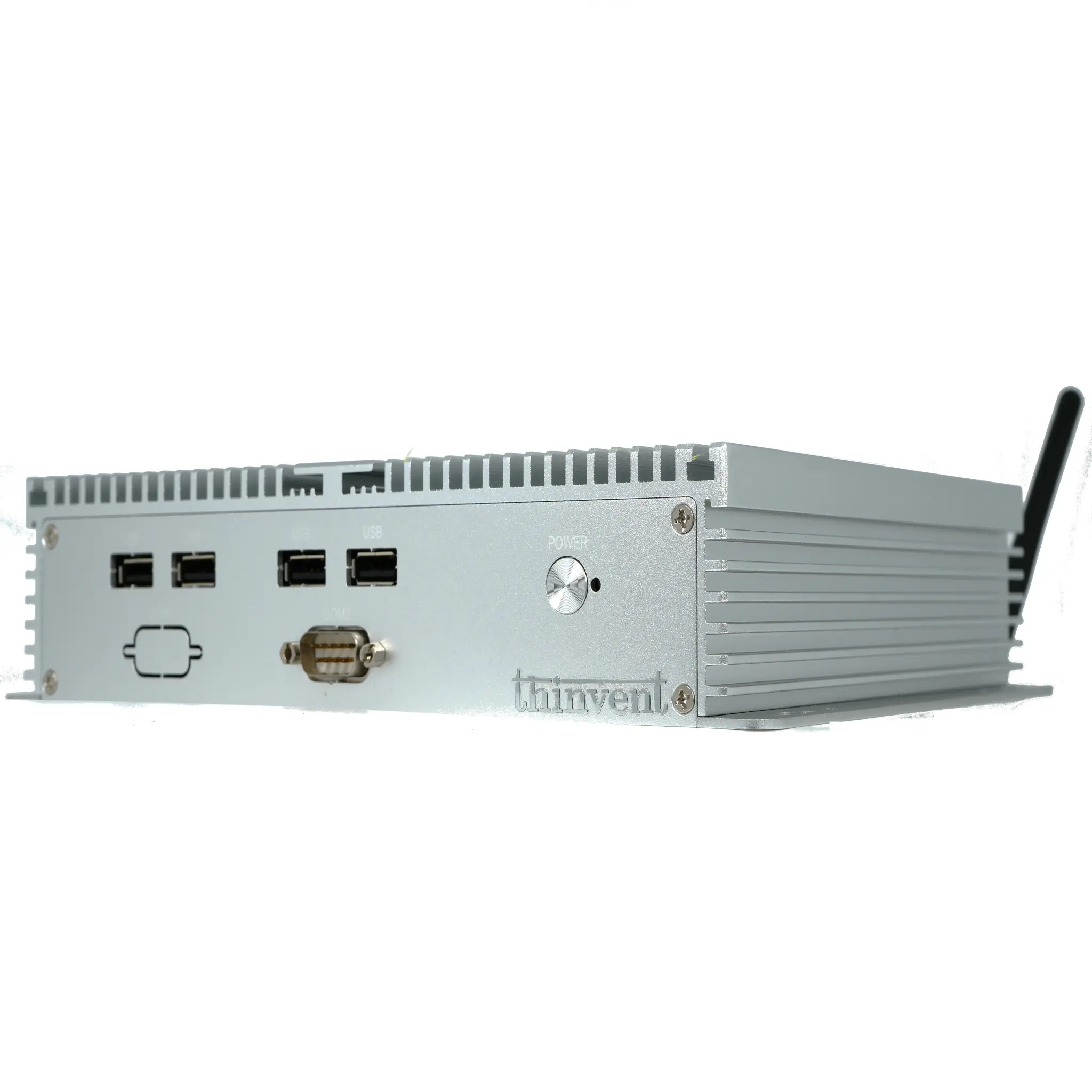
What Are Fanless Industrial PCs?
A fanless industrial PC is a rugged computing system designed to operate without internal cooling fans. Instead, it uses passive cooling techniques, such as heatsinks and thermally conductive chassis designs, to dissipate heat. This fundamental design choice eliminates moving parts, which is the key to their exceptional reliability and suitability for demanding industrial applications.
Key Specifications and Technical Advantages
The core technical specifications of fanless industrial computers focus on low-power, efficient processors and robust construction. They typically feature Intel or ARM-based processors (like the Intel N-series or Celeron series) that generate minimal heat. Common configurations include 4 to 12 CPU cores, 4GB to 64GB of RAM, and solid-state storage from 128GB to 1TB. The absence of a fan provides several critical advantages: zero dust ingress, silent operation, lower power consumption, and dramatically reduced mechanical failure rates. These systems are built with industrial-grade components, wide operating temperature ranges (often from -20°C to 60°C+), and support for various DC power inputs.
Primary Use Cases and Applications
Fanless industrial PCs are indispensable in environments where reliability, cleanliness, and durability are paramount. Their primary applications include:
-
Factory Automation & Control: Operating on the shop floor to control PLCs, HMIs, and robotic systems where dust and debris are prevalent.
-
Digital Signage & Kiosks: Providing silent, maintenance-free operation in retail, transportation hubs, and public spaces.
-
Medical and Laboratory Equipment: Where silent operation and prevention of airborne particle circulation are critical.
-
Outdoor and In-Vehicle Computing: Used in traffic systems, agricultural machinery, and fleet management, exposed to wide temperature swings and vibrations.
-
Clean Rooms and Food Processing: The sealed, fanless design prevents contamination in sterile or sensitive manufacturing environments.
Comparison: Fanless vs. Traditional Industrial PCs
| Feature | Fanless Industrial PC | Traditional (Fanned) Industrial PC |
|---|---|---|
| Cooling Method | Passive (Heatsink/Chassis) | Active (Fans) |
| Dust & Debris Resistance | Excellent (Fully Sealed) | Requires Frequent Filter Maintenance |
| Acoustic Noise | Silent | Audible Fan Noise |
| Mean Time Between Failures (MTBF) | Very High (No Moving Parts) | Lower (Fan is a Common Failure Point) |
| Typical Power Consumption | Lower | Higher |
| Ideal For | Harsh, Dirty, Silent, or Vibration-Prone Settings | High-Performance Computing with Intensive Cooling Needs |
Thinvent Fanless Industrial Computing Solutions
Thinvent specializes in high-reliability, fanless industrial computers engineered for 24/7 operation. Our product range includes compact Mini PCs and versatile Industrial Panel PCs, all built around efficient, low-heat Intel processors like the N100. These systems come pre-configured with robust memory and storage options, support for multiple operating systems (including Windows 11 IoT, Ubuntu Linux, and our own Thinux™ Embedded Linux), and feature a wide array of I/O ports for industrial connectivity. Designed with a solid metal chassis that acts as a giant heatsink, Thinvent fanless PCs deliver uncompromising performance where it matters most, ensuring your operations run smoothly without downtime.