What Are Intel Core i7 Desktop Computers?
Intel Core i7 desktop computers are high-performance systems designed for demanding computing tasks. These machines feature Intel's Core i7 processors, which are part of the company's performance-focused lineup, offering a significant boost in multi-core processing, clock speeds, and cache size compared to entry-level or mid-range CPUs. They are ideal for users who require robust computing power for professional applications, multitasking, and intensive workloads.
Key Specifications and Technical Details
Intel Core i7 processors are characterized by their high core and thread counts, which enable efficient parallel processing. Modern i7 CPUs, such as those from the 12th to 14th generations, feature a hybrid architecture with Performance-cores (P-cores) and Efficient-cores (E-cores) for optimized power and performance. Key specifications typically include:
-
High Core Count: Ranging from 10 to 16 cores (P-cores + E-cores) in recent generations.
-
Hyper-Threading: Most models support this technology, allowing each core to handle two threads simultaneously.
-
High Clock Speeds: Base frequencies often start above 2.0 GHz, with turbo boost speeds reaching up to 5.0+ GHz.
-
Large Smart Cache: Sizes from 25 MB to 30 MB, improving data access speeds for the CPU.
-
Integrated Graphics: Most include Intel UHD or Iris Xe graphics, suitable for display output and light graphical tasks.
-
Memory Support: Support for high-speed DDR4 or DDR5 RAM, often up to 128 GB.
Use Cases and Applications
These powerful desktops are not general-purpose machines but are built for specific, resource-intensive scenarios:
-
Professional Workstations: For engineering (CAD/CAM), architecture, 3D modeling, and scientific simulations.
-
Content Creation: Video editing, animation, graphic design, and music production where rendering speed is critical.
-
Software Development: Compiling large codebases, running multiple virtual machines, and server-side development.
-
Data Analysis & Financial Modeling: Handling large datasets and complex computational models.
-
High-End Gaming & Streaming: Providing a smooth experience for gaming at high settings while streaming content.
Processor Series Comparison
For clarity, here is a simplified comparison of common Intel desktop processor series:
| Series | Typical Use Case | Core/Thread Count (Example) | Key Differentiator |
|---|---|---|---|
| Intel Core i3 | Everyday Computing, Office Tasks | 4-6 Cores / 8 Threads | Entry-level performance, value-focused. |
| Intel Core i5 | Mainstream Performance, Gaming | 6-14 Cores / 12-20 Threads | Balanced performance for most users and gamers. |
| Intel Core i7 | High-Performance & Professional Work | 10-16 Cores / 16-24 Threads | High clock speeds, large cache for demanding applications. |
| Intel Core i9 | Enthusiast & Extreme Workloads | 16-24+ Cores / 24-32+ Threads | Maximum core count and performance for peak workloads. |
Thinvent's Industrial-Grade Computing Solutions
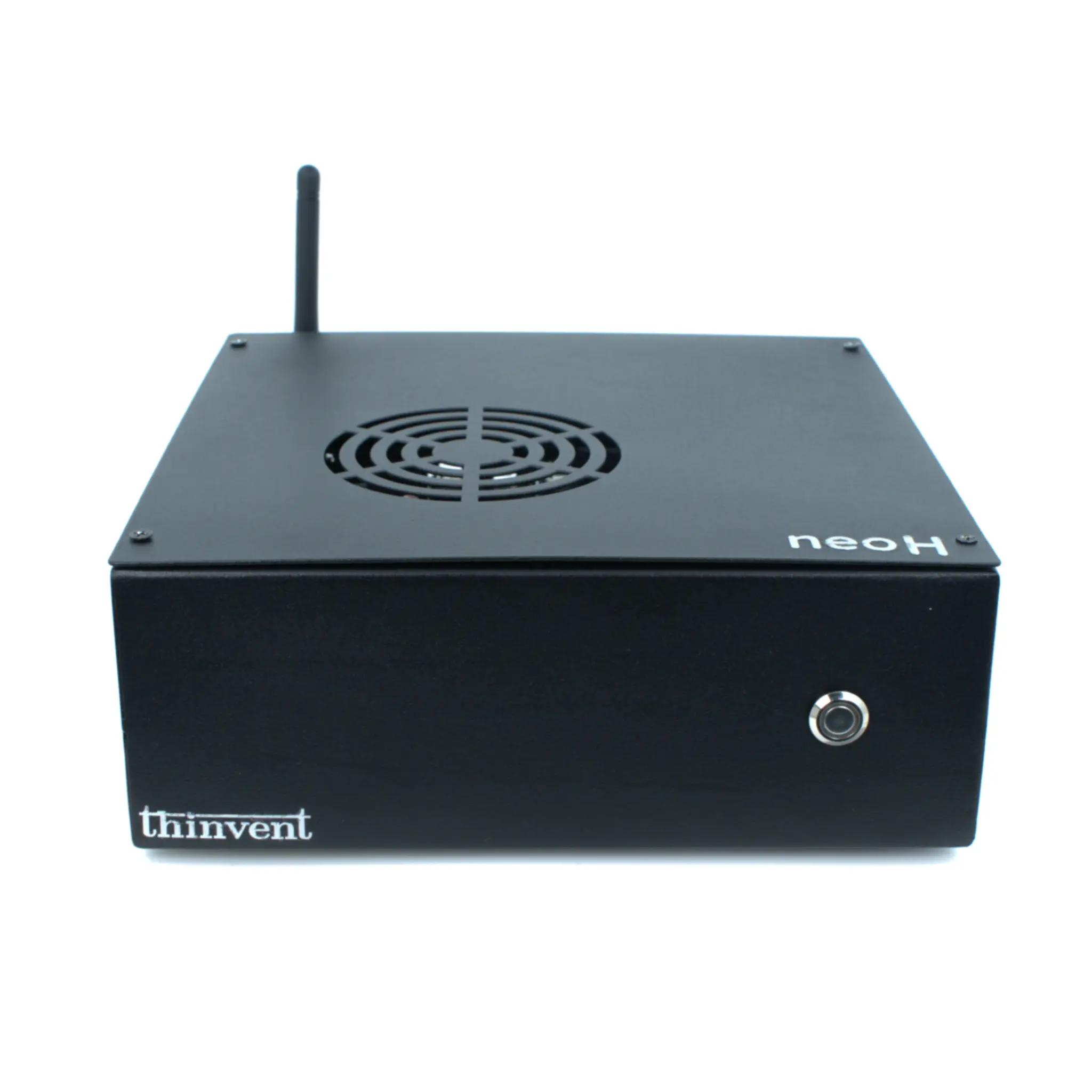
While Thinvent specializes in robust, fanless industrial computers, our product philosophy aligns with the reliability and performance sought in high-end computing. Our systems are engineered for 24/7 operation in challenging environments, featuring wide-temperature components, shock/vibration resistance, and rich I/O connectivity. For applications requiring the raw processing power of an Intel Core i7 in a rugged, dependable form factor—such as industrial automation, edge AI inference, digital signage, or compact server deployments—Thinvent offers customizable solutions. We focus on delivering stable, long-lifecycle platforms where durability is as critical as computational throughput.