What is an Intel Xeon Processor?
Intel Xeon processors are a family of high-performance, server-grade CPUs designed for demanding workloads that require exceptional reliability, scalability, and data integrity. Unlike consumer-grade processors, Xeon chips are engineered for 24/7 operation in mission-critical environments, featuring advanced technologies like Error-Correcting Code (ECC) memory support, larger cache sizes, and support for higher core and thread counts. These processors are the backbone of data centers, enterprise servers, high-end workstations, and rugged industrial computing systems.
Key Specifications and Technical Advantages
Xeon processors are distinguished by several key features that make them suitable for professional and industrial applications. They support multi-socket configurations, allowing for massive parallel processing capabilities essential for virtualization, complex simulations, and large databases. ECC memory support is a critical feature that detects and corrects data corruption, preventing system crashes and data loss—a non-negotiable requirement for financial, medical, and scientific computing. Furthermore, Xeon CPUs offer enhanced security features like Intel® Software Guard Extensions (SGX) and support for Intel® Total Memory Encryption (TME), providing hardware-based protection for sensitive data and applications.
Primary Use Cases and Applications
The robust architecture of Intel Xeon processors makes them ideal for a wide range of intensive computing tasks. Common applications include:
-
Data Centers & Cloud Servers: For hosting virtual machines, databases, and web services that demand high uptime and throughput.
-
High-Performance Computing (HPC): Powering scientific research, financial modeling, and engineering simulations that require immense computational power.
-
Industrial Automation & Control: Running complex SCADA systems, PLCs, and machine vision applications in manufacturing and logistics, where reliability is paramount.
-
Digital Signage & Media Servers: Driving multiple high-resolution displays in public spaces, retail, and broadcast environments.
-
Network Appliances: Serving as the engine for firewalls, routers, and storage area networks (SANs) that manage high volumes of network traffic.
Comparison: Xeon vs. Core i-Series for Industrial Use
While both are powerful, key differences dictate their optimal use in industrial settings.
| Feature | Intel Xeon Processors | Intel Core i-Series (e.g., i5, i7) |
|---|---|---|
| Primary Design | Server & Workstation; Mission-Critical | Consumer & Performance Desktop |
| ECC Memory Support | Yes – Essential for data integrity | No |
| Multi-Socket Support | Yes – For extreme scalability | No |
| Reliability & Validation | Extended lifecycle, validated for 24/7 operation | Standard consumer lifecycle |
| Typical Use Case | Data servers, industrial controllers, HPC | Office PCs, compact workstations, kiosks |
| Cost & Power | Higher cost, often higher TDP | Lower cost, generally more power-efficient |
Thinvent Industrial Computers with Intel Xeon
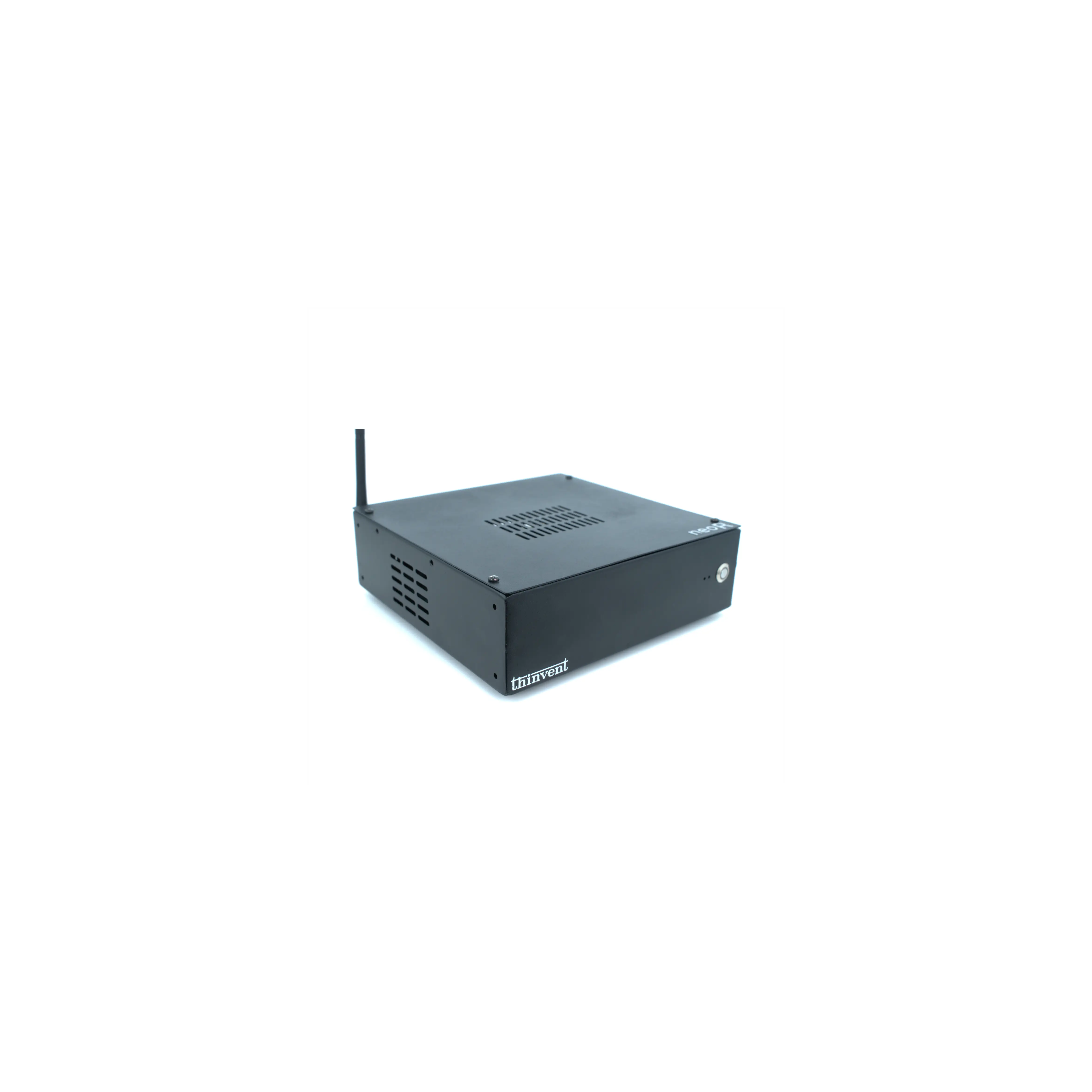
While the sample products on this page feature efficient Intel N-series processors for compact, fanless applications, Thinvent's broader industrial computing portfolio includes robust solutions powered by Intel Xeon technology. These systems are built for the most demanding environments, offering unparalleled performance, reliability, and scalability. Thinvent's Xeon-based platforms are ideal for edge computing servers, industrial AI inference, and high-density virtualization, all housed in rugged, fanless or actively cooled chassis designed for wide-temperature operation and long-term availability. Explore Thinvent's range to find the perfect balance of raw processing power and industrial durability for your critical applications.