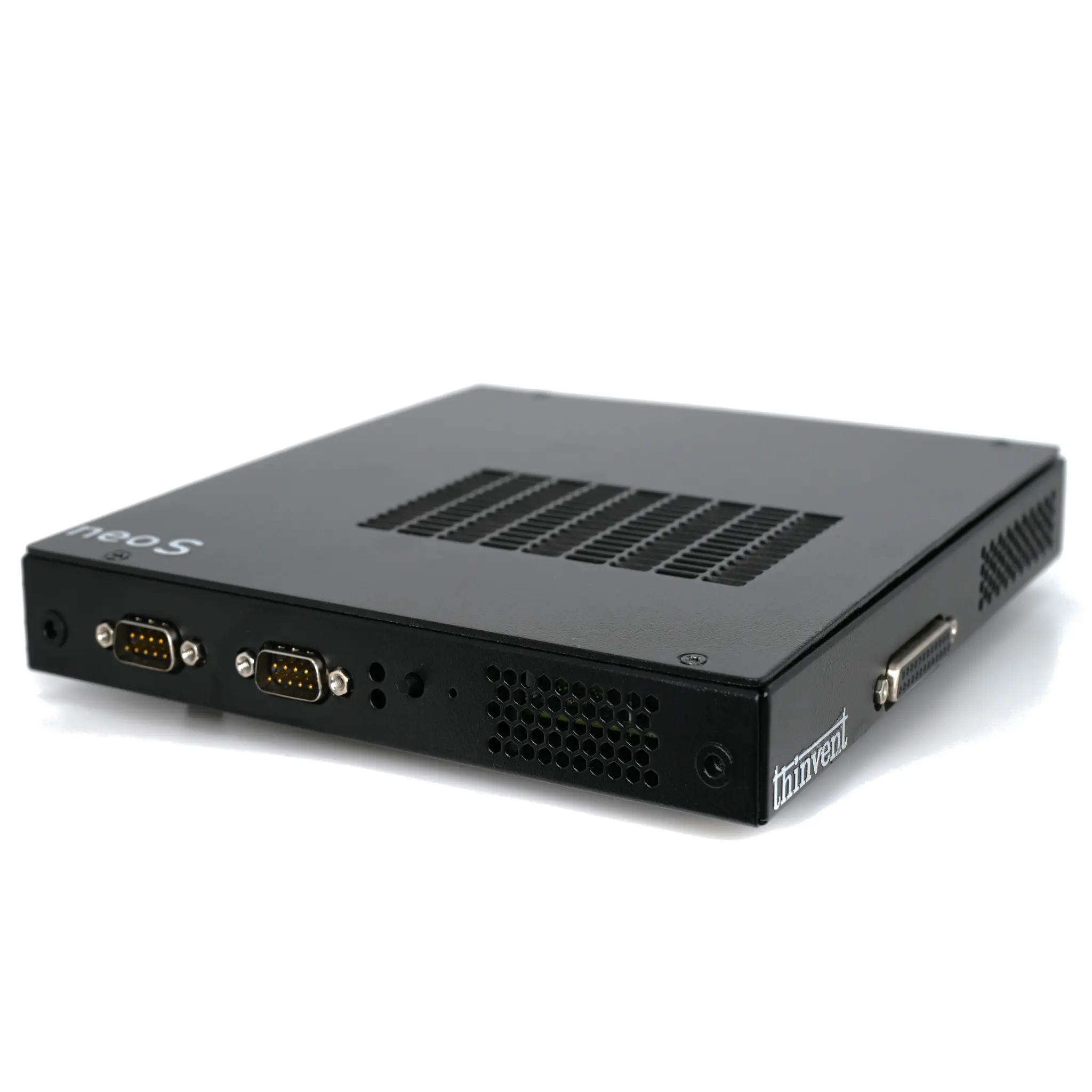
What is an Industrial PC?
An Industrial PC (IPC) is a specialized computing system designed for reliable operation in demanding environments. Unlike standard desktop computers, industrial PCs are built with ruggedized components, fanless cooling for silent and dust-resistant operation, and extended temperature ranges to withstand harsh conditions like factory floors, outdoor kiosks, or transportation systems. They prioritize long-term availability, stability, and connectivity for industrial automation, digital signage, and embedded applications.
Key Specifications and Technical Details
Industrial PCs are defined by their robust construction and specialized features. Core specifications include:
-
Rugged Design: Often fanless with metal chassis for passive cooling, eliminating moving parts that can fail and preventing dust ingress.
-
Wide Operating Temperature: Capable of functioning in extreme temperatures, typically from -20°C to 60°C or wider.
-
Extended Component Lifespan: Utilizes industrial-grade components with longer lifecycles than consumer parts, ensuring system availability for years.
-
Rich I/O Connectivity: Features multiple Ethernet ports (including Gigabit), serial ports (COM), USB ports, and expansion slots (PCIe, mPCIe) for connecting to machinery, sensors, and legacy industrial equipment.
-
Power Input: Supports a wide range of DC input voltages (e.g., 9-36V DC) to handle power fluctuations common in industrial settings.
Use Cases and Applications
The durability and reliability of industrial PCs make them ideal for critical applications where standard computers would fail.
-
Factory Automation & Control: Acting as PLCs, HMIs (Human-Machine Interfaces), or gateways on the production line.
-
Digital Signage & Kiosks: Powering displays in retail, hospitality, and public transportation, often in 24/7 operation.
-
Machine Vision & Inspection: Processing image data from cameras for quality control in manufacturing.
-
Edge Computing & IoT Gateways: Collecting, processing, and transmitting data from sensors at the network edge.
-
Transportation & Logistics: Used in fleet management, railway systems, and warehouse automation.
Comparison: Industrial PC vs. Standard Desktop PC
| Feature | Industrial PC | Standard Desktop PC |
|---|---|---|
| Operating Temperature | Wide range (e.g., -20°C to 60°C) | Narrow range (typically 5°C to 35°C) |
| Cooling | Often fanless (passive) | Active cooling with fans |
| Durability | Vibration & shock resistant | Not designed for physical stress |
| Component Lifecycle | Long-term (5-10+ years) | Short-term (consumer cycle) |
| I/O & Expansion | Rich industrial I/O (COM, GPIO) | Standard consumer ports |
| Primary Use Case | Harsh environments, 24/7 operation | Office, home, general computing |
Thinvent Industrial Computing Solutions
Thinvent offers a comprehensive range of industrial-grade computing solutions designed for reliability and performance in challenging environments. Our product lines include compact Mini PCs and Industrial PCs built with fanless designs for silent, maintenance-free operation. They feature robust metal enclosures, wide voltage input, and support for multiple operating systems including Windows, Linux, and embedded platforms. Engineered for long-term deployment in automation, digital signage, and edge computing applications, Thinvent systems provide the stability and connectivity required for industrial and embedded projects worldwide.