What a "Compact Ubuntu Linux Nano PC" Actually Is
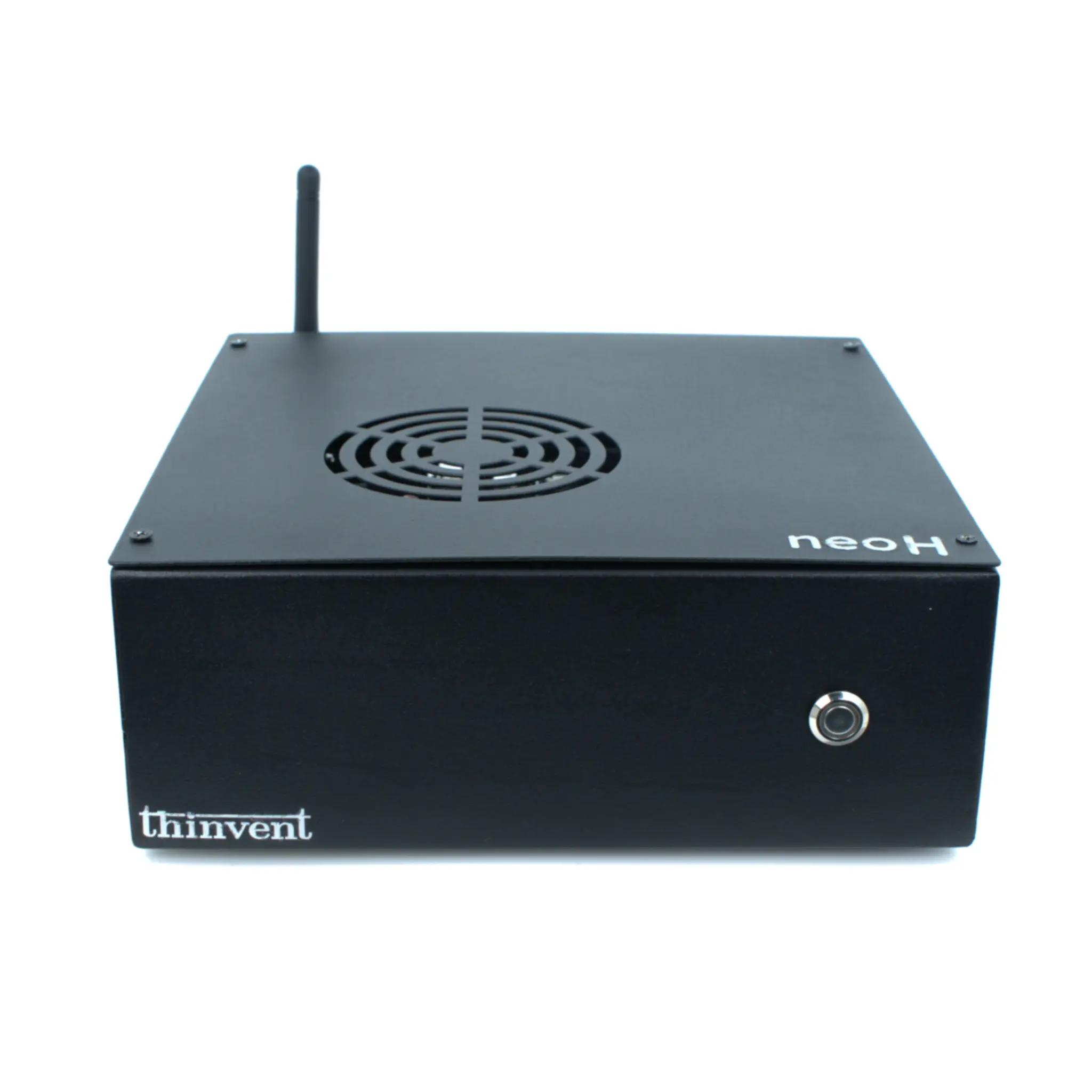
The phrase covers a few overlapping product families, and it helps to separate them before you buy. A true single board computer (SBC) is a bare board with the processor, memory and I/O soldered on, no enclosure, no storage bay and often an ARM or low-power x86 chip. A compact Linux mini PC — sometimes marketed as a "nano PC" or "micro PC" — takes the same low-power philosophy but packages it in a metal chassis with a DC power jack, a 2.5" or M.2 storage bay, standard display outputs and a pre-installed operating system such as Ubuntu Linux 24.04 LTS. For most industrial, kiosk and edge deployments, the enclosed mini PC is the more practical choice: it mounts, it survives dust, and it does not need a separate carrier board, heatsink stack and custom cabling before it can be deployed.
Why Ubuntu Changes the Hardware Requirements
Ubuntu LTS releases ship with long-term kernel and security maintenance, which makes them the default choice for machines that must run unattended for years. In practice that means hardware selection is driven less by raw clock speed and more by driver maturity. Intel platforms are the safe path here: the integrated graphics, Gigabit Ethernet controllers, NVMe and SATA storage and USB controllers on Intel-based systems are supported in the mainline kernel, so a fresh Ubuntu install typically provides display, networking and storage with no proprietary driver hunting. Fanless Intel mini PCs also suit Ubuntu workloads well because the OS is light — a headless or light-desktop Ubuntu instance idles at a fraction of the CPU and RAM that a full Windows desktop session consumes, so a modest 4-core chip can comfortably drive digital signage, remote access sessions or an edge gateway.
Choosing an Intel Processor for a Compact Linux Box
Intel's low-power lines map neatly onto different Ubuntu workloads. The table below is a practical guide rather than a strict rule.
| Intel Processor | Cores / Threads | Typical Ubuntu Workload |
|---|---|---|
| Celeron J4125 | 4 / 4 | Thin client, serial gateway, simple kiosk |
| Celeron N5095A | 4 / 4, up to 2.9 GHz | Thin client, POS |