What is a Mac Mini CPU Equivalent?
A "Mac Mini CPU" refers to the central processing unit found in Apple's compact desktop computer. For users seeking a Windows or Linux-based alternative, the equivalent is a compact, energy-efficient Intel processor housed within a similarly small form factor industrial PC. These processors, such as Intel's N-Series, are designed for fanless operation, low power consumption, and reliable performance in space-constrained environments, making them ideal direct competitors to the Apple Silicon (M-series) or Intel-based chips in the Mac Mini.
Key Specifications and Technical Details
Industrial mini PCs designed as alternatives typically feature modern, low-power Intel processors. Key specifications to consider include:
-
Processor Series: Intel's N-Series (e.g., N100, N95) and Celeron series offer excellent performance-per-watt for everyday computing, digital signage, and light workloads.
-
Core Count: Modern equivalents often feature 4 to 12 efficient cores, balancing multitasking capability with thermal design.
-
Memory & Storage: Configurations typically range from 8GB to 16GB of DDR4/DDR5 RAM and 128GB to 512GB of fast SSD storage, ensuring responsive system performance.
-
Connectivity: These units provide comprehensive I/O, including multiple USB ports (often USB 3.2 and Type-C), HDMI outputs for dual displays, and Gigabit Ethernet for stable network connections.
-
Design: A core advantage is their fanless, solid-state design, which eliminates moving parts for silent, dust-resistant, and highly reliable operation in 24/7 industrial settings.
Use Cases and Applications
These compact, powerful computers are deployed in scenarios where a small footprint and reliability are critical:
-
Digital Signage & Kiosks: Driving displays in retail, hospitality, and public information systems.
-
Office Productivity: Serving as a space-saving desktop for general office applications, web browsing, and communication tools.
-
Edge Computing & IoT Gateways: Processing data locally in smart factories, retail environments, and building automation.
-
Thin Client & VDI: Acting as an endpoint for virtual desktop infrastructure, centralizing management and security.
-
Home Entertainment: Functioning as a compact media center or home server.
Comparison: Key Processor Options
| Processor Model | Cores/Threads | Max Turbo Frequency | Typical Use Case |
|---|---|---|---|
| Intel N100 | 4 / 4 | Up to 3.4 GHz | General office, digital signage, basic computing. Excellent efficiency. |
| Intel N95 | 4 / 4 | Up to 3.4 GHz | Entry-level tasks, kiosks, lightweight edge applications. |
| Intel Celeron J4125 | 4 / 4 | Up to 2.7 GHz | Legacy-compatible designs for industrial control and embedded systems. |
| Intel Core i3-1215U | 6 (2P+4E) / 8 | Up to 4.4 GHz | Enhanced office productivity, multi-tasking, and more demanding business software. |
Thinvent's Compact Computing Solutions
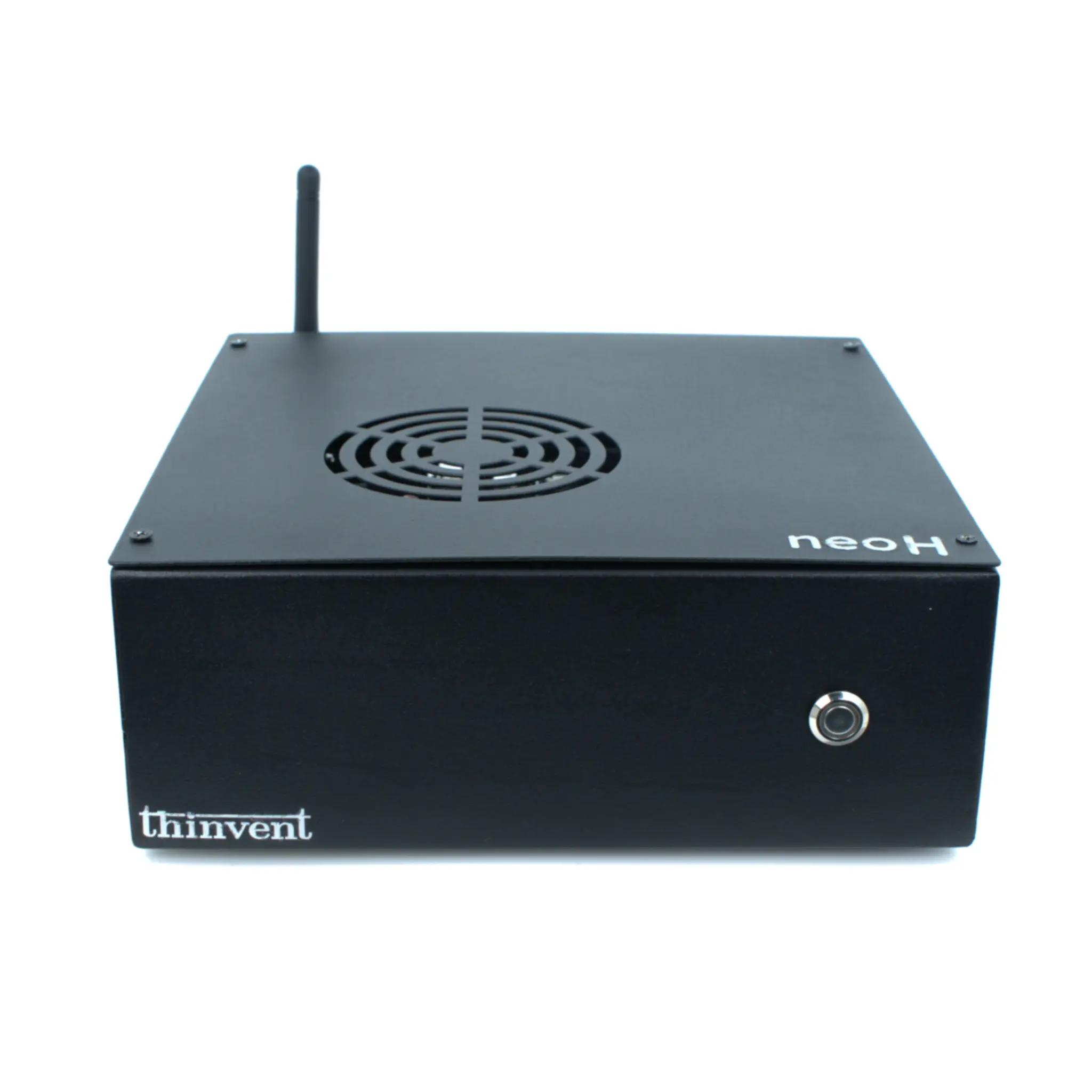
Thinvent offers a robust range of industrial mini PCs that serve as powerful and reliable alternatives. Our Aero Mini PC series, for example, is built with the latest Intel processors like the efficient N100. These systems are engineered for fanless, silent operation and come in various configurations of RAM, storage, and operating systems (Windows 11, Linux, or without OS) to match specific project requirements. Designed for durability in commercial and light-industrial environments, Thinvent mini PCs provide the performance, connectivity, and form factor needed to replace or supplement traditional desktop setups, offering a versatile and dependable computing foundation for global applications.