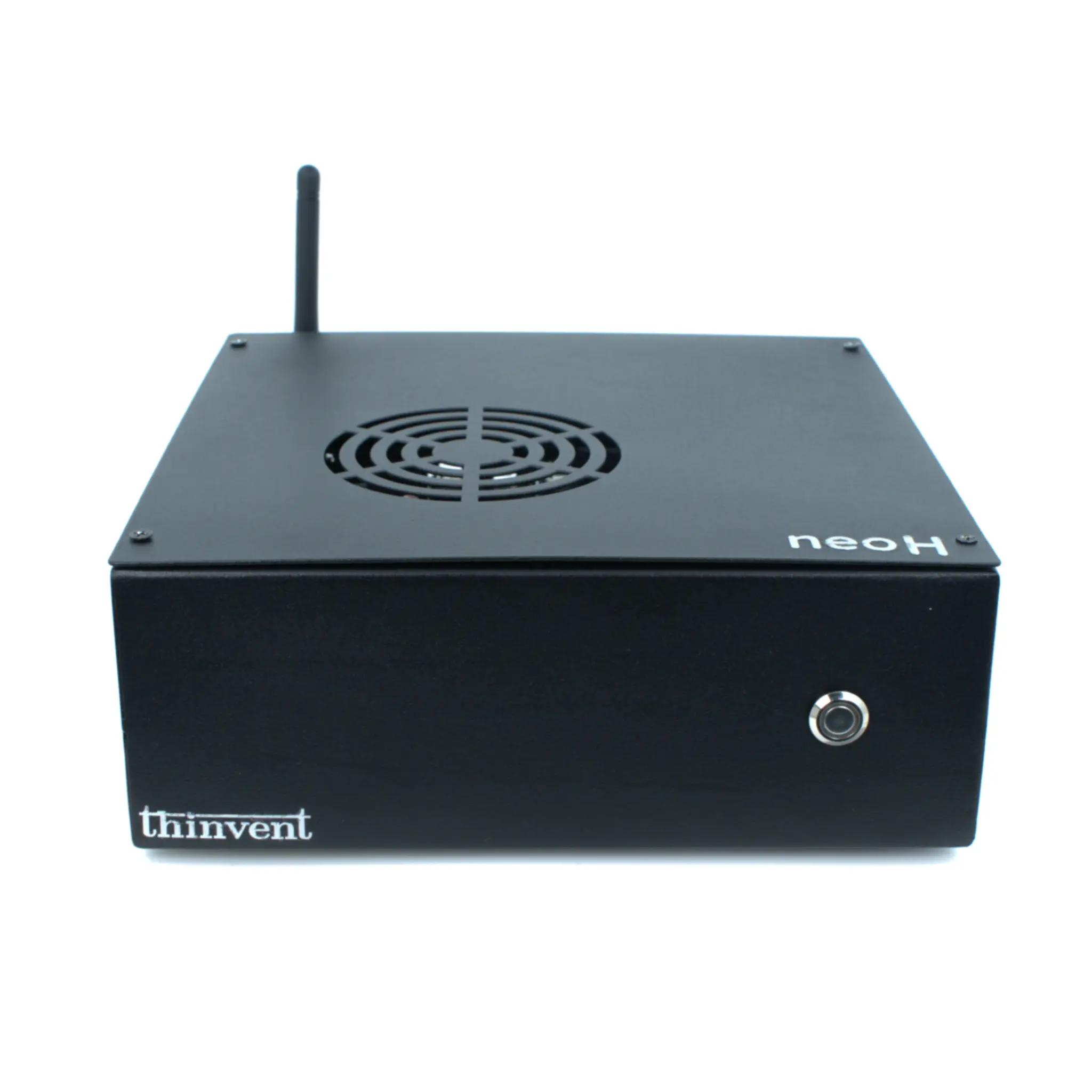
What are Mini PCs with OCuLink Ports?
Mini PCs with OCuLink ports are compact computing devices that feature the OCuLink (Optical Copper Link) connector. OCuLink is a high-speed external interface standard, primarily based on PCI Express (PCIe), designed to connect external peripherals like graphics cards (eGPUs), high-speed storage arrays, or specialized data acquisition cards. It provides a direct, low-latency connection that is significantly faster than USB or Thunderbolt for specific PCIe-based applications, making it ideal for expanding the capabilities of a small-form-factor PC without internal upgrade slots.
Key Specifications and Technical Advantages
The core advantage of an OCuLink port is its utilization of PCIe lanes, offering much higher bandwidth for data transfer compared to standard USB interfaces. Common implementations use PCIe 3.0 x4 or x8 links, providing theoretical bandwidths of up to 32 Gbps or 64 Gbps, respectively. This makes it exceptionally suitable for tasks requiring rapid data movement. When integrated into a mini PC, this port allows the compact system to bridge the gap to desktop-level expansion, supporting professional-grade external hardware while maintaining a small footprint, often with fanless or ultra-quiet cooling designs for reliable 24/7 operation.
Primary Use Cases and Applications
These specialized mini PCs are deployed in scenarios where compact size meets high-performance peripheral needs. Key applications include:
-
Professional eGPU Setups: Connecting an external graphics card for GPU-accelerated computing, AI inference, video rendering, or high-end gaming on an ultra-compact host.
-
High-Speed External Storage: Linking to NVMe SSD enclosures or RAID arrays for on-site video editing, data logging, or as a high-performance network-attached storage (NAS) controller.
-
Industrial & Embedded Systems: Integrating with specialized PCIe-based hardware for machine vision, test and measurement, or telecommunications in space-constrained environments.
-
Desktop Virtualization & Thin Clients: In advanced setups, they can host powerful external hardware that is shared across a network of simpler terminals.
Comparison: OCuLink vs. Other Expansion Interfaces
| Interface | Standard Used | Max Theoretical Bandwidth (Common) | Primary Use Case | Latency |
|---|---|---|---|---|
| OCuLink | PCIe 3.0/4.0 | 32 Gbps (x4) / 64 Gbps (x8) | External GPUs, High-speed storage | Very Low |
| Thunderbolt 3/4 | PCIe + DisplayPort | 40 Gbps | General docking, eGPUs, fast storage | Low |
| USB 3.2 Gen 2x2 | USB | 20 Gbps | External SSDs, fast peripherals | Moderate |
| USB4 | PCIe + TB3 | 40 Gbps | Similar to Thunderbolt 4 | Low |
Note: Actual performance depends on host controller, cable quality, and device implementation.
Thinvent Mini PCs with Expansion Capabilities
While the specific sample products listed do not include models with native OCuLink ports, Thinvent's range of robust and compact industrial computers and mini PCs exemplifies the platform ideal for such high-performance expansion. Our systems, like the fanless Thinvent Treo and Industrial PC IPC series, are built with reliability and connectivity in mind. They feature powerful Intel Core and processor-N series CPUs, ample DDR4 RAM, and fast SSD storage. Their sturdy construction and support for various operating systems (Thinux™, Ubuntu, Windows IoT) make them perfect hosts for customized solutions. For projects requiring OCuLink connectivity, Thinvent's engineering team can provide guidance on compatible external adapter solutions or discuss custom configuration options to meet your specific high-bandwidth external peripheral needs, leveraging the compact and reliable foundation of our mini PC platforms.