What is an MSI CPU?
The term "MSI CPU" is often a point of confusion. MSI (Micro-Star International) is a leading manufacturer of computer hardware, primarily known for its motherboards, graphics cards, and pre-built gaming systems. They do not manufacture CPUs (Central Processing Units). The CPU is the core processing chip made by companies like Intel® and AMD®. When someone refers to an "MSI CPU," they are likely referring to a computer system or motherboard from MSI that features a specific Intel or AMD processor.
Key CPU Specifications in Industrial Computing
For industrial, embedded, and mini PC applications, the choice of CPU dictates performance, power efficiency, and thermal design. Key specifications to consider include:
-
Core Count & Threads: Determines multitasking capability. More cores (e.g., 12-core i5) handle parallel tasks better.
-
Clock Speed (Frequency): Measured in GHz, it affects the speed of individual operations. Boost frequencies (e.g., up to 5.0 GHz) are crucial for burst performance.
-
Cache Memory: A small, fast memory on the CPU (e.g., 6MB, 12MB) that stores frequently accessed data, significantly improving efficiency.
-
Thermal Design Power (TDP): Lower TDP processors (like Intel's N-series) enable fanless, silent operation ideal for harsh environments.
-
Instruction Set Architecture: This defines the CPU's fundamental design, with x86 (Intel/AMD) being dominant for general computing and ARM offering high power efficiency for specific embedded tasks.
Applications Based on CPU Type
The right CPU platform is selected based on the target application:
-
ARM-based Processors (Cortex A53/A55): Ideal for lightweight, fanless thin clients, digital signage, and kiosks. They offer excellent power efficiency for running embedded Linux and basic display tasks.
-
Intel Processor N-series (e.g., N100): Perfect for entry-level industrial PCs, mini PCs, and edge computing nodes. They balance x86 compatibility with low power consumption for fanless designs, suitable for POS systems and light-duty servers.
-
Intel Core i-series (e.g., i3, i5): Used in high-performance industrial PCs for demanding applications like machine vision, automation control, IoT gateways, and rugged computing. They offer higher core counts and turbo boost for complex computations.
CPU Comparison for Embedded Systems
| Feature | ARM Cortex (A55) | Intel Processor N100 | Intel Core i5-1250P |
|---|---|---|---|
| Architecture | ARM | x86 (Intel) | x86 (Intel) |
| Typical Cores | 4 | 4 | 12 (Performance + Efficient) |
| Max Frequency | ~1.9 GHz | Up to 3.4 GHz | Up to 4.4 GHz |
| Power Profile | Very Low | Low | Moderate/High |
| Primary Use Case | Thin Clients, Basic Kiosks | Fanless Mini PCs, Light Edge Computing | High-Performance Industrial Workloads |
| OS Support | Embedded Linux, Android | Linux, Windows | Windows, Linux |
Thinvent Products Featuring Advanced Processors
Thinvent leverages a wide range of these processors to build reliable computing solutions for global industrial and commercial markets. Our product portfolio includes:
-
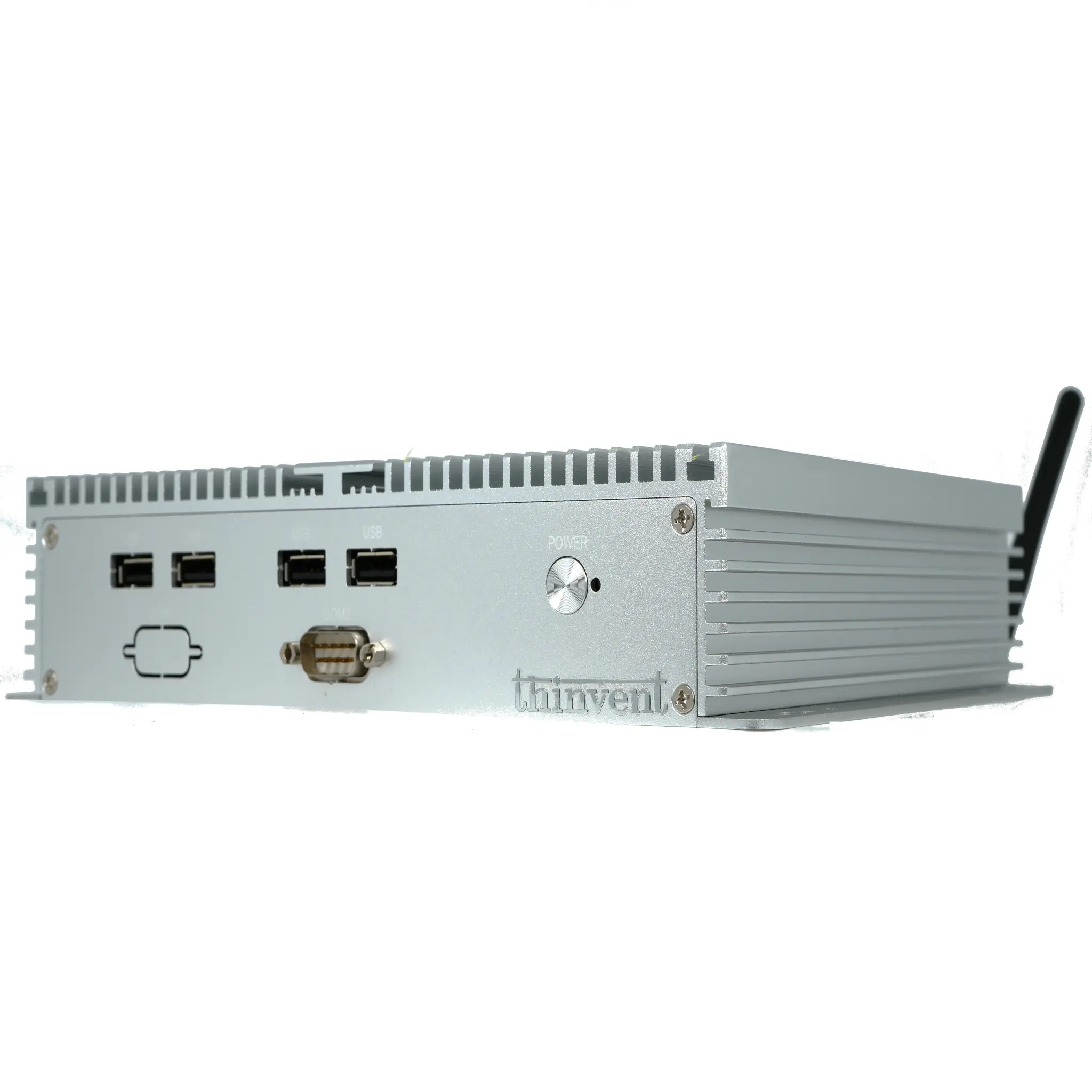
Fanless Thin Clients & Mini PCs: Utilizing ARM Cortex and Intel N-series processors for silent, reliable operation in digital signage and virtual desktop environments.
-
Rugged Industrial PCs: Featuring Intel Core i3, i5, and newer generation processors (like the 14th Gen Core 5 120U) for demanding factory automation, surveillance, and control systems.
-
Custom Configurations: Systems are available with various RAM, storage (eMMC/SSD), and operating system options (Thinux™ Embedded Linux, Ubuntu, Windows IoT/Pro) to match specific project requirements. Our focus is on delivering durable, fanless designs where applicable, ensuring longevity in challenging environments.