Understanding Modern PC Processors for Industrial Applications
A new PC processor is the central processing unit (CPU) that serves as the brain of an industrial computer. Modern processors are defined by their architecture, core count, clock speed, power efficiency, and integrated technologies. For industrial environments, key considerations extend beyond raw speed to include thermal design, long-term reliability, and support for industrial I/O and connectivity.
Key Specifications and Technical Details
Modern industrial processors range from efficient, fanless Intel N-series CPUs for embedded applications to powerful Intel Core i-series processors for demanding workloads. Key specifications include:
-
Core Count: Determines multitasking capability (e.g., 4, 6, 10, or 12 cores).
-
Clock Speed: Measured in GHz, indicates how fast a core can process instructions.
-
Generation: Represents the architectural design (e.g., 12th, 13th, 14th Gen Intel), with newer generations offering better performance per watt and enhanced features.
-
Thermal Design Power (TDP): Critical for fanless designs; lower TDP (e.g., 6W-15W) enables silent, reliable operation in harsh environments.
-
Integrated Graphics: Modern CPUs include capable integrated GPUs for driving multiple displays, which is essential for digital signage and control panels.
Use Cases and Application Scenarios
The choice of processor directly impacts the suitability of an industrial PC for specific tasks:
-
Lightweight & Embedded Tasks: Processors like the Intel N100 (4 cores, low TDP) are ideal for digital signage, thin clients, kiosks, and basic IoT gateways where silent, fanless operation and energy efficiency are paramount.
-
General Industrial Computing: Mid-range CPUs like Intel Core i3 or i5 (10th-13th Gen) handle factory automation, machine vision, and POS systems, balancing performance with thermal management.
-
High-Performance Workloads: For advanced analytics, AI inference at the edge, or complex control systems, processors like Intel Core i5/i7 (13th/14th Gen) with higher core counts and turbo frequencies are required.
Processor Comparison for Industrial PCs
| Processor Series | Typical Cores | Use Case Focus | Key Advantage |
|---|---|---|---|
| Intel N-Series (e.g., N100) | 4 | Embedded, Fanless Systems | Ultra-low power, cost-effective, silent operation |
| Intel Celeron | 2-4 | Entry-Level Industrial PCs | Reliable performance for basic control and HMI |
| Intel Core i3 | 4-10 | Mainstream Automation | Excellent balance of performance and efficiency |
| Intel Core i5/i7 | 6-14 | High-Performance Workstations | Superior multitasking and processing for demanding applications |
Thinvent Industrial PCs Featuring Latest Processors
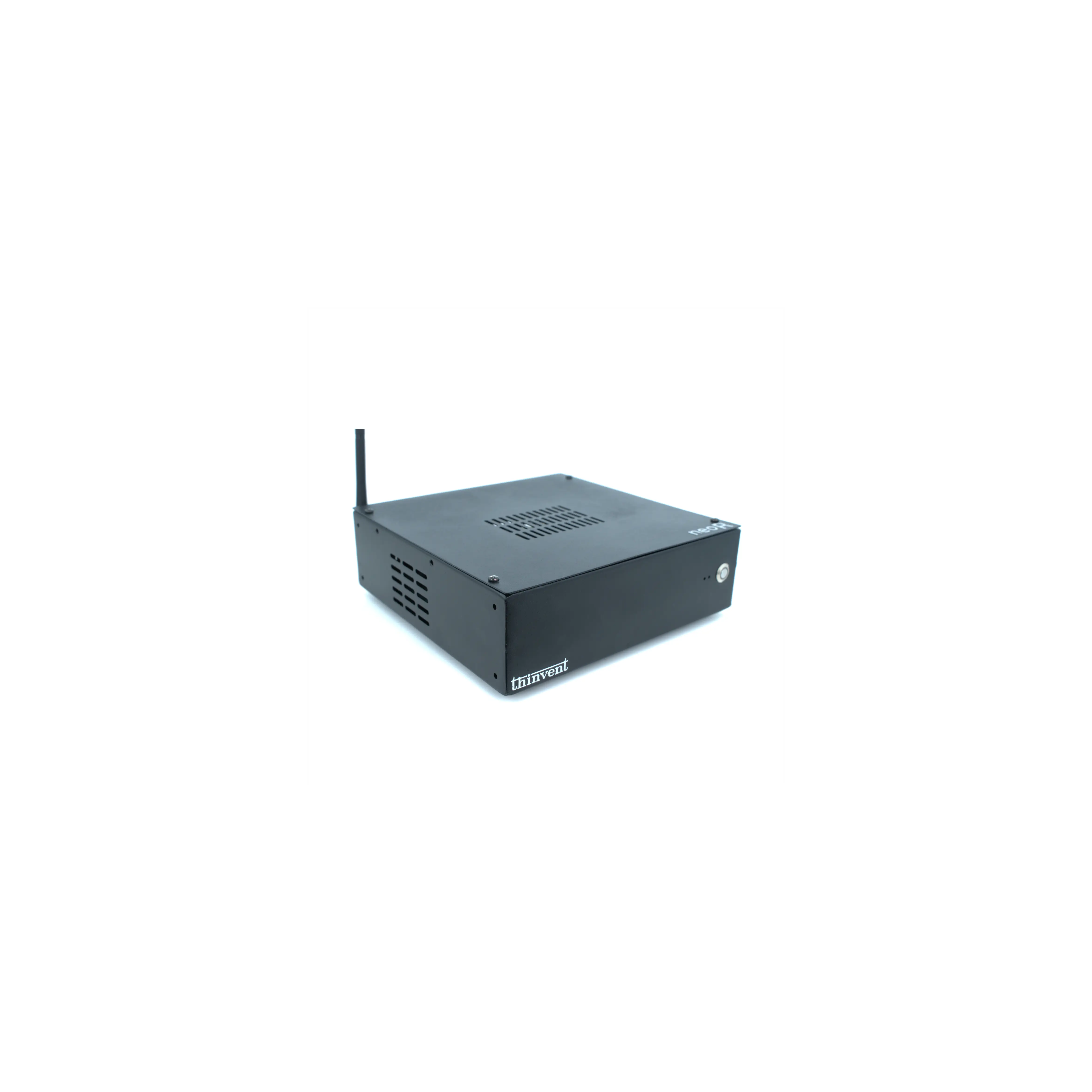
Thinvent's product portfolio incorporates the latest processor technologies to meet diverse industrial demands. Our Aero Mini PC series, for example, utilizes the efficient Intel Processor N100, part of Intel's latest generation, to deliver fanless, reliable computing in a compact form factor. For more demanding applications, our range extends to systems powered by Intel Core i3, i5, and i7 processors from the latest generations, offering scalable performance for everything from digital signage to ruggedized edge computing servers. Each system is engineered for 24/7 operation, with a focus on durability, stable performance, and comprehensive I/O to connect to industrial peripherals.