What is a PC for Rendering?
A PC for rendering is a specialized computer system designed to efficiently process and generate high-quality 2D or 3D visual outputs from raw data. Rendering is a computationally intensive task that converts 3D models, scenes, and animations into final images or video frames. This process demands significant processing power, fast memory, capable graphics, and reliable storage to handle complex calculations for lighting, textures, shadows, and physics simulations within a reasonable timeframe.
Key Specifications for Rendering PCs
The performance of a rendering PC is dictated by several core components. The Central Processing Unit (CPU) is critical, especially for CPU-based rendering engines like V-Ray CPU, Corona Renderer, and Arnold. High core and thread counts (e.g., 12+ cores) dramatically reduce render times. Random Access Memory (RAM) is equally vital; 32GB is a practical minimum for professional 3D work, with 64GB or more recommended for complex scenes. Storage must be fast; NVMe SSDs (512GB or larger) are essential for quick loading of assets and project files. While a dedicated Graphics Processing Unit (GPU) accelerates viewport performance and is mandatory for GPU-based renderers like OctaneRender, Redshift, or V-Ray GPU, the CPU often remains the workhorse for final frame output.
Applications and Use Cases
Rendering PCs are indispensable across creative and technical industries. In Architecture, Engineering, and Construction (AEC), they are used for photorealistic architectural visualizations and building information modeling (BIM). The Media & Entertainment sector relies on them for animation, visual effects (VFX), and game development. Product Design and Manufacturing teams use rendering for creating marketing materials and prototyping. Furthermore, these systems are crucial in Scientific Visualization for simulating complex data sets.
CPU vs. GPU Rendering: A Quick Comparison
| Feature | CPU Rendering | GPU Rendering |
|---|---|---|
| Primary Hardware | Multi-core Processor (CPU) | Graphics Card (GPU) |
| Typical Use | Final frame output, complex simulations | Real-time previews, final frames (with supported engines) |
| Strength | Handles highly complex scenes, larger memory pool | Extremely fast for supported tasks, parallel processing |
| Consideration | Render times can be longer | Limited by GPU VRAM, requires specific software support |
| Example Engines | V-Ray (CPU), Arnold, Corona | OctaneRender, Redshift, V-Ray GPU |
Thinvent Solutions for Rendering Workloads
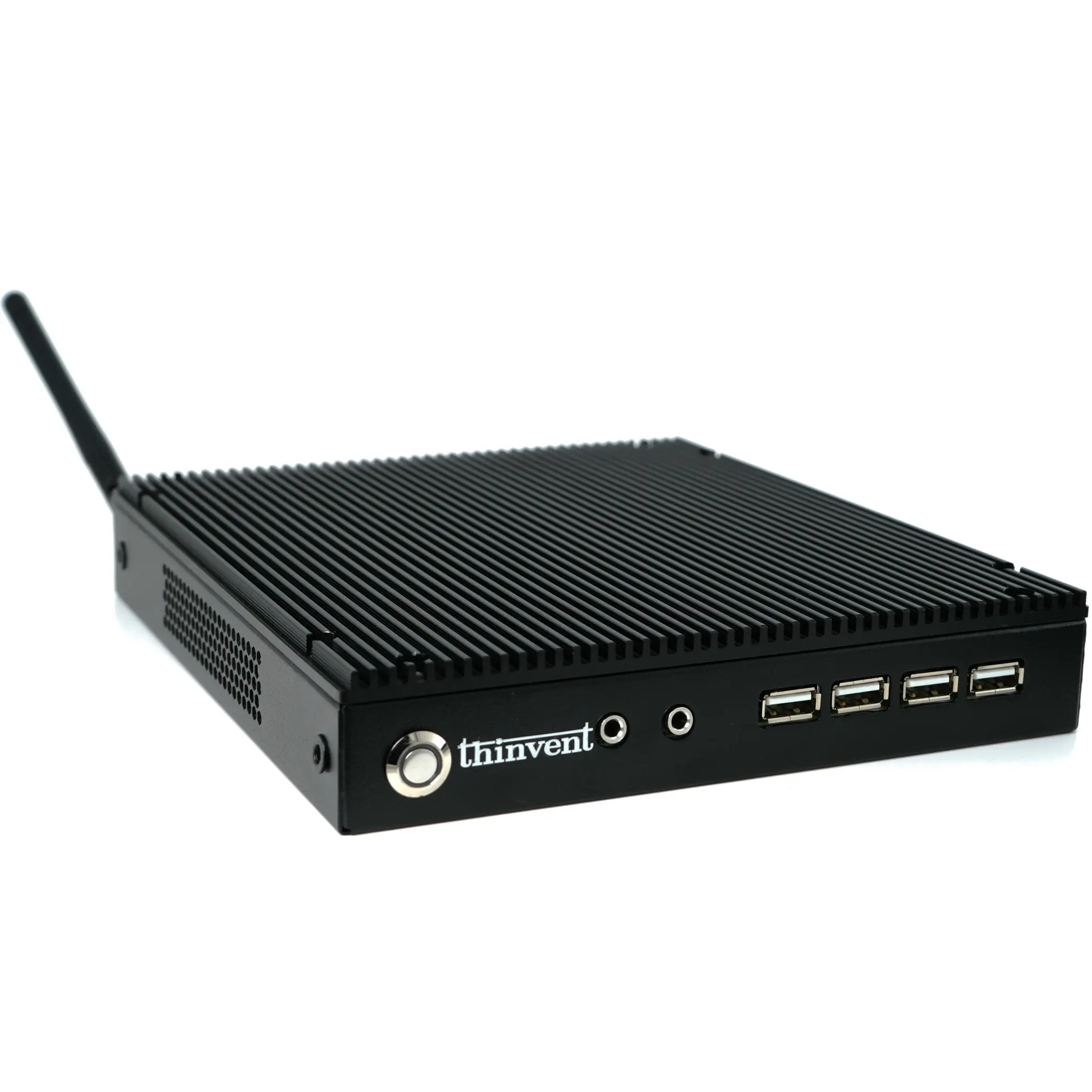
While the sample products listed, such as the Aero Mini PC with an Intel N100 processor, are excellent for general computing and light industrial tasks, they are not optimized for heavy rendering workloads. For professional rendering, Thinvent offers robust Industrial PC solutions that can be configured with high-performance Intel Core i5 and i7 processors from the latest generations, supporting higher core counts. These systems can be equipped with ample 32GB or 64GB of RAM and large, fast 512GB or 1TB NVMe SSDs to meet the demanding requirements of 3D rendering applications. Their durable, fanless designs ensure reliable, silent operation in studio or industrial environments, providing the stable platform necessary for long, uninterrupted render jobs.