Understanding Industrial PC Processors
Industrial PC processors are the computational heart of systems designed for demanding environments. Unlike consumer-grade CPUs, they are engineered for long-term reliability, extended temperature ranges, and stable performance under continuous operation. The key differentiators are not just raw speed, but features like error-correcting code (ECC) memory support, extended lifecycle availability, and robust thermal design for fanless operation. Selecting the right processor involves balancing performance needs with environmental constraints and longevity requirements.
Key Specifications and Architectures
Industrial PCs primarily utilize two processor architectures: Intel x86 and ARM. Intel processors, ranging from efficient N-series (e.g., Intel N100) to powerful Core i-series (e.g., i3, i5, i7), offer high performance for complex tasks, virtualization, and Windows-based applications. ARM processors (e.g., Cortex-A53/A55) are highly power-efficient, generate minimal heat, and are ideal for lightweight, embedded Linux applications like digital signage or thin clients. Critical specs to evaluate include core count (4 to 12+ cores), clock speed (1.5 GHz to 5.0 GHz), cache size (1 MB to 12+ MB), thermal design power (TDP), and support for industrial I/O.
Performance Tiers and Use Cases
Processor choice directly dictates the application suitability of an industrial PC.
| Performance Tier | Example Processors | Ideal Use Cases |
|---|---|---|
| Entry-Level / Embedded | ARM Cortex-A53/A55, Intel Celeron/J-series | Digital signage, kiosks, thin clients, basic HMIs, IoT gateways. |
| Efficient Performance | Intel Processor N-series (N95, N100, N150) | Edge computing, light industrial automation, retail POS, fanless systems. |
| Mainstream Power | Intel Core i3/i5 (12th/13th/14th Gen U/P-series) | Machine vision, advanced automation, robotics, compact workstations. |
| High Performance | Intel Core i5/i7/i9 (P/H-series) | AI inference, complex data acquisition, simulation, and control systems. |
Reliability and Durability Factors
Reliability in industrial processors is achieved through several design philosophies. Extended Temperature Range operation ensures functionality in harsh environments from -40°C to 85°C. Longevity Support guarantees component availability for 7-15 years, crucial for multi-year project lifecycles. Fanless Design is enabled by efficient, low-TDP processors, eliminating moving parts that are prone to failure from dust and vibration. Furthermore, industrial-grade components and rigorous testing for shock, vibration, and EMI ensure consistent operation in factories, transportation, and outdoor settings.
Thinvent Industrial PCs: Engineered for Demanding Applications
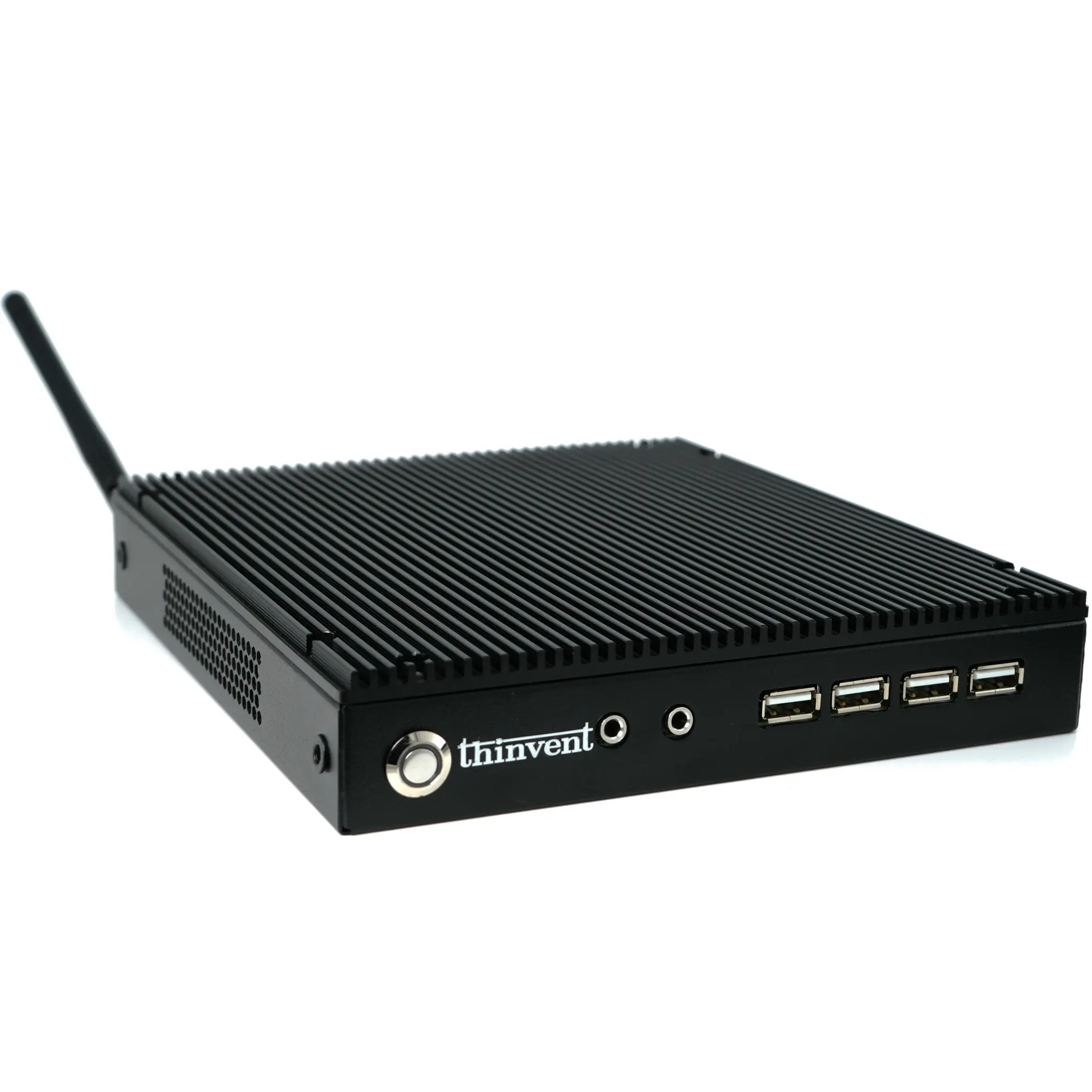
Thinvent's range of industrial computing solutions incorporates the processors discussed, tailored for real-world reliability. Our Industrial PC (IPC) series features robust, fanless designs with Intel Core i3, i5, and N-series processors, built for 24/7 operation in challenging conditions. For space-constrained or lightweight applications, our Mini PC and Thin Client lines utilize efficient Intel N100 or ARM processors, offering a perfect balance of capability and energy efficiency. Every Thinvent system is designed with industrial durability, from wide-voltage power input to metal chassis construction, ensuring your critical operations run smoothly year after year.