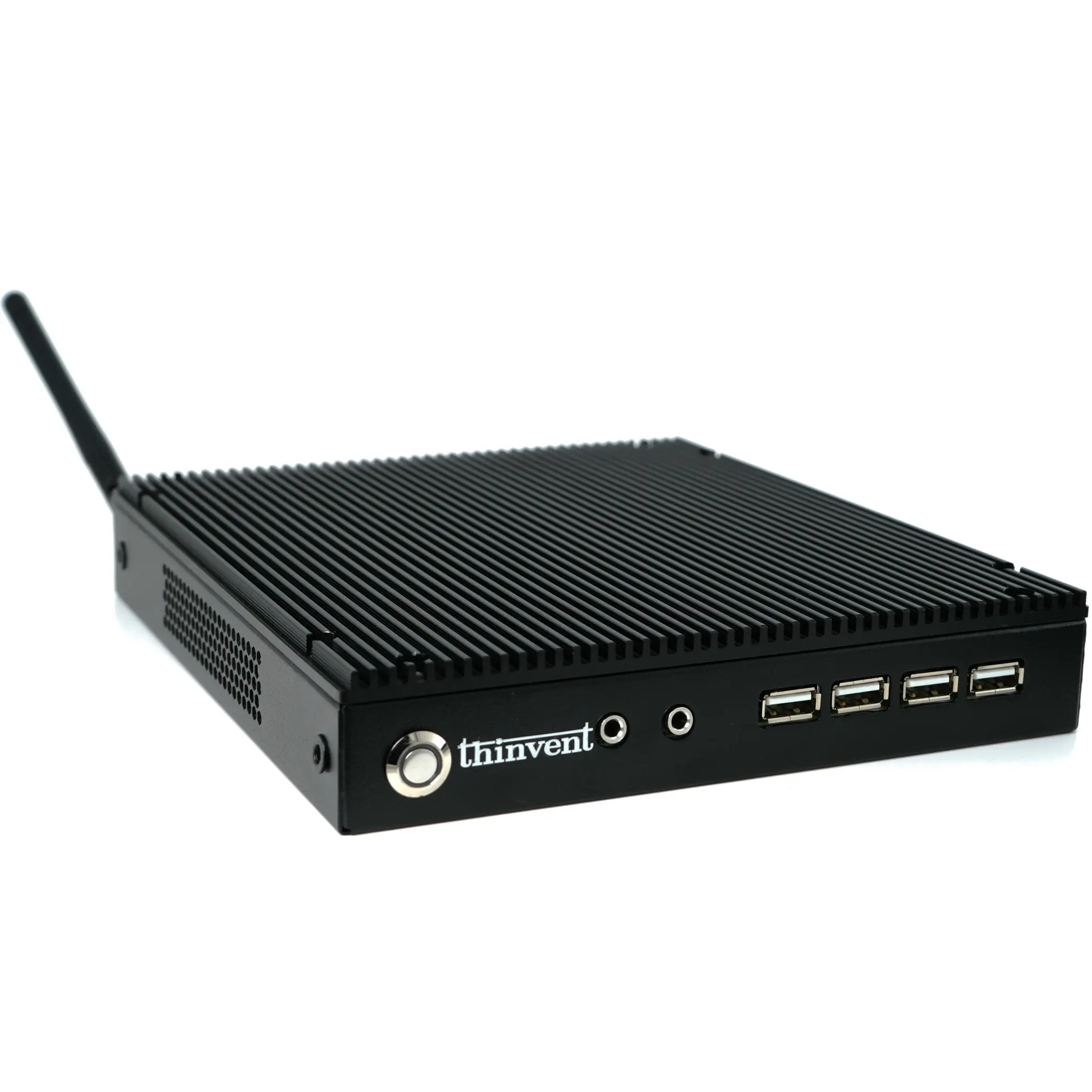
A powerful computer is defined by its ability to handle demanding computational tasks with speed, reliability, and efficiency. For industrial and commercial applications, this translates to robust hardware specifications, stable performance under continuous operation, and resilience in challenging environments. Key components that define a powerful system include a multi-core processor from a recent generation, ample high-speed RAM, fast solid-state storage, and reliable connectivity.
Key Specifications for a Powerful Computer
The core of a powerful computer is its processor. Modern industrial systems often feature Intel Core i3, i5, or i7 series processors from the 12th generation or newer, offering high core counts (6, 10, or 12 cores) and advanced architectures for superior multitasking and processing power. System memory (RAM) is equally critical; 16GB is a common starting point for demanding tasks, with 32GB or 64GB configurations recommended for data-intensive applications like virtualization, AI inference, or complex simulations. Storage should utilize NVMe SSDs (512GB or 1TB) for rapid data access and system responsiveness. Robust I/O, including multiple Gigabit Ethernet ports, USB 3.2 Gen 2, and USB-C, ensures seamless peripheral and network integration.
Applications and Use Cases
Powerful industrial computers are engineered for scenarios where standard commercial PCs would falter. They are ideal for:
-
Digital Signage & Kiosks: Driving multiple high-resolution displays with complex media content.
-
Factory Automation & Control: Running PLC software, HMI interfaces, and machine vision systems 24/7.
-
Edge Computing & AI: Processing data locally from IoT sensors, cameras, and equipment for real-time analytics and decision-making.
-
Medical Imaging & Diagnostics: Handling large datasets from medical equipment with precision and reliability.
-
Network Appliances: Serving as firewalls, routers, or network-attached storage (NAS) solutions requiring constant uptime.
Comparing Processor Tiers for Power
The choice of processor significantly impacts performance. Below is a comparison of common processor tiers found in powerful industrial systems.
| Processor Series | Typical Cores/Threads | Ideal Use Case | Performance Tier |
|---|---|---|---|
| Intel Core i3 (12th/13th Gen) | 4-6 Cores | General industrial computing, multi-display setups, light data processing. | Entry-Level Power |
| Intel Core i5 (12th/13th Gen) | 6-10 Cores | Advanced automation, mid-range AI workloads, virtualization. | Mid-Range Power |
| Intel Core i7/i9 (12th/13th Gen) | 10-16+ Cores | High-performance computing, complex simulations, intensive AI model training. | High-End Power |
| Intel Processor N-Series (N100/N200) | 4 Cores | Fanless, low-power operations for space-constrained or always-on applications. | Efficient & Compact |
Thinvent's Powerful Industrial Computing Solutions
Thinvent offers a comprehensive range of powerful industrial computers designed for reliability and peak performance. Our portfolio includes compact yet potent Mini PCs featuring the latest Intel Core processors, perfect for space-sensitive installations. For centralized computing power, our Industrial PCs provide expansive I/O and upgradeability. Our All-in-One systems integrate a vibrant display with a powerful computing core, ideal for interactive kiosks and control rooms. Every Thinvent system is built with industrial-grade components, featuring fanless cooling for silent, dust-resistant operation, and wide-range power input to ensure stability across global power grids. We provide flexible configurations in memory, storage, and operating systems (Windows, Linux) to match the exact power requirements of your application.