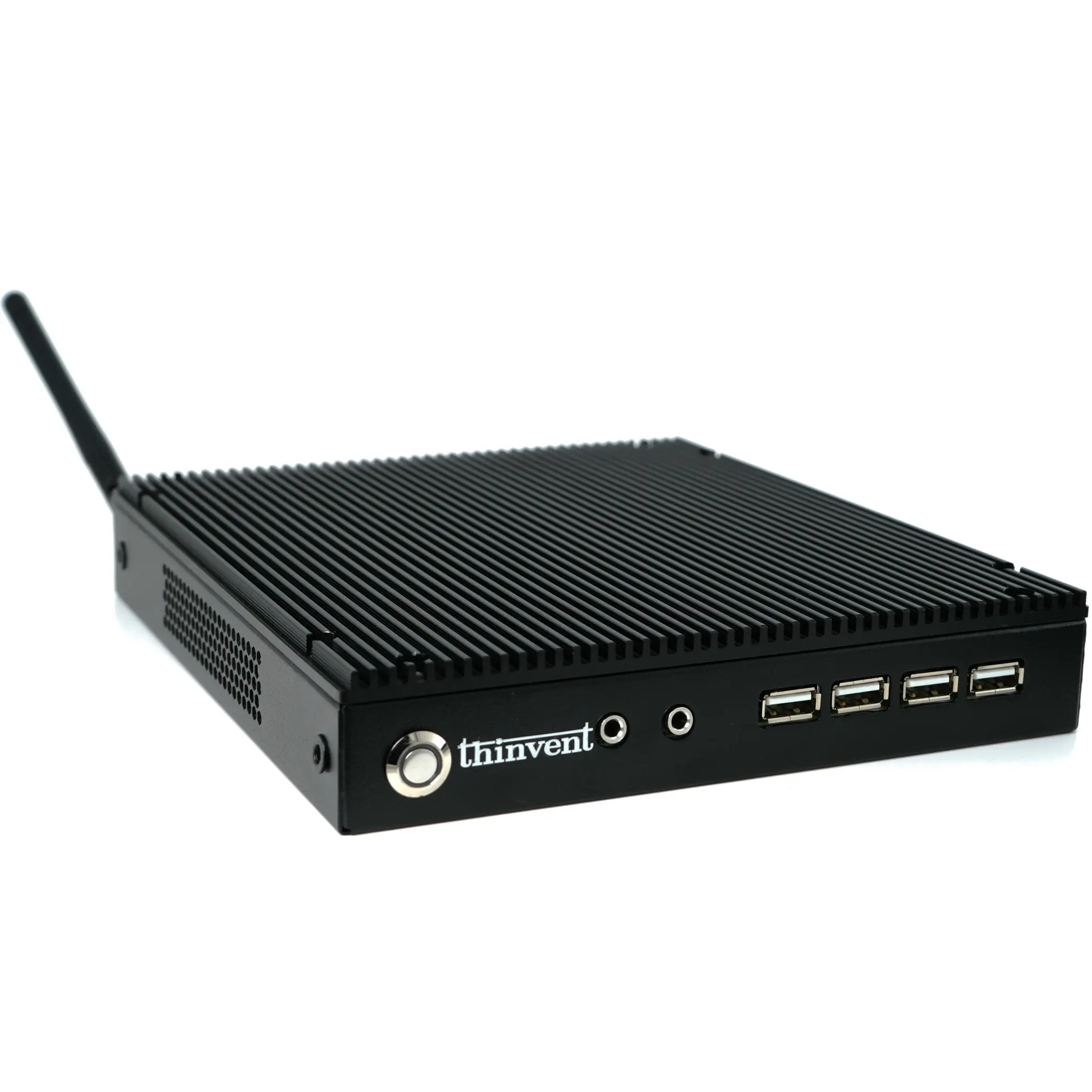
The QNAP name in your query refers to a range of network attached storage (NAS) devices. The facts provided for QNAP cover memory guidance for models such as the TS-464, TS-473A, TS-233 and TR-004, but they do not give processor, RAM or storage specifications for those devices. Thinvent does not make NAS appliances. Its Treo and IPC lines are compact industrial and mini PCs that can run storage software, file servers or edge services where a general-purpose compact computer is needed. The closest Thinvent alternatives for a fanless, compact build are the Treo Mini PC and the IPC5 Industrial PC.
QNAP vs Thinvent Treo and IPC5
| Feature | QNAP NAS range | Thinvent Treo Mini PC, Intel Core i3 to i5 | Thinvent IPC5 Industrial PC, Intel Core i5 to i7 |
|---|---|---|---|
| Processor | Not stated | Intel Core i3-1215U to i5-1240P | Intel Core i5-1240P to i7-1255U |
| Cores/Threads | Not stated | 6 to 12 cores | 10 to 12 cores |
| RAM | Use identical QNAP modules per the hardware manual | Up to 64 GB | Up to 64 GB |
| Storage | Not stated | 128 GB to 2 TB SSD | 128 GB to 2 TB SSD |
| Form Factor | NAS appliance | Mini PC | Industrial PC |
Key differences
-
Thinvent Treo and IPC5 models offer RAM up to 64 GB, and SSDs up to 2 TB, from a compact computer.
-
The Thinvent products provide Intel Core processors with 6 to 12 cores, giving headroom for applications running alongside file services.
-
QNAP's published notes stress using matched QNAP memory modules to maintain performance and stability; Thinvent configurations are sold as complete, pre-configured systems.
-
QNAP is a purpose-built NAS platform with its own storage OS; Thinvent systems are general compact computers that you set up with the software you choose.
-
Thinvent products are offered with or without dual band Wi-Fi 5, so you can choose the connectivity your site needs.
Which one should you choose?
Choose a QNAP NAS if you want a dedicated, ready-made storage appliance with its own operating system and drive bays. Choose a Thinvent Treo or IPC5 if you need a compact, fanless-style computer with up to 64 GB RAM and up to 2 TB SSD that can run storage or server software at the edge.