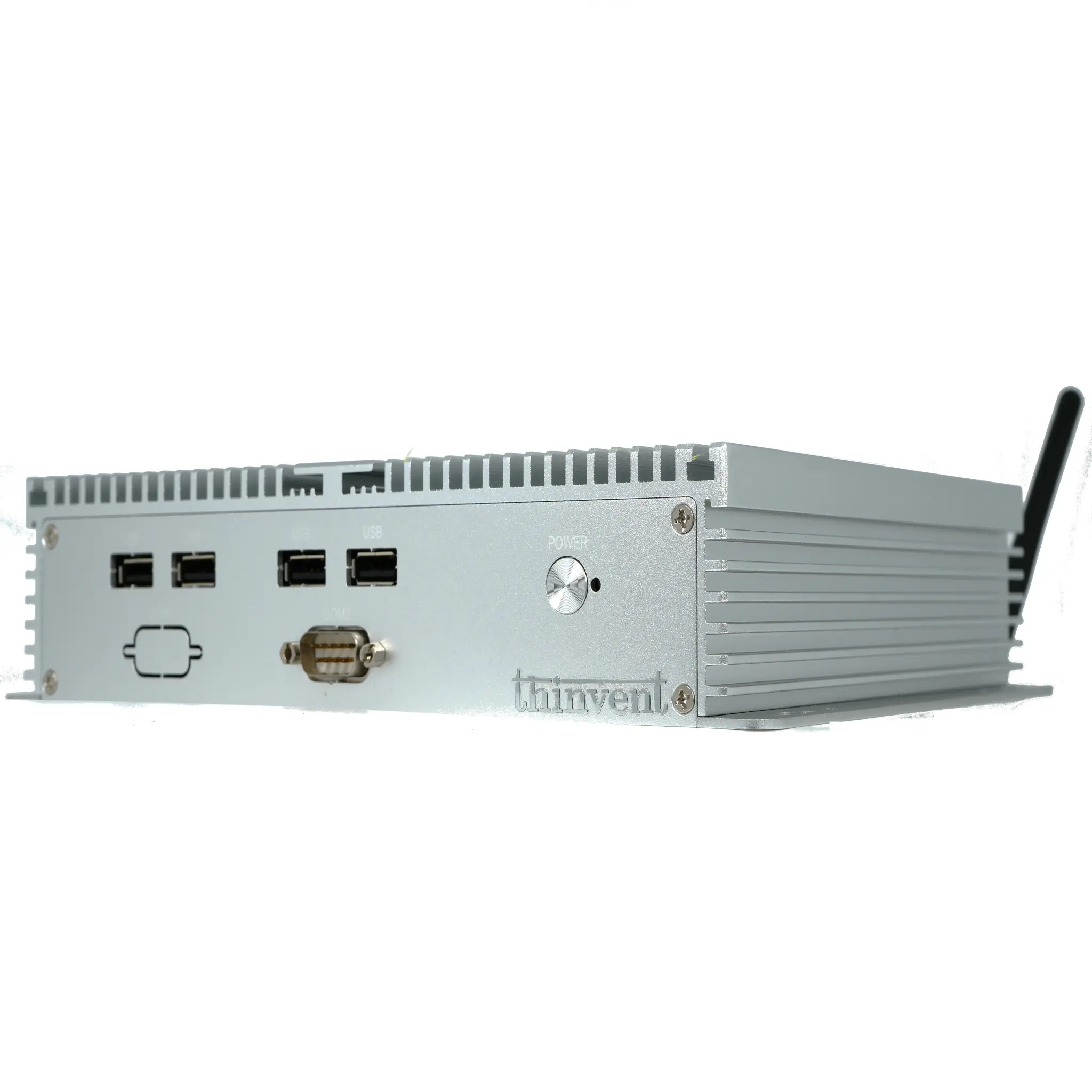
What is an Industrial Raspberry Pi Computer?
An industrial Raspberry Pi computer refers to a compact, low-power computing device designed for embedded and industrial applications, similar in concept to the popular Raspberry Pi single-board computer (SBC). However, true industrial-grade solutions offer significant enhancements over consumer SBCs, including ruggedized fanless designs, wider operating temperature ranges, industrial-grade components for longevity, and comprehensive certifications for reliability in demanding environments. These systems are engineered for 24/7 operation in applications like factory automation, digital signage, and IoT gateways.
Key Specifications and Technical Advantages
Industrial mini PCs built for Raspberry Pi-like applications prioritize reliability and connectivity. Core specifications often include efficient, low-TDP Intel or ARM processors (like the Intel N-series), soldered RAM for vibration resistance, and solid-state storage. A critical feature is the fanless cooling system, which uses passive heatsinks to eliminate moving parts, thereby reducing points of failure, preventing dust ingress, and enabling silent operation. These systems typically support a wide voltage input (e.g., 9-36V DC) for industrial power supplies and offer rich I/O including multiple Gigabit Ethernet ports, USB, serial (COM), and HDMI/DisplayPort outputs for control and monitoring.
Industrial Use Cases and Applications
These robust computers are deployed across numerous sectors where reliability is non-negotiable. In Industrial Automation, they serve as PLCs, HMIs, or machine vision controllers on the factory floor. For Digital Signage and Kiosks, their fanless design ensures silent, reliable operation in retail and public spaces. They are ideal IoT Edge Gateways, collecting and processing data from sensors in smart agriculture, energy, and building management. Other key applications include in-vehicle computing for fleet management, thin clients for secure desktop virtualization, and embedded controllers in medical and laboratory equipment.
Comparison: Consumer SBC vs. Industrial Mini PC
| Feature | Consumer Raspberry Pi | Industrial Mini PC |
|---|---|---|
| Build Quality | Consumer-grade components | Industrial-grade, ruggedized chassis |
| Cooling | Often requires active fan for sustained load | Passive, fanless heatsink design |
| Operating Temp | Limited range (typically 0°C to 50°C) | Wide range (e.g., -20°C to 70°C) |
| Power Input | Standard 5V DC | Wide-range DC (e.g., 9-36V), anti-surge |
| Reliability & Support | Community support, shorter lifecycle | Long-term availability, professional technical support |
| Certifications | Few or none | CE, FCC, RoHS, often vibration/shock tested |
Thinvent Industrial Mini PCs with Fanless Design
Thinvent offers a comprehensive range of industrial-grade mini PCs that provide superior alternatives to consumer SBCs for professional applications. Our Aero Series exemplifies this approach, featuring efficient Intel processors in a completely fanless aluminum chassis for maximum durability. These systems come with flexible configuration options, including choice of operating system (Windows, Linux, or without OS), memory, and storage to fit specific project needs. Engineered for continuous operation in challenging conditions, Thinvent computers deliver the performance, connectivity, and reliability required for critical industrial, commercial, and embedded deployments worldwide.