What Are Raspberry Pi Like Devices?
Raspberry Pi-like devices are compact, low-power, single-board computers (SBCs) or mini PCs designed for embedded computing, DIY projects, and light-duty professional applications. They offer a balance of performance, energy efficiency, and a small physical footprint, making them ideal alternatives to the popular Raspberry Pi platform. These devices typically feature integrated processors, memory, and storage on a single board or within a tiny enclosure, providing a complete computing solution without the bulk of a traditional desktop.
Key Specifications and Technical Details
These compact computers are defined by several core specifications. They often utilize efficient, fanless processors from Intel's N-series (like the N100) or ARM architectures to minimize heat and power draw. Standard configurations include 4 to 16GB of RAM and SSD storage from 128GB to 512GB, offering substantial performance over microSD cards commonly used in basic SBCs. Connectivity is robust, featuring multiple USB ports (including USB 3.2 and Type-C), Gigabit Ethernet, and HDMI outputs. A critical advantage of industrial-grade alternatives is their support for a wide range of operating systems, including Windows 11 IoT/Pro, Ubuntu Linux, and other embedded OS options, providing greater flexibility than the typical Raspberry Pi OS environment.
Common Use Cases and Applications
The versatility of these devices opens them to a broad spectrum of applications. In industrial settings, they serve as reliable controllers for HMIs (Human-Machine Interfaces), digital signage players, and thin clients. Developers and makers use them for prototyping IoT solutions, home automation hubs, and network-attached storage (NAS). Their small size and low power consumption also make them perfect for edge computing nodes, educational tools, and compact media centers. Compared to a standard Raspberry Pi, these industrial mini PCs often provide better I/O options, more reliable storage, and broader OS compatibility for commercial deployments.
Comparison: Raspberry Pi vs. Industrial Mini PCs
| Feature | Typical Raspberry Pi | Industrial Mini PC (e.g., Intel N100) |
|---|---|---|
| Form Factor | Credit-card SBC | Enclosed mini PC or small form factor board |
| Processor | ARM-based SoC | x86 (Intel/AMD) or higher-performance ARM |
| Cooling | Passive, may throttle under load | Fanless, designed for sustained performance |
| Storage | Primarily microSD, optional eMMC | Built-in SATA/NVMe SSD (128GB+) |
| RAM | 1GB - 8GB LPDDR | 4GB - 64GB DDR4/DDR5 |
| OS Support | Linux-based (Raspberry Pi OS) | Windows, Linux, FreeDOS, Embedded OS |
| I/O & Expansion | GPIO pins, limited PCIe | More USB ports, optional expansion slots |
| Primary Use | Hobbyist, education, light prototyping | Industrial, commercial, embedded systems |
Thinvent's Compact Computing Solutions
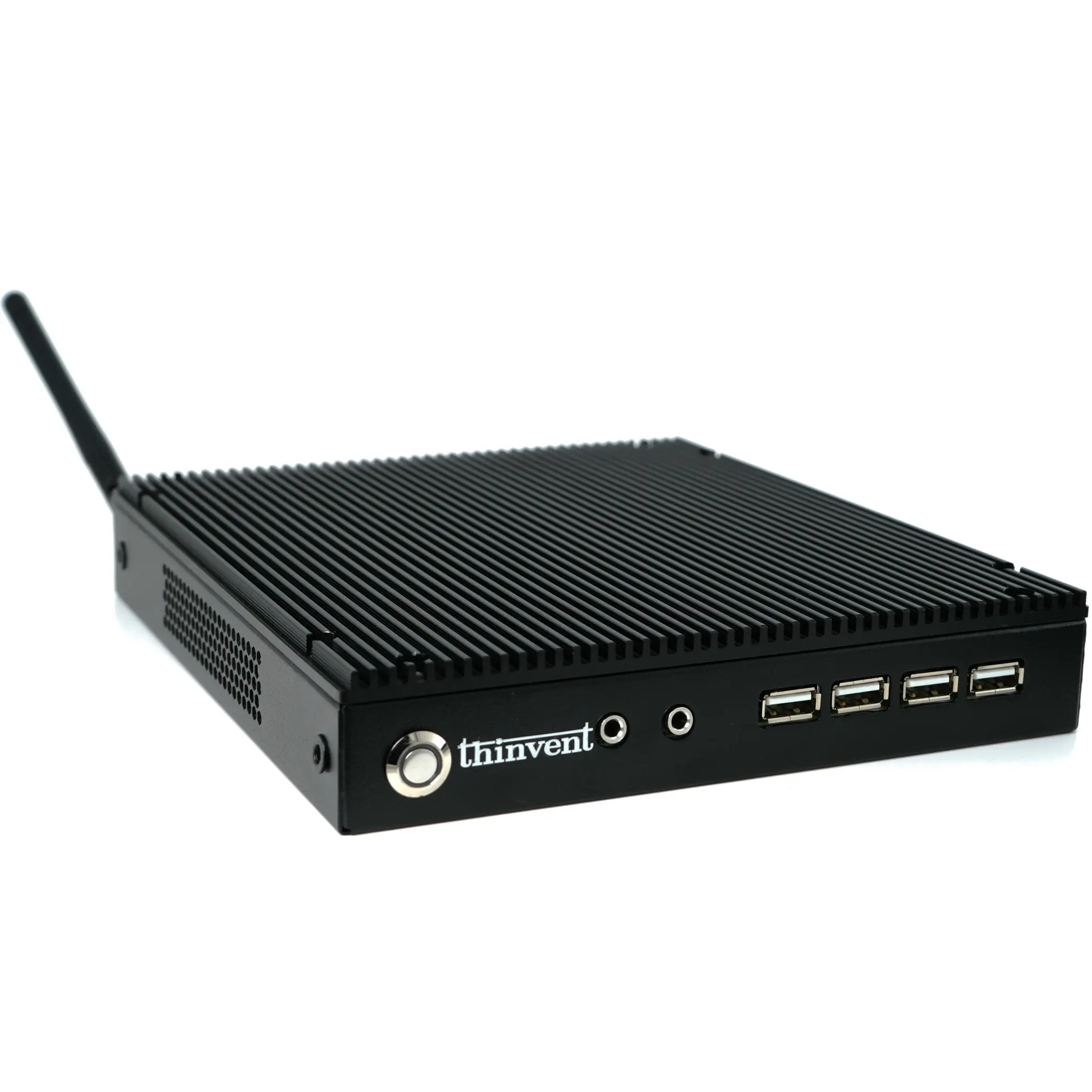
Thinvent offers a range of industrial-grade mini PCs that serve as powerful, reliable alternatives to consumer-grade single-board computers. Our Aero Mini PC series, for example, features efficient Intel N-series processors like the N100 in a robust, fanless chassis. These devices are pre-configured with ample DDR4 RAM and fast SSD storage, supporting operating systems from Windows 11 and Ubuntu Linux to our own Thinux™ Embedded Linux for specialized applications. Built for 24/7 operation in diverse environments, Thinvent mini PCs provide the durability, connectivity, and performance required for professional IoT, digital signage, and edge computing projects worldwide.