What is an X86 Single Board Computer (SBC)?
An X86 Single Board Computer (SBC) is a complete computer built on a single circuit board, featuring a microprocessor, memory, input/output (I/O) ports, and other core components. The "X86" designation refers to the instruction set architecture (ISA) used by the processor, which is the standard for most desktop PCs and servers. This architecture is known for its high performance, broad software compatibility, and robust ecosystem, making X86 SBCs a powerful and versatile solution for embedded and industrial computing.
Key Specifications and Technical Details
X86 SBCs are characterized by their compact, integrated design and industrial-grade components. Key specifications typically include:
-
Processor: Modern, low-power Intel or AMD X86 CPUs, such as Intel's N-series (e.g., N100, N95) or Celeron series, offering a balance of performance and energy efficiency.
-
Memory: Soldered or socketed DDR4/DDR5 RAM, typically ranging from 4GB to 16GB or more.
-
Storage: Onboard eMMC storage or M.2/NVMe slots for SSDs.
-
Connectivity: A rich set of I/O including multiple USB ports (2.0, 3.2), Gigabit Ethernet, HDMI/DisplayPort outputs, and often serial ports (COM) for industrial device communication.
-
Form Factor: Common industry-standard sizes like Mini-ITX, 3.5-inch, or proprietary compact designs for space-constrained applications.
-
Power: Typically powered via a single DC input (e.g., 12V/19V), supporting wide voltage ranges for stability.
Use Cases and Applications
The combination of small size, reliable performance, and standard architecture makes X86 SBCs ideal for a wide range of demanding environments:
-
Industrial Automation: Serving as the brain for PLCs, HMIs, machine vision systems, and robotic controllers on the factory floor.
-
Digital Signage & Kiosks: Powering interactive displays, information terminals, and point-of-sale systems with reliable, always-on operation.
-
Edge Computing & IoT Gateways: Collecting, processing, and transmitting data from sensors and devices at the network edge.
-
Thin Clients & Desktop Virtualization: Providing a secure, manageable endpoint for accessing cloud or virtual desktop infrastructure (VDI).
-
Transportation & In-Vehicle Computing: Used in fleet management, passenger infotainment, and mobile data terminals.
Comparison: X86 SBC vs. ARM SBC
| Feature | X86 SBC | ARM SBC |
|---|---|---|
| Architecture | CISC (Complex Instruction Set Computing) | RISC (Reduced Instruction Set Computing) |
| Performance | Generally higher single-thread & raw compute power | Excellent power efficiency, often lower raw performance |
| Software Ecosystem | Broadest compatibility (Windows, Linux, legacy industrial software) | Primarily Linux/Android, growing Windows support |
| Power Consumption | Moderate to High (typically 6W-65W TDP) | Very Low (typically 2W-15W TDP) |
| Typical Use Case | Performance-intensive industrial apps, legacy software support | Battery-powered devices, ultra-low power embedded systems |
Thinvent X86 Single Board Computer Solutions
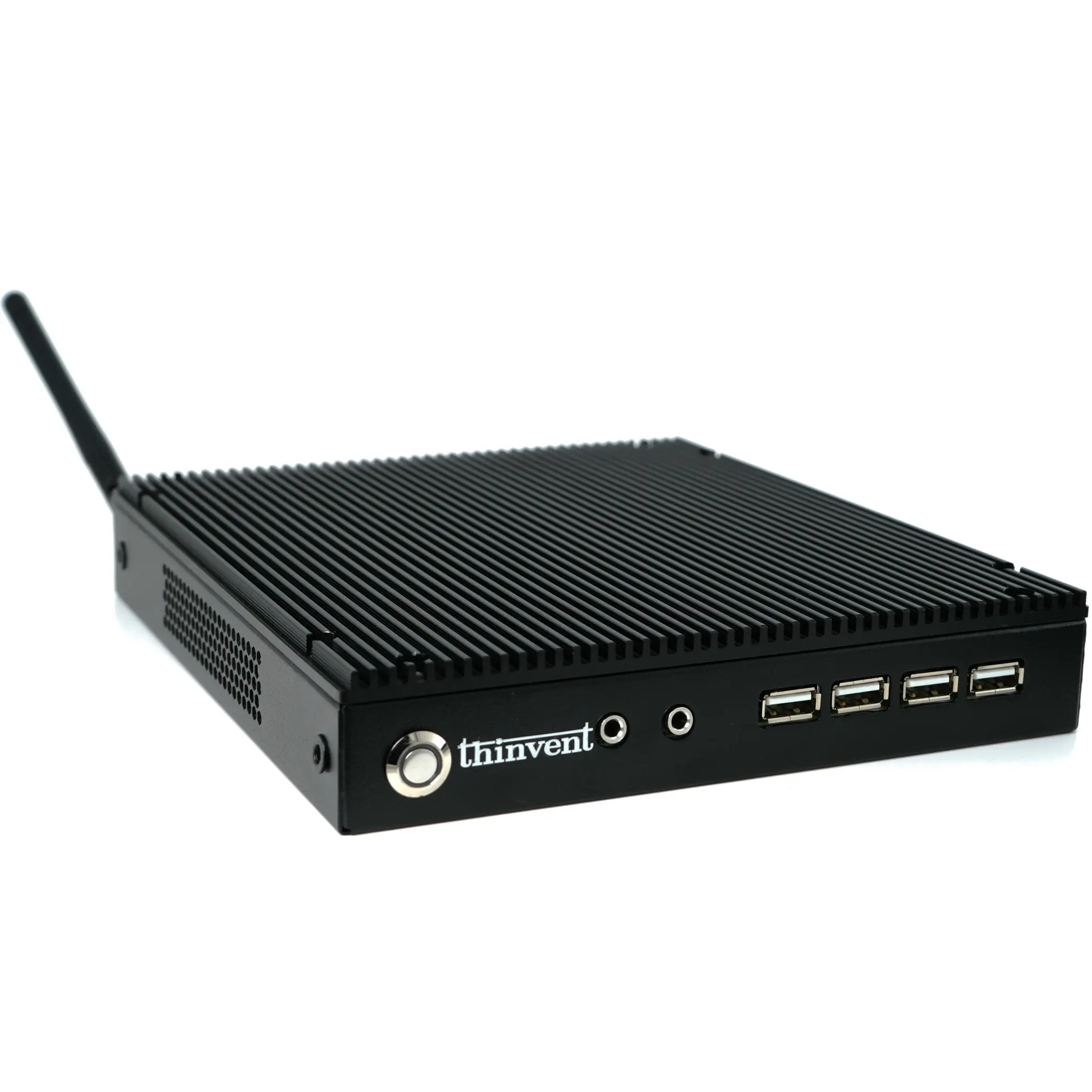
Thinvent offers a range of robust industrial computing solutions built on reliable X86 SBC technology. Our products, like the Aero Mini PC series, encapsulate this technology into rugged, fanless enclosures designed for 24/7 operation. They feature efficient Intel processors, ample DDR4 memory, and solid-state storage, providing a complete, deployment-ready system. Thinvent X86 computers are engineered for durability in challenging environments, offering wide temperature tolerance, rich connectivity options, and multiple operating system choices, from Windows IoT and Pro to various Linux distributions, ensuring seamless integration into your specific industrial application.