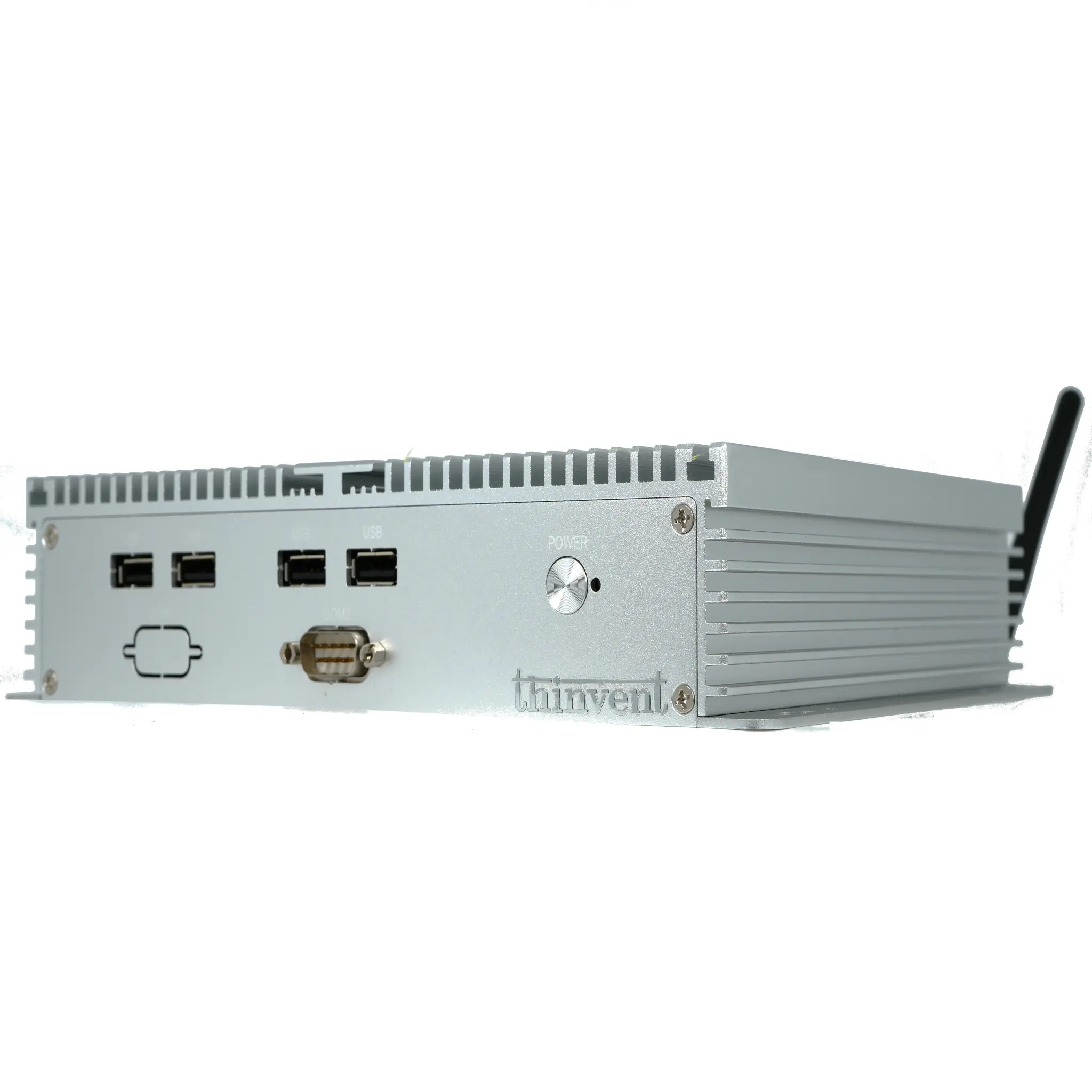
What Are Sealed Industrial Computers?
Sealed industrial computers are ruggedized computing systems designed with an enclosed, fanless chassis to protect internal components from environmental contaminants. Unlike standard commercial PCs, these systems are built to operate reliably in harsh conditions where dust, dirt, moisture, and extreme temperatures are present. The key design principle is the elimination of vents and moving parts like fans, which are common points of failure. Instead, they utilize passive cooling through heatsinks and thermally conductive chassis materials to dissipate heat, ensuring silent operation and enhanced longevity.
Key Specifications and Design Features
The core specifications of a sealed industrial computer are defined by its need for durability and consistent performance. Common features include wide operating temperature ranges (often from -20°C to 60°C or beyond), high shock and vibration resistance, and IP-rated enclosures for dust and water protection (e.g., IP65). Technically, they are powered by efficient, low-TDP processors from Intel's Celeron, N-series, or Core i-series families. Memory and storage are typically soldered or use industrial-grade connectors to withstand movement. Connectivity is robust, featuring industrial I/O like multiple Gigabit Ethernet ports, serial ports (RS-232/485), and isolated digital I/O for machine control.
Primary Use Cases and Applications
These computers are indispensable in automation and control scenarios where reliability is non-negotiable. Major applications include:
-
Factory Automation & IIoT: Controlling PLCs, HMIs, and vision systems on manufacturing floors.
-
Transportation & Logistics: In-vehicle computing for fleet management, railway systems, and airport baggage handling.
-
Outdoor & Marine: Digital signage, kiosks, and navigation systems exposed to weather.
-
Utilities & Energy: Monitoring and control in substations, oil & gas refineries, and renewable energy sites.
-
Food & Pharmaceutical Processing: Environments requiring frequent washdowns and hygiene compliance.
Comparison: Sealed Industrial PC vs. Standard Commercial PC
| Feature | Sealed Industrial PC | Standard Commercial PC |
|---|---|---|
| Enclosure | Fanless, sealed, metal chassis | Vented plastic/metal case with fans |
| Cooling | Passive (heatsink) | Active (fans) |
| Operating Temp | Wide range (e.g., -20°C to 60°C) | Narrow range (e.g., 5°C to 35°C) |
| Durability | High shock/vibration resistance | Minimal protection |
| Environmental | IP-rated (dust/water resistant) | Not rated |
| Lifespan | 5-10+ years (long-term availability) | 3-5 years (rapid refresh cycles) |
| I/O Options | Industrial (serial, isolated DIO) | Consumer (USB, HDMI, audio) |
| Typical Use | Harsh, critical environments | Office, home, retail |
Thinvent Sealed Industrial Computing Solutions
Thinvent offers a comprehensive range of sealed, fanless industrial computers engineered for mission-critical deployments. Our product lines include compact Mini PCs and versatile Industrial PCs, all built with robust aluminum enclosures for superior heat dissipation and physical protection. They are powered by efficient Intel processors, from the entry-level N-series to powerful Core i-series CPUs, supporting various memory and SSD configurations. With support for multiple operating systems—including Windows 11 IoT, Windows 11 Pro, and Linux distributions—Thinvent systems provide a reliable computing backbone for automation, digital signage, and edge computing applications worldwide.