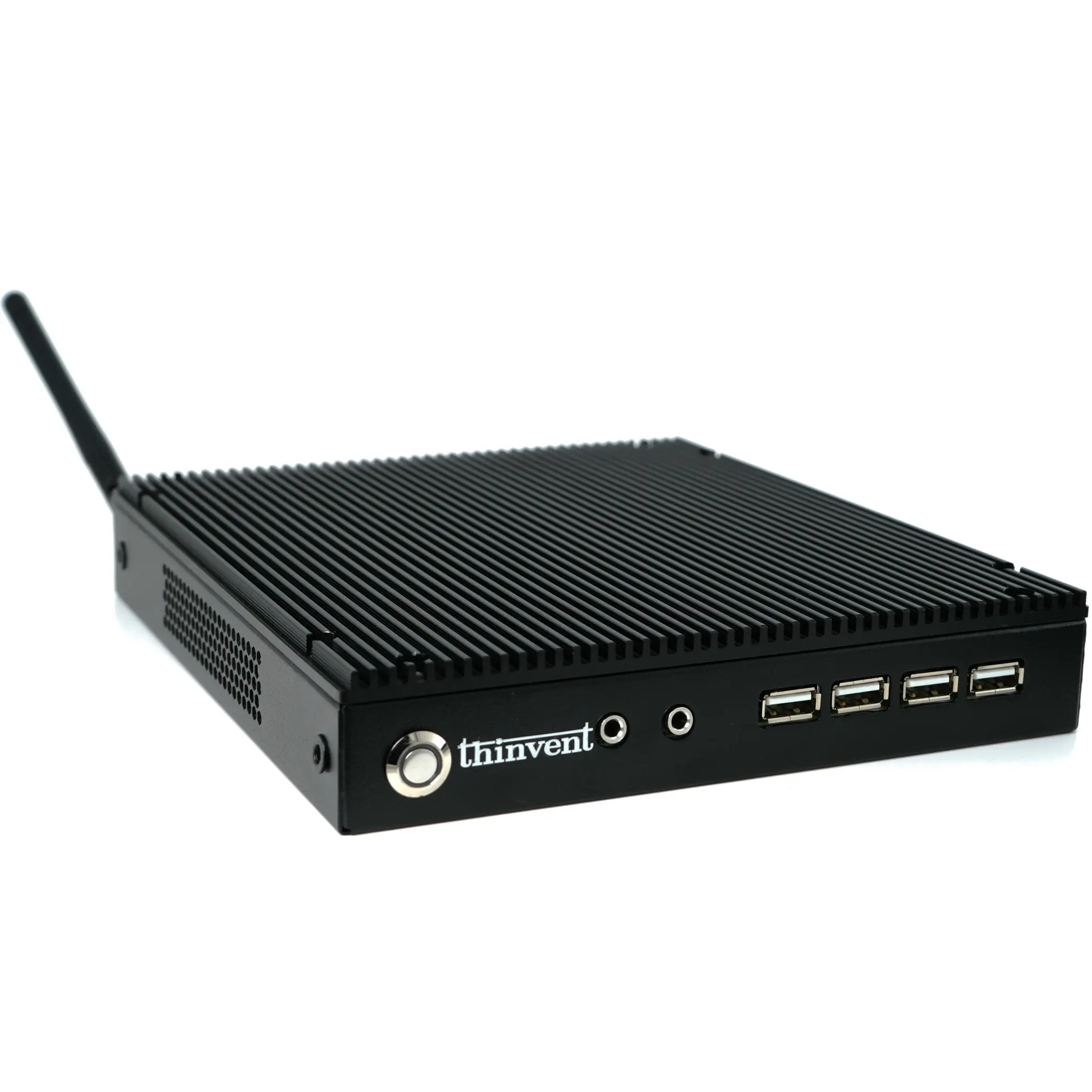
What is a Zero Client?
A Zero Client is a specialized, ultra-thin endpoint device designed for virtual desktop infrastructure (VDI) and cloud computing environments. Unlike traditional PCs or thin clients, a zero client contains no local operating system, storage, or applications. It is a hardware endpoint that relies entirely on a centralized server or cloud to deliver a complete desktop experience. The primary function is to establish a secure, encrypted connection to a remote host, rendering only the display, keyboard, and mouse inputs/outputs. This makes it an ideal solution for centralized IT management, enhanced security, and reduced total cost of ownership.
Key Specifications and Technical Details
Zero clients are defined by their minimalistic hardware profile. They typically feature a low-power processor (often ARM or Intel Atom/Celeron N-series), minimal RAM (just enough for the connection protocol), and no local storage. The core technology is the embedded firmware that supports specific remote display protocols like PCoIP, Blast Extreme, or HDX. Key specifications to look for include:
-
Connectivity: Multiple high-speed Ethernet ports (often 1GbE or 2.5GbE) for network redundancy and performance.
-
Display Outputs: Support for dual or quad monitors via DisplayPort or HDMI.
-
Protocol Support: Compatibility with major VDI platforms like VMware Horizon, Citrix Virtual Apps and Desktops, and Microsoft Remote Desktop Services.
-
Security: Hardware-based security with no writable storage, making them immune to malware and data theft at the endpoint.
-
Power: Extremely low power consumption, often under 10 watts, leading to significant energy savings.
Use Cases and Applications
Zero clients are deployed in scenarios demanding high security, centralized management, and consistent user performance across many identical workstations.
-
Healthcare (Hospitals, Clinics): Secure access to Electronic Health Records (EHR) systems and medical imaging, ensuring patient data privacy and compliance (HIPAA, GDPR).
-
Financial Services & Call Centers: Provides a locked-down, secure desktop for transaction processing and customer service, preventing data leakage.
-
Education (Computer Labs, Libraries): Allows students to access virtualized lab software and desktops from any terminal, simplifying maintenance and software updates.
-
Manufacturing & Industrial Control: Delivers a reliable and consistent interface for SCADA and MES systems on the factory floor, resistant to dust and vibration.
Comparison: Zero Client vs. Thin Client vs. Traditional PC
| Feature | Zero Client | Thin Client | Traditional PC (Fat Client) |
|---|---|---|---|
| Local OS & Storage | None | Lightweight OS (e.g., ThinOS, Linux) | Full OS (Windows, Linux) |
| Processing | Protocol decoding only | Local processing for OS & some apps | Full local processing |
| Management | Centralized, firmware-based | Centralized, image-based | Individual, complex |
| Security | Very High (stateless, no attack surface) | High | Varies, requires antivirus |
| Total Cost of Ownership | Lowest (energy, management, security) | Low | Highest |
| Best For | Static, task-based VDI environments | Flexible environments needing local apps | Power users, offline work |
Thinvent Solutions for Zero Client Deployments
While Thinvent specializes in robust industrial and mini PCs, our product philosophy aligns perfectly with the core requirements of zero-client-like environments: reliability, low power consumption, and fanless durability. For organizations building or supplementing a VDI infrastructure, our compact and efficient systems can serve as excellent thin client terminals or even host the virtualized environment itself. Our fanless Mini PCs, featuring Intel N-series processors, offer the silent operation, minimal maintenance, and compact form factor ideal for deploying secure endpoints in healthcare, digital signage, and kiosk applications. Explore our range to find the perfect hardware foundation for your centralized computing strategy.