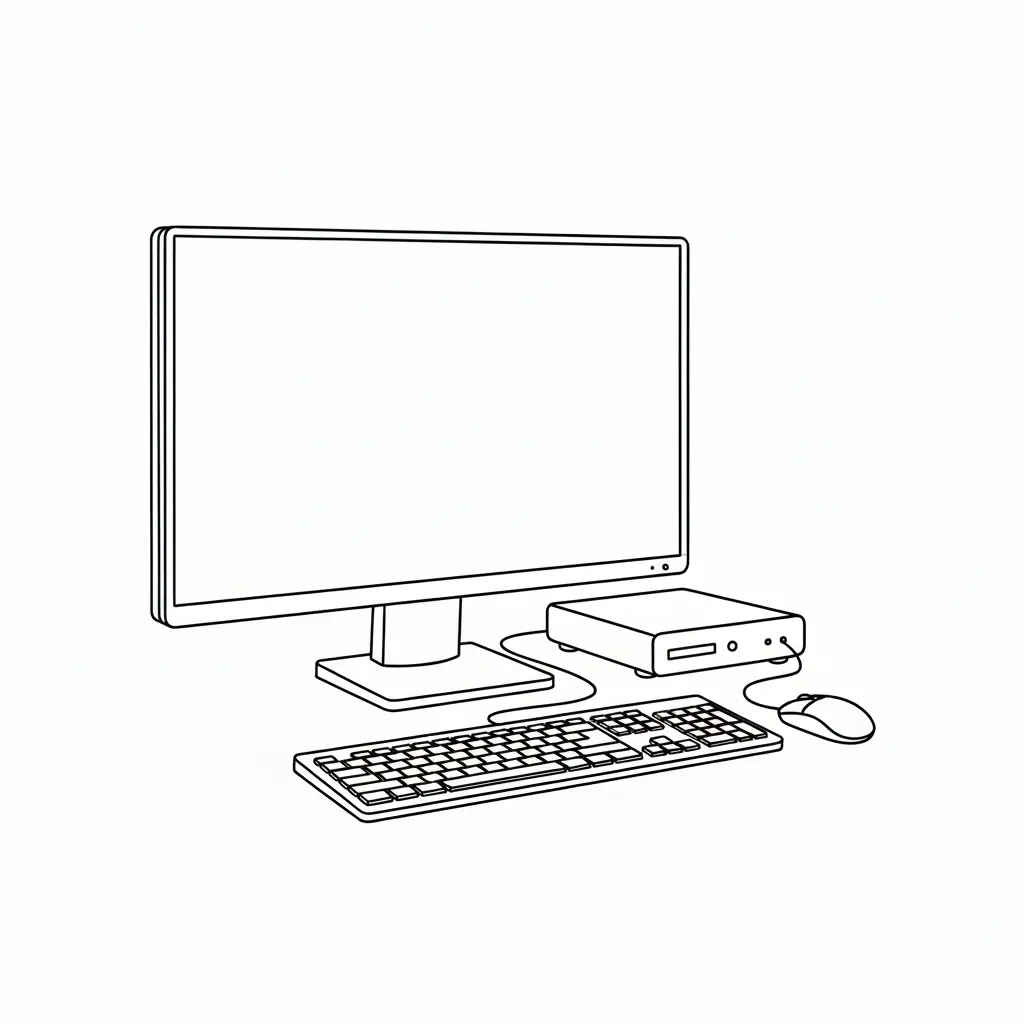
A system solution computer is a complete, application-ready computing platform rather than a bare board or a component. Instead of buying a motherboard, storage, power supply, enclosure, cooling and operating system separately and then integrating them, you specify the workload — a kiosk, a machine tool, a digital signage wall, a thin-client fleet, a data acquisition node — and receive a validated, tested system that boots straight into production. The "solution" part is the integration: mechanical enclosure, thermal design, power input, I/O layout, operating system image and long-term supply consistency, all resolved before the unit ships.
What Defines a System Solution Platform
The core of any such system is the compute engine. Modern industrial and commercial designs typically pair an Intel® processor — from efficiency-class chips like the Celeron® J4125 or the N-series (N95, N100, N150) up to 12th and 13th generation Core™ i3/i5 parts — with 4 GB to 64 GB of DDR4 memory and 128 GB to 1 TB of SSD storage. Two attributes matter more than raw clock speed in a solution context: fanless thermal design, so no dust is drawn into the chassis and no fan bearing becomes the first failure point, and wide, stable DC power input, so the unit tolerates the voltage sag and noise found on factory floors and in vehicles.
Interfaces and Integration
A solution computer earns its name through its I/O. Typical configurations include dual Gigabit Ethernet ports for network segmentation or redundancy, multiple HDMI outputs for dual-display workstations, USB 3.2 Gen 2 and USB-C for peripherals and cameras, and — for industrial roles — isolated RS-232/RS-485 serial ports in DB9 format for PLCs, weighbridges, barcode scanners and legacy controllers. Storage and memory are usually socketed rather than soldered, so the same chassis can be scaled from an entry thin client to a workstation-class node without redesigning the software stack.
System Solution Comparison by Form Factor
| Form Factor | Typical Deployment | Compute Class | Key Trait |
|---|---|---|---|
| Mini PC | Office, kiosk, signage, edge gateway | N100 / i3 / i5 | Small footprint, VESA mountable |
| Thin Client | VDI, Citrix, RDP fleets | Celeron, N-series | Low power, centralised management |
| All-in-One PC | Reception, clinic, retail counter | i3 / i5 | Integrated 21.5"–23.8" display, no cable clutter |
| Industrial PC | Factory automation, SCADA, transport | 12th–14th gen Core™ | Fanless, wide-temp, serial I/O, DIN/panel mount |
Use Cases
System solution computers are chosen wherever deployment speed and long-term stability outweigh the lower unit cost of assembling parts. Common applications include industrial automation (SCADA terminals, HMI hosts, data loggers), retail and hospitality (POS back-office, self-service kiosks), healthcare (nurse stations, imaging workstations), logistics (fleet and warehouse terminals), education and enterprise IT (thin-client labs, VDI endpoints) and digital signage (multi-display media players). In each case the buyer wants one part number, one OS image, one warranty and one thermal envelope to plan around.
Thinvent System Solution Computers
Thinvent builds system solution computers across four families. The Industrial PC range — including the IPC3 series with Intel® Core™ i3-1215U (6 cores, up to 4.4 GHz, 10 MB cache), 16 GB DDR4 RAM, 1 TB SSD and 12V 10A adapter — is available with quad DB9 serial