What Is an Intel Xeon Processor?
An Intel Xeon processor is a server and workstation chip from Intel. Intel sells Xeon processors for data centers, networking, edge computing and workstations. Intel has several Xeon families, including Xeon 6, Xeon 6+ and Xeon CPU Max, and each family targets a different workload.
Key Specifications
Intel publishes Xeon specifications for each model, including core count, maximum frequency, cache size and supported memory. Intel documents these details in its product specification listings. Buyers compare these values to match a Xeon model to a workload. A Xeon chip with more cores suits parallel server tasks, and a chip with more cache suits data-heavy applications.
Common Uses
Xeon processors run servers in data centers, network appliances, edge devices and professional workstations. Xeon chips suit virtualization, databases, cloud services and engineering software. Edge deployments use Xeon chips where compute must run close to the data source.
Comparison
| Use case | Typical Xeon focus |
|---|---|
| Data center | High core count and memory capacity |
| Network | Packet processing and reliability |
| Edge | Compact compute near the data source |
| Workstation | Sustained performance for demanding software |
Compare exact model numbers on Intel's product pages before you select a chip.
Thinvent Products and Xeon Processors
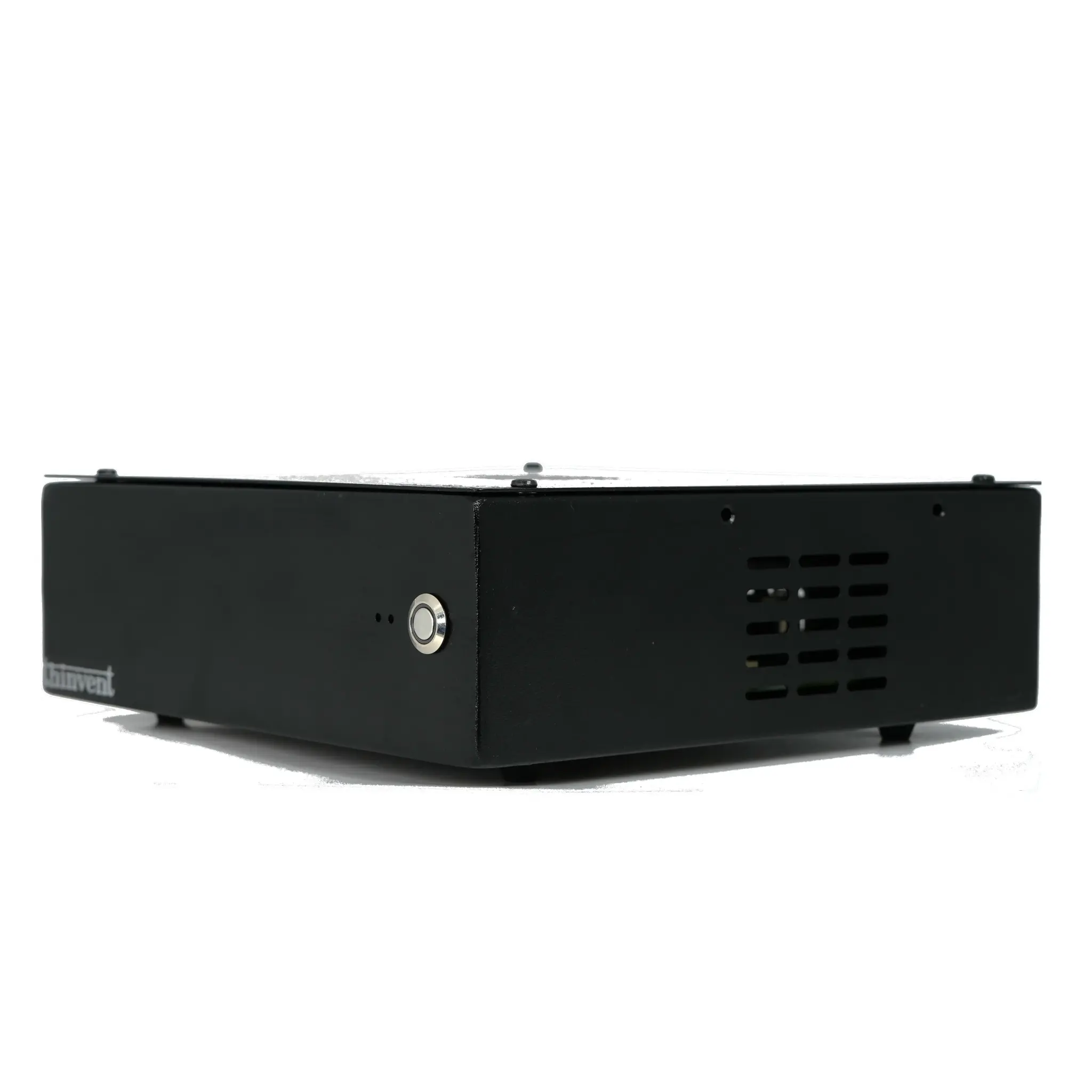
The Thinvent range on this page does not include Intel Xeon processors. Every Thinvent Aero Mini PC on this page uses the Intel Core i7-1255U processor, which has 10 cores, a maximum frequency of 4.7 GHz and 12 MB of cache. Each unit has 16GB DDR4 RAM and a 128GB SSD. The range has these units with Windows 11 Pro, Windows 11 IoT Value, DOS, Thinux Embedded Linux or Ubuntu Linux, and some configurations include a Thinvent keyboard and mouse set.