What Are Mini PCs With PCIe Slots?
A Mini PC with a PCIe (Peripheral Component Interconnect Express) slot is a compact computing device that includes one or more expansion slots, allowing users to add specialized hardware cards. This feature bridges the gap between the ultra-compact form factor of a mini PC and the expandability of a traditional desktop, enabling significant customization and functionality upgrades without sacrificing a small footprint. The PCIe interface provides a high-speed connection for add-in cards, which is critical for performance-sensitive expansions.
Key Specifications and Technical Details
The core value of these systems lies in their expansion capability. Key specifications to consider include:
-
PCIe Slot Generation and Lanes: Common configurations include PCIe 3.0 or 4.0, with x1, x4, or x16 lanes. More lanes provide higher bandwidth, essential for graphics cards, high-speed networking (10GbE), or data acquisition cards.
-
Form Factor: The slot type is often a half-height or low-profile slot to fit within the mini PC's chassis. Some models may support a full-size card with an external riser or a specific chassis design.
-
Processor and Chipset: The CPU and platform chipset determine the number of available PCIe lanes. More powerful processors (e.g., Intel Core i-series) typically support more lanes, enabling better multi-card configurations.
-
Power Delivery: Adding a PCIe card increases power consumption. It's crucial to verify the mini PC's power supply unit (PSU) has sufficient wattage and the correct connectors (e.g., 6-pin or 8-pin PCIe power) for the intended card.
-
Cooling and Chassis Design: Adequate airflow is necessary to manage the additional heat generated by an expansion card. Industrial-grade mini PCs often feature robust, fanless or actively cooled designs for this purpose.
Applications and Use Cases
Mini PCs with PCIe slots are indispensable in professional and industrial environments where space is limited but specific hardware is required.
-
Digital Signage & Kiosks: Add a high-performance GPU for driving multiple 4K displays or a video capture card for live content feeds.
-
Industrial Automation: Install specialized I/O cards for machine control, data acquisition (DAQ) cards for sensor networks, or serial communication cards.
-
Network Appliances: Utilize multi-port network interface cards (NICs) to create firewalls, routers, or network monitoring systems.
-
Edge Computing & AI: Incorporate AI acceleration cards (like some M.2 form factor AI cards) or GPUs for on-site inference and data processing.
-
Gaming & Compact Workstations: While less common, some mini PCs can accommodate low-profile graphics cards, creating a powerful, space-saving gaming or design workstation.
Comparison of Common PCIe Card Types for Mini PCs
| Card Type | Typical Use Case | Key Consideration for Mini PC |
|---|---|---|
| GPU (Graphics) | Display expansion, light gaming, AI acceleration | Power supply capacity, physical space/height, cooling. |
| Network Interface (NIC) | Adding 2.5GbE, 10GbE, or fiber ports | PCIe lane bandwidth (x1 vs. x4), driver support for the OS. |
| Serial/Parallel I/O | Connecting to legacy industrial machinery | Number of required ports (RS-232/422/485), isolation needs. |
| Data Acquisition (DAQ) | Reading sensors and control signals | Sampling rate, input channel count, software compatibility. |
| Storage Controller | Adding SATA, SAS ports, or hardware RAID | PCIe generation for speed, support for booting from array. |
Thinvent Mini PCs Featuring PCIe Expansion
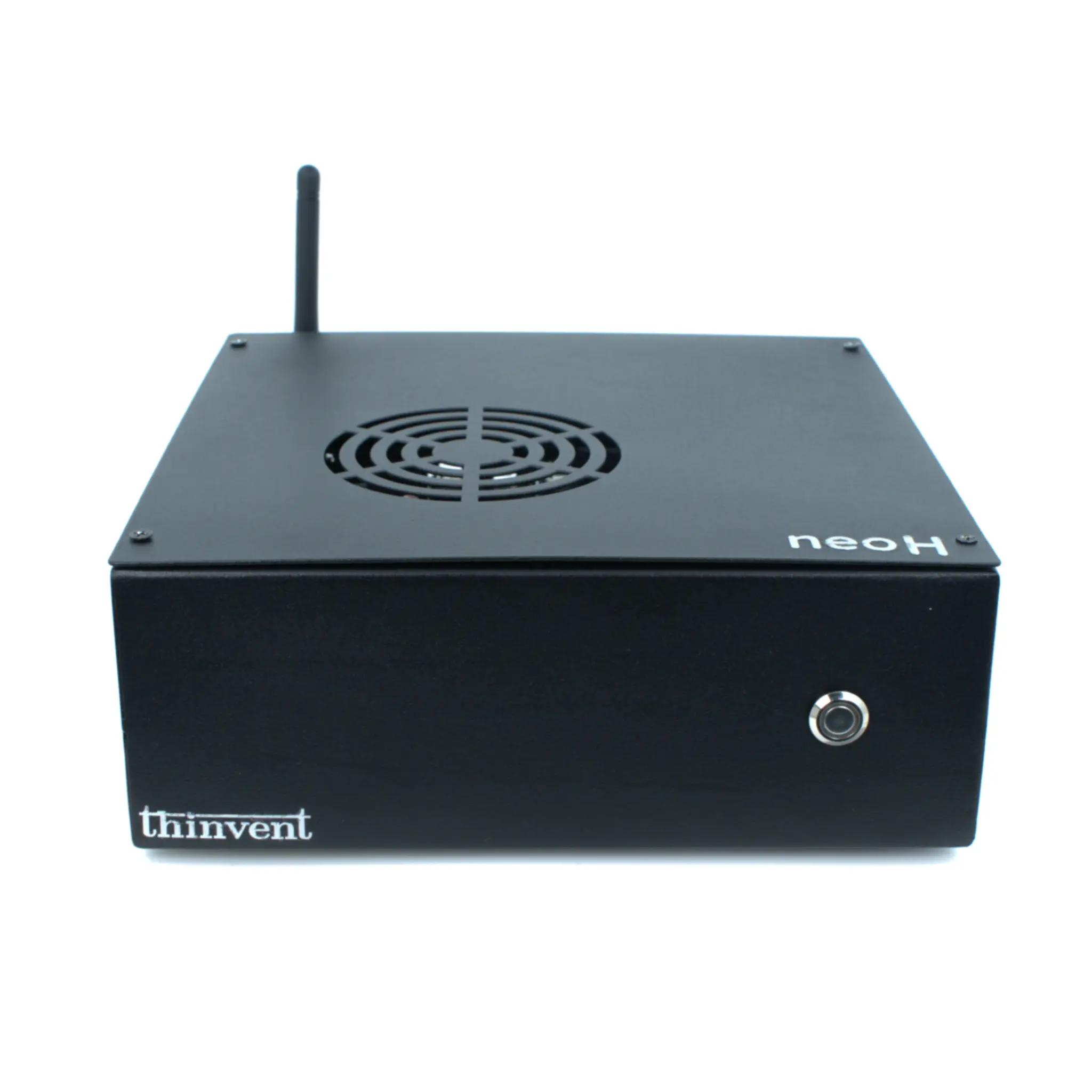
Thinvent offers a range of robust industrial mini PCs designed with expansion in mind. Our chassis are engineered to support reliable operation with added PCIe cards, featuring efficient thermal management through fanless or intelligent fan designs. Models are available with various Intel processor options, from efficient N-series chips for basic I/O expansion to more powerful Core i3, i5, and i7 processors that provide ample PCIe lanes for demanding multi-card setups. This allows our customers to deploy a standardized, compact computing platform that can be precisely tailored with hardware for digital signage, factory automation, networking, and other specialized applications worldwide.