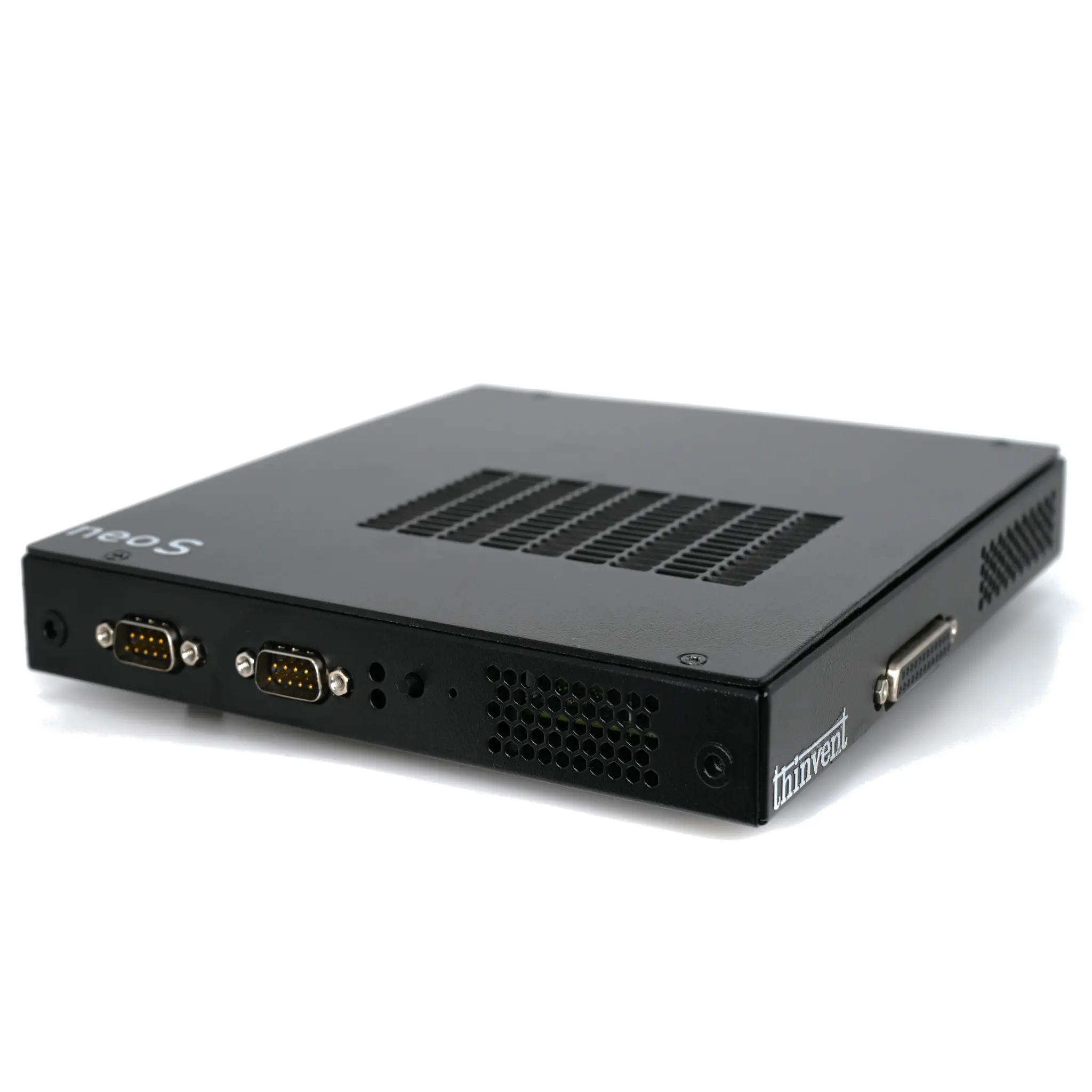
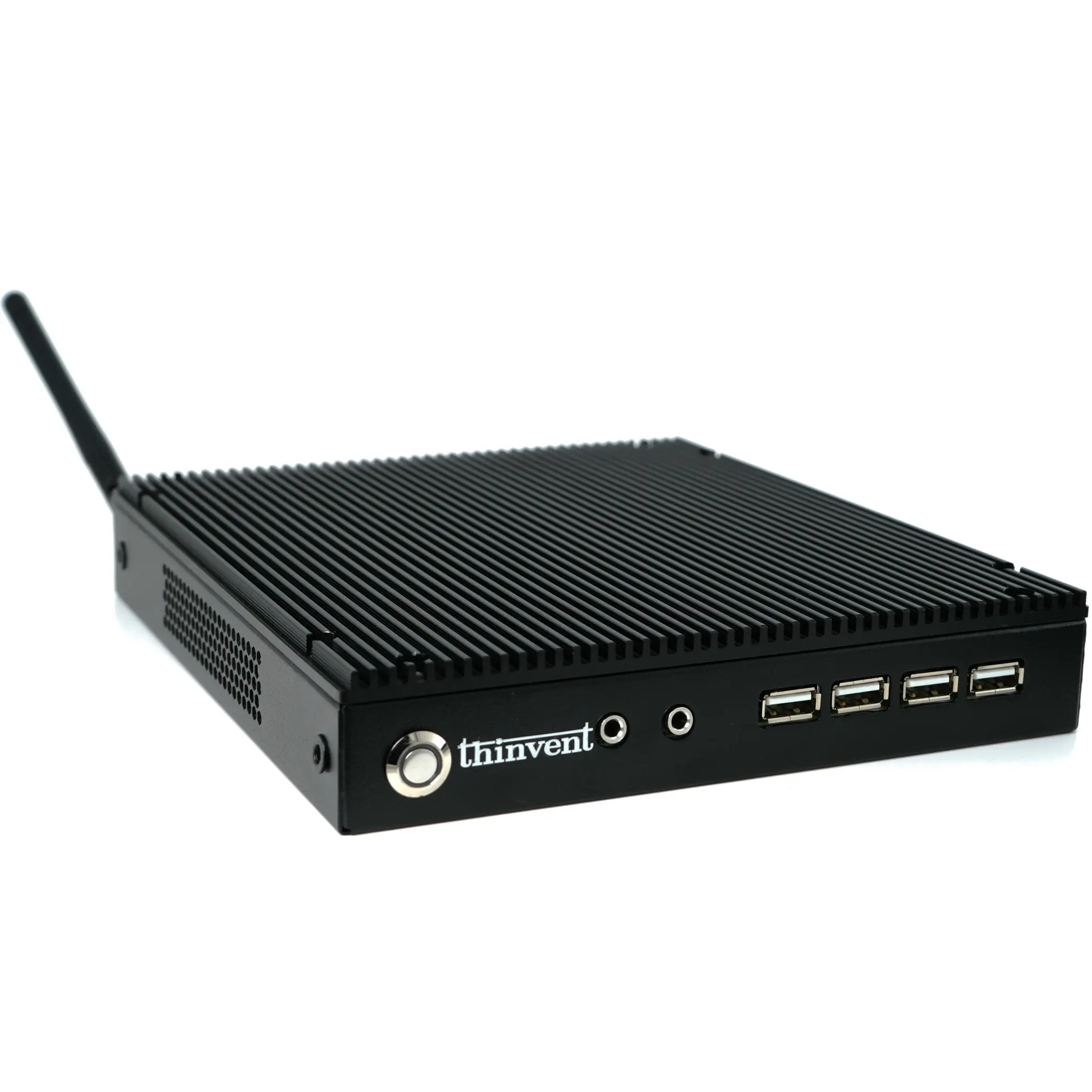
A 20-core industrial server represents the high-performance segment of embedded computing, designed to handle intensive, parallelized workloads in demanding environments. These systems are built around processors with a high core count, typically from Intel's Core i7, i9, or Xeon families, which can feature 20 or more processing threads. Unlike standard servers, industrial-grade versions are engineered for 24/7 operation with features like fanless cooling for silent, dust-resistant operation, wide operating temperature ranges, and enhanced shock and vibration resistance. They provide the raw computational power needed for data processing, virtualization, and complex automation tasks where reliability is non-negotiable.
Key Specifications and Architecture The defining characteristic is the CPU, with core counts of 20 or more (e.g., 12 P-cores + 8 E-cores in modern Intel architectures). This is paired with substantial, often ECC-capable, memory (64GB to 128GB+ DDR4/DDR5) and high-speed NVMe SSD storage in RAID configurations for maximum throughput and data integrity. I/O is critical, with these servers featuring multiple 2.5GbE or 10GbE LAN ports, abundant USB 3.2/4.0 ports, and expansion slots like M.2 and PCIe for adding specialized networking, GPUs, or data acquisition cards. Power delivery is robust to support sustained peak performance.
Primary Use Cases and Applications High-core-count industrial servers are deployed where computational density and reliability converge. Key applications include:
-
Edge Computing & AI Inference: Processing data from IoT sensors and running machine learning models at the network edge, reducing latency.
-
Industrial Automation & Control: Acting as a central controller for complex manufacturing lines, robotics, and SCADA systems.
-
Digital Signage & Media Servers: Driving multiple 4K/8K displays in transportation hubs, retail networks, and control rooms.
-
Network Appliances: Serving as high-performance firewalls, routers, or virtualization hosts (e.g., VMware, Hyper-V) in telecom and enterprise settings.
-
Scientific & Research Data Acquisition: Capturing and analyzing real-time data in laboratory and field environments.
Comparison: High-Core Industrial Servers vs. Standard Servers | Feature | High-Core Industrial Server | Standard Rack Server | | :--- | :--- | :--- | | Form Factor | Compact, rugged (wall-mount, DIN-rail) | Large, rack-mounted (1U/2U+) | | Cooling | Often fanless (passive) or silent fan | Active cooling with loud fans | | Operating Temp | Wide range (e.g., -20°C to 70°C) | Narrow, controlled data center temps | | Durability | High shock/vibration resistance | Standard, for stable environments | | Deployment | Edge, factory floor, harsh environments | Climate-controlled data center | | Power Supply | Wide-range DC or industrial AC | Standard AC |
Thinvent's High-Performance Industrial Computing Solutions While Thinvent's current product portfolio showcased on this page includes capable systems with up to 12 cores (like the IPC5 with an i5-1240P), the query for a "20-core server" indicates a need for top-tier computational power. Thinvent specializes in engineering reliable, fanless industrial PCs that can be configured to meet such demanding specifications. For applications requiring the ultimate in parallel processing—such as advanced edge AI, multi-channel video analytics, or dense virtualization—Thinvent can provide tailored solutions. We focus on integrating high-core-count Intel processors into rugged, compact chassis designed for 24/7 operation in challenging conditions, ensuring your critical workloads run with unwavering stability.