A desktop computer equipped with 24GB of RAM represents a significant tier of performance, designed for demanding professional and creative workloads. This memory capacity sits between standard 16GB configurations and high-end 32GB+ workstations, offering an excellent balance of multitasking capability, application responsiveness, and future-proofing. It is particularly well-suited for users who run multiple resource-intensive applications simultaneously, such as virtual machines, large databases, complex spreadsheets, advanced photo editing, and moderate video editing projects.
The primary advantage of 24GB RAM is its ability to handle substantial data sets in memory, drastically reducing reliance on slower disk-based virtual memory. This translates to smoother performance in scenarios like software development with multiple containers or IDEs, financial modeling, architectural rendering, and scientific computing. For power users, it means virtually no slowdowns when switching between dozens of browser tabs, a design suite, and communication tools. It also provides ample headroom for operating system overhead and background processes, ensuring consistent system stability.
When considering a 24GB RAM desktop, it's crucial to evaluate the complete system specification. The performance is heavily influenced by the CPU, storage type (NVMe SSD vs. SATA SSD), and graphics solution. A powerful multi-core processor from Intel's Core i5/i7/i9 series or AMD's Ryzen 5/7/9 series is typically paired with this memory capacity to avoid bottlenecks. Furthermore, the RAM configuration itself matters—whether it's a single 24GB module or a dual-channel setup (e.g., 16GB + 8GB)—as dual-channel can offer better performance in memory-intensive tasks.
Typical Use Cases for 24GB RAM Desktops:
-
Advanced Multitasking & Productivity: Seamlessly running enterprise resource planning (ERP) software, CRM platforms, large databases, and numerous business applications.
-
Content Creation & Media Processing: Efficient handling of 4K video editing, 3D modeling, graphic design with high-resolution assets, and music production with multiple plugins.
-
Engineering & Development: Running CAD/CAM software, computational simulations, integrated development environments (IDEs) with compilers, and multiple virtual machines for testing.
-
Data Analysis & Research: Processing large datasets in statistical software, machine learning with moderate-sized models, and complex financial analytics.
Thinvent Industrial Computing Solutions
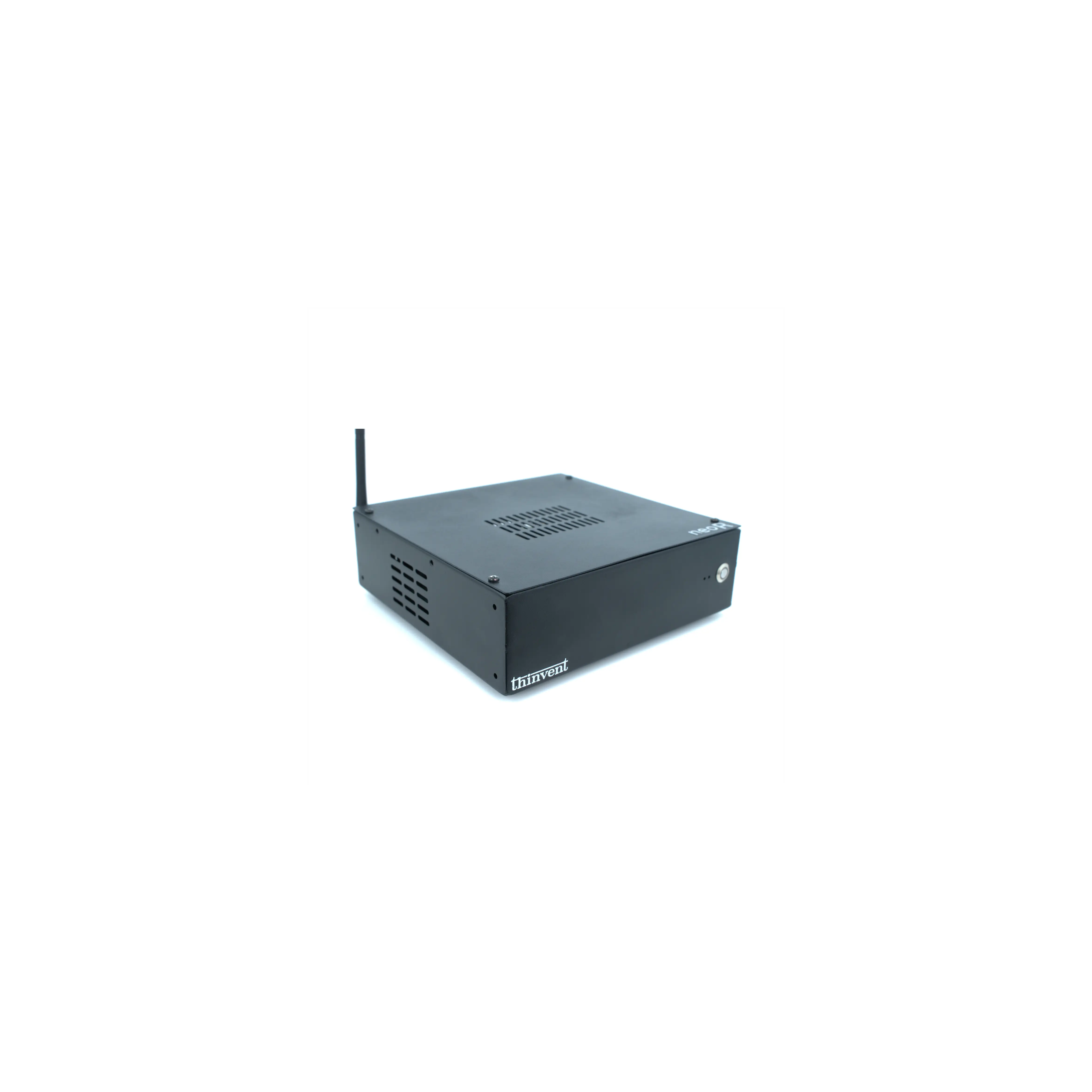
While the sample products listed showcase Thinvent's robust range of reliable, fanless industrial computers, mini PCs, and thin clients—ideal for digital signage, kiosks, IoT gateways, and lightweight computing—our engineering capabilities extend to custom configurations for high-performance needs. Thinvent specializes in building durable, purpose-built computing solutions for industrial and commercial environments. For clients requiring desktops with 24GB RAM or other high-specification configurations, we offer custom-built industrial PCs and mini PCs. These systems can be tailored with powerful Intel Core processors, ample DDR4/DDR5 memory, fast NVMe storage, and robust cooling solutions to meet the demands of specialized applications in automation, control systems, and edge computing, ensuring reliability and performance in challenging conditions.