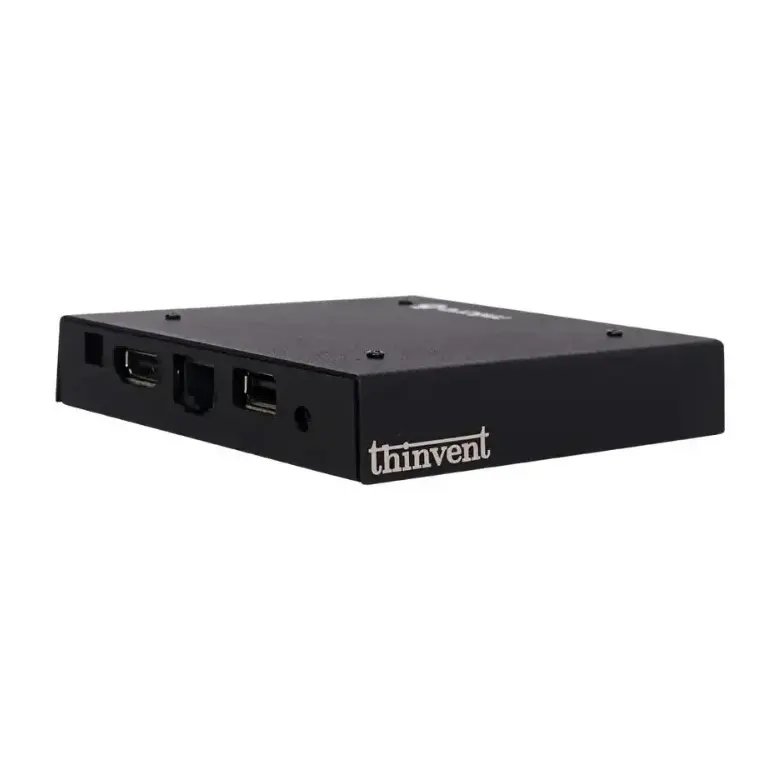
What Are Fanless Mini PCs?
Fanless mini PCs are compact computing devices designed without internal cooling fans. They rely on passive cooling systems, such as heat sinks and thermally efficient chassis designs, to dissipate heat. This fundamental design choice eliminates moving parts, which is the primary source of failure in traditional computers. The result is a highly reliable, silent, and maintenance-free system ideal for demanding environments where dust, vibration, and continuous operation are concerns.
Key Specifications and Technical Advantages
The core advantage of fanless design is enhanced reliability and longevity. By removing the fan, these systems achieve a true Mean Time Between Failures (MTBF) measured in decades under typical operating conditions. They are built to withstand wide temperature ranges, often from -20°C to 70°C, and are immune to dust ingress. Technically, they utilize low-power, high-efficiency processors from both ARM and Intel architectures. ARM-based models, like those with Cortex-A55 cores, offer exceptional power efficiency for lightweight tasks, while Intel-based models, including Core i-series and N-series processors, provide robust x86 performance for more complex applications. Common features across these platforms include solid-state storage (eMMC or SSD), soldered or DDR4 RAM for shock resistance, and multiple I/O ports for industrial connectivity.
Ideal Use Cases and Applications
The rugged and reliable nature of fanless mini PCs makes them perfect for embedded and industrial automation. Key applications include:
-
Digital Signage & Kiosks: Silent operation and 24/7 reliability for public displays.
-
Factory Automation & IoT Gateways: Withstanding harsh factory floors with dust, vibrations, and temperature fluctuations.
-
Thin Client & VDI Endpoints: Providing a secure, low-maintenance endpoint for virtual desktop infrastructures.
-
Edge Computing Nodes: Processing data locally in smart retail, transportation, or energy management systems.
-
Medical and Laboratory Equipment: Where silence and cleanliness are critical.
Comparison of Common Fanless Architectures
| Feature | ARM-Based Mini PCs (e.g., Cortex A53/A55) | Intel x86-Based Mini PCs (e.g., N100, Core i3/i5) |
|---|---|---|
| Core Strength | Ultra-Low Power, Cost-Effective | High Performance, Broad Software Compatibility |
| Typical Use | Thin Clients, Basic Kiosks, Simple IoT Gateways | Industrial PCs, Advanced Automation, Edge AI, Multi-display Setups |
| Power Consumption | Very Low (often 5V adapters) | Low to Moderate (12V adapters) |
| OS Support | Linux-based (Thinux™, Ubuntu), Android | Windows, Linux (Ubuntu, Thinux™) |
| Ideal For | Fixed-function, dedicated applications | Flexible, compute-intensive applications |
Thinvent's Range of Fanless Industrial Computing Solutions
Thinvent offers a comprehensive portfolio of fanless mini PCs and industrial computers designed for ultimate reliability. Our Micro Series leverages ARM technology for ultra-efficient thin client and lightweight computing tasks. For more demanding performance, our Treo and IPC Series feature Intel processors like the efficient Intel N100 and powerful 12th/14th Gen Core i3/i5 CPUs, capable of handling complex industrial software and multi-tasking. The Aero Series provides a balance of premium performance in a compact form factor. All Thinvent fanless systems are built with industrial-grade components, support wide voltage input, and come with a choice of operating systems—including our proprietary Thinux™ Embedded Linux, Ubuntu, or Windows IoT/Pro—to match your exact application requirements. This range ensures that whether you need an ultra-low-power endpoint or a high-performance industrial controller, Thinvent has a silent, reliable, and robust fanless solution.