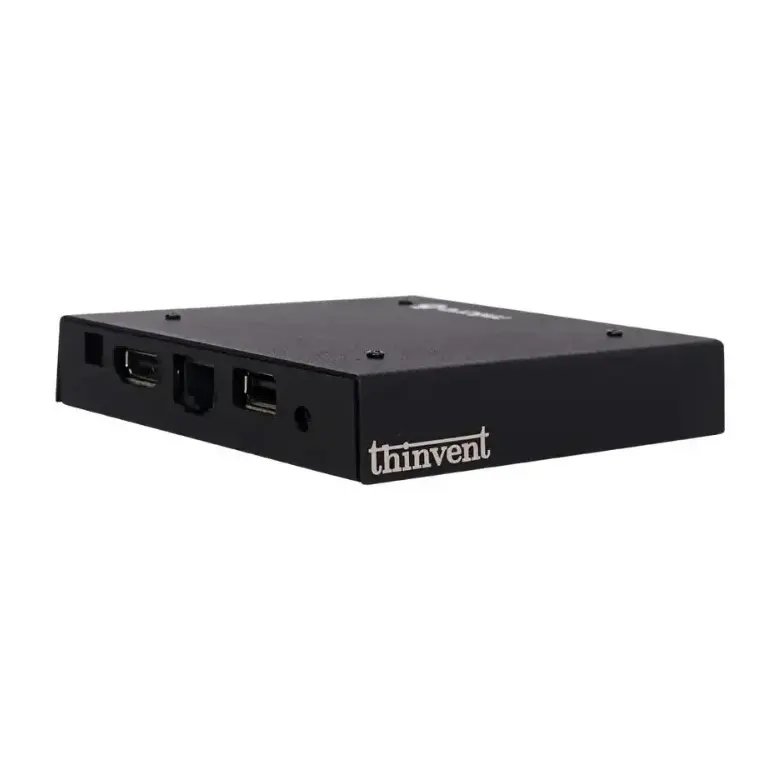
What are Compact Industrial Nanobox PCs for Automation?
The query "6Es7647 8Bd31 0Cw1" appears to be a specific part number, likely for a Siemens SIMATIC industrial PC module designed for compact, embedded automation tasks. These devices, often called Nanobox PCs, are ultra-compact, ruggedized computers built for harsh industrial environments. They are characterized by fanless cooling for silent, reliable operation, wide operating temperature ranges, and robust connectivity for interfacing with PLCs, HMIs, and other factory floor equipment. Their primary role is to provide localized computing power for machine control, data acquisition, and process visualization directly at the edge of the automation network.
Key Specifications and Technical Advantages
Compact industrial PCs for automation prioritize reliability and longevity over raw performance. Key specifications include:
-
Fanless Design: Eliminates moving parts, preventing dust ingress and mechanical failure, crucial for 24/7 operation.
-
Wide Power Input: Typically support a range like 9-36V DC, compatible with standard industrial power supplies.
-
Rugged Construction: Often feature metal housings, wide operating temperature ranges (e.g., -20°C to 60°C), and resistance to vibration.
-
Diverse I/O: Include multiple serial ports (COM), Ethernet ports (often with industrial protocols), USB ports, and display outputs for HMIs.
-
Storage: Utilize reliable, shock-resistant solid-state storage (eMMC, SSD).
-
Longevity: Components and software support are guaranteed for extended periods, often 10+ years, which is critical for industrial lifecycle planning.
Applications and Use Cases
These compact PCs are deployed across various automation scenarios:
-
Machine Control: Acting as a dedicated controller or co-processor for CNC machines, packaging systems, or robotic cells.
-
Edge Gateway: Collecting, preprocessing, and transmitting data from sensors and PLCs to central SCADA or MES systems.
-
Human-Machine Interface (HMI): Powering local touchscreen displays for operator interaction and process visualization.
-
Digital Signage & Kiosks: Driving informational displays in factories, warehouses, and public spaces.
-
Test & Measurement: Used in automated test equipment for data logging and analysis.
Comparison of Common Form Factors & Processors
| Feature | ARM-based Nano PC (e.g., Thinvent Micro Series) | Intel x86-based Compact PC (e.g., Thinvent IPC/Treo Series) |
|---|---|---|
| Core Architecture | ARM (e.g., Cortex-A53/A55) | x86 (e.g., Intel N100, Core i3/i5) |
| Typical Use Case | Lightweight HMI, thin client, basic gateway, kiosk | Advanced edge computing, machine vision, data-intensive control |
| Power Consumption | Very Low (5-10W) | Low to Moderate (10-35W) |
| Performance Profile | Excellent for dedicated, efficient tasks | Higher compute power for multi-tasking & complex applications |
| OS Compatibility | Linux-based (Thinux, Ubuntu) | Windows, Linux, Real-time OS |
| Thermal Management | Passively cooled, completely silent | Passively cooled (fanless) in compact designs |
Thinvent's Range of Compact Industrial PCs for Automation
Thinvent offers a comprehensive portfolio of compact, fanless industrial computers perfectly suited for automation roles, from basic HMIs to powerful edge controllers. Our Micro Series (like the Micro 5 Wifi and Micro 6 Pro) provide ultra-low-power, cost-effective solutions with ARM processors and embedded Linux, ideal for lightweight visualization and connectivity tasks. For more demanding computational needs, the Treo Mini PC and IPC Series (IPC1, IPC3, IPC5) feature efficient Intel processors from the N100 up to the 12th/14th Gen Core series, offering robust performance for data processing, control logic, and industrial software. The Aero Mini PC series rounds out the offering with balanced performance in a compact form factor. All Thinvent industrial PCs are built with durability in mind, featuring fanless designs, solid-state storage, and support for industrial operating systems, providing reliable computing cores for your automation infrastructure worldwide.