What the Query Refers To
The value 747220998 does not correspond to any processor, chipset, form factor or industry standard used in computing hardware. Public search results for this number return only reverse phone lookup and caller-ID services, which indicates it is a telephone number rather than a technical identifier or part number. If you arrived here expecting a specific industrial PC configuration, the correct way to identify a machine is by its processor model, core count, memory, storage and I/O layout — not by a numeric string.
How to Specify an Industrial PC Correctly
Industrial computers are selected by matching workload requirements to four core attributes: compute, memory, storage and I/O. A typical mid-range industrial PC today pairs a 12th-generation Intel® Core™ processor with 16 GB of DDR4 memory and a 1 TB SSD, which is sufficient for SCADA front-ends, HMI software, machine vision pre-processing and multi-terminal data logging. Processor selection matters most: 6-core parts with high turbo frequencies handle bursty workloads well, while low-power fanless designs suit continuous duty in dusty or hot environments.
| Attribute | Typical Entry | Typical Mid-Range | Typical High Performance |
|---|---|---|---|
| Processor | Intel® Celeron® / N-series | Intel® Core™ i3, 6 cores | Intel® Core™ i5, 10–12 cores |
| Memory | 4–8 GB DDR4 | 16 GB DDR4 | 32–64 GB DDR4 |
| Storage | 128–256 GB SSD | 512 GB–1 TB SSD | 1 TB+ SSD |
| Cooling | Fanless | Fanless or fan-assisted | Active cooling |
| Serial I/O | 1–2 ports | 2–4 ports (DB9) | 4+ ports, isolated |
| Mounting | DIN rail / VESA | DIN rail / wall / VESA | Rack or wall |
Serial Connectivity and Legacy Equipment
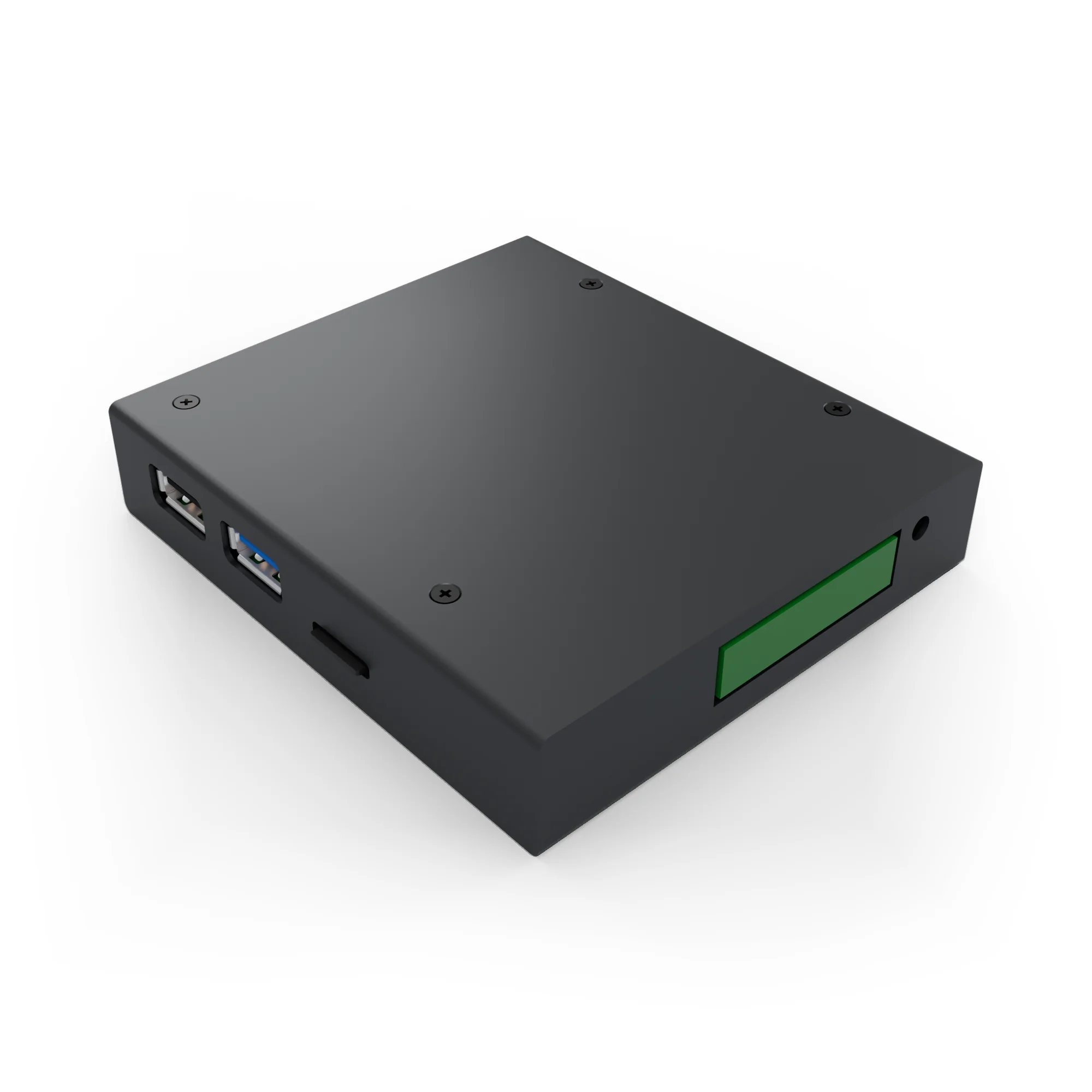
Many factory floors still rely on RS-232 and RS-485 serial devices — PLCs, weighbridges, barcode scanners, energy meters and older CNC controllers. Quad DB9 configurations allow a single industrial PC to manage four independent serial links simultaneously, removing the need for USB-to-serial converters that can drop connections under electrical noise. Combined with dual Gigabit Ethernet, this makes a single box capable of bridging OT equipment to an IT network or MES layer.
Operating System Choices for Industrial Deployment
Operating system choice is driven by the software stack and update policy. Microsoft Windows 11 Pro suits conventional HMI and SCADA applications with standard management tooling. Windows 11 IoT Value targets fixed-function devices with longer servicing. Ubuntu Linux 24.04 LTS and embedded Linux builds are preferred where licensing cost, deterministic behaviour or long-term stability matter more than desktop application compatibility. FreeDOS or no-OS options are used when the integrator supplies their own image.
Environmental and Reliability Considerations
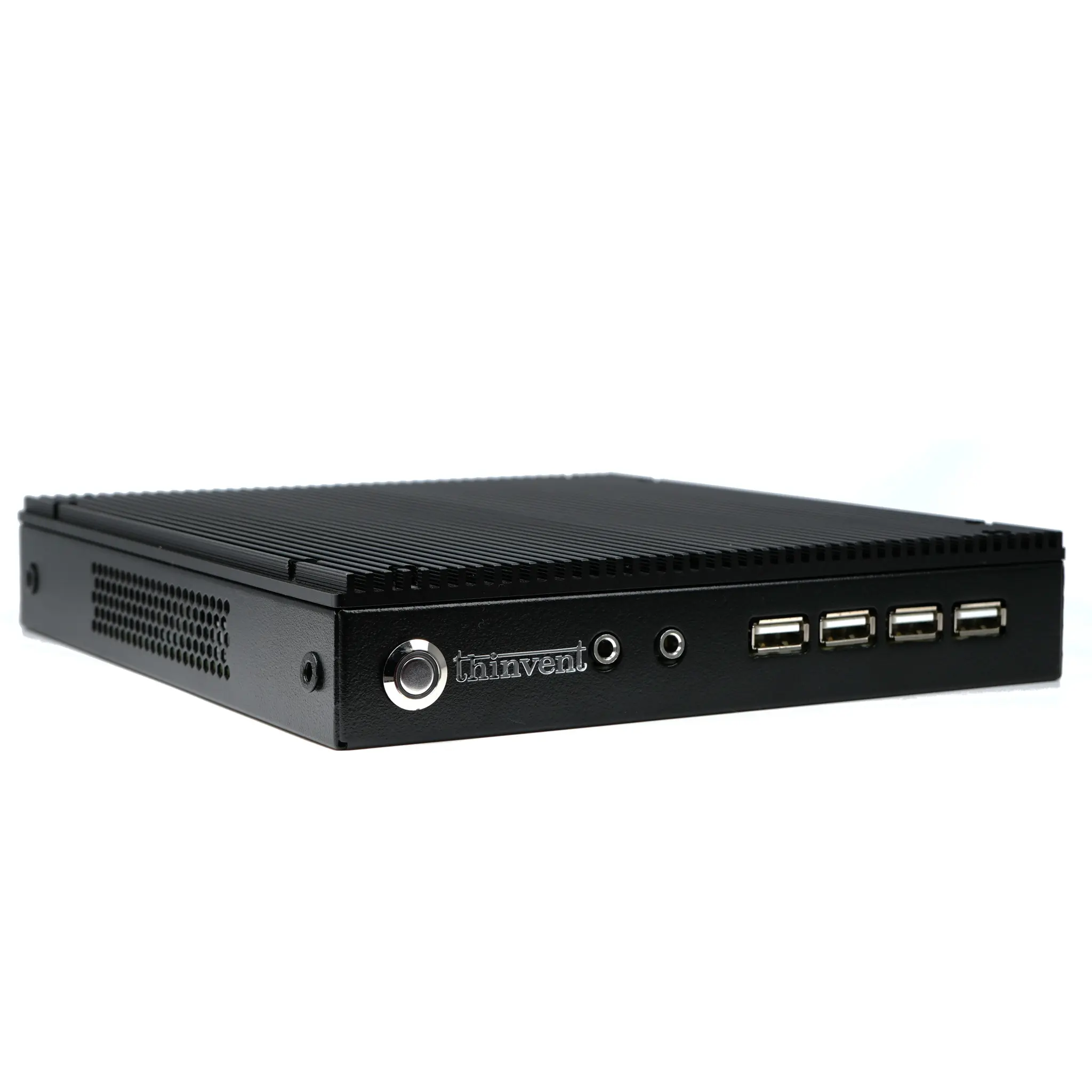
Industrial PCs are judged on uptime rather than peak benchmark scores. Fanless chassis remove the single most common mechanical failure point and prevent dust ingress into the enclosure, which extends service life in workshops, plant rooms and outdoor cabinets. Wide-temperature components, watchdog timers, and 12 V DC input with adapter or direct supply all contribute to predictable operation. For 24/7 duty, storage endurance and thermal headroom matter more than short-term clock speed.
Thinvent Industrial PCs
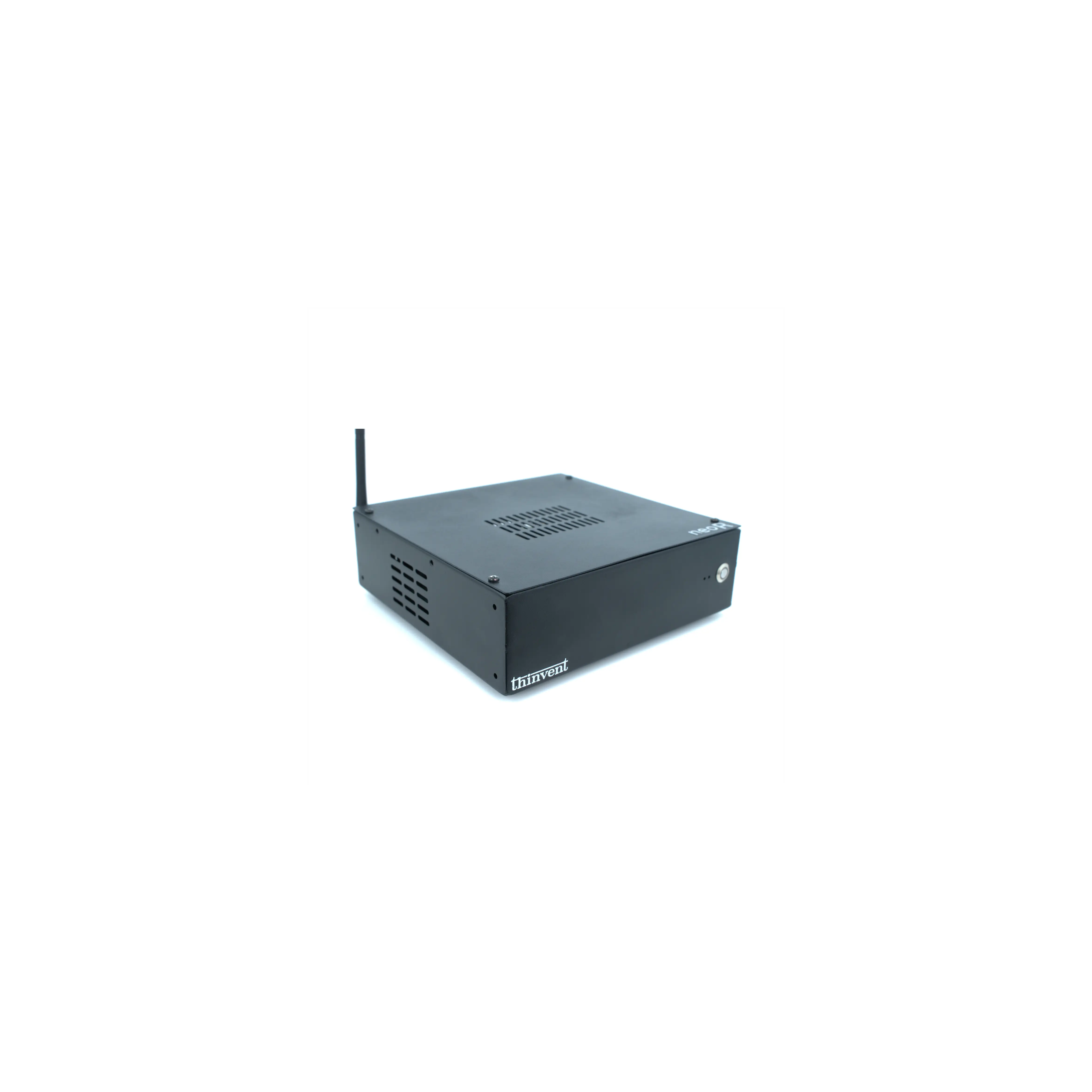
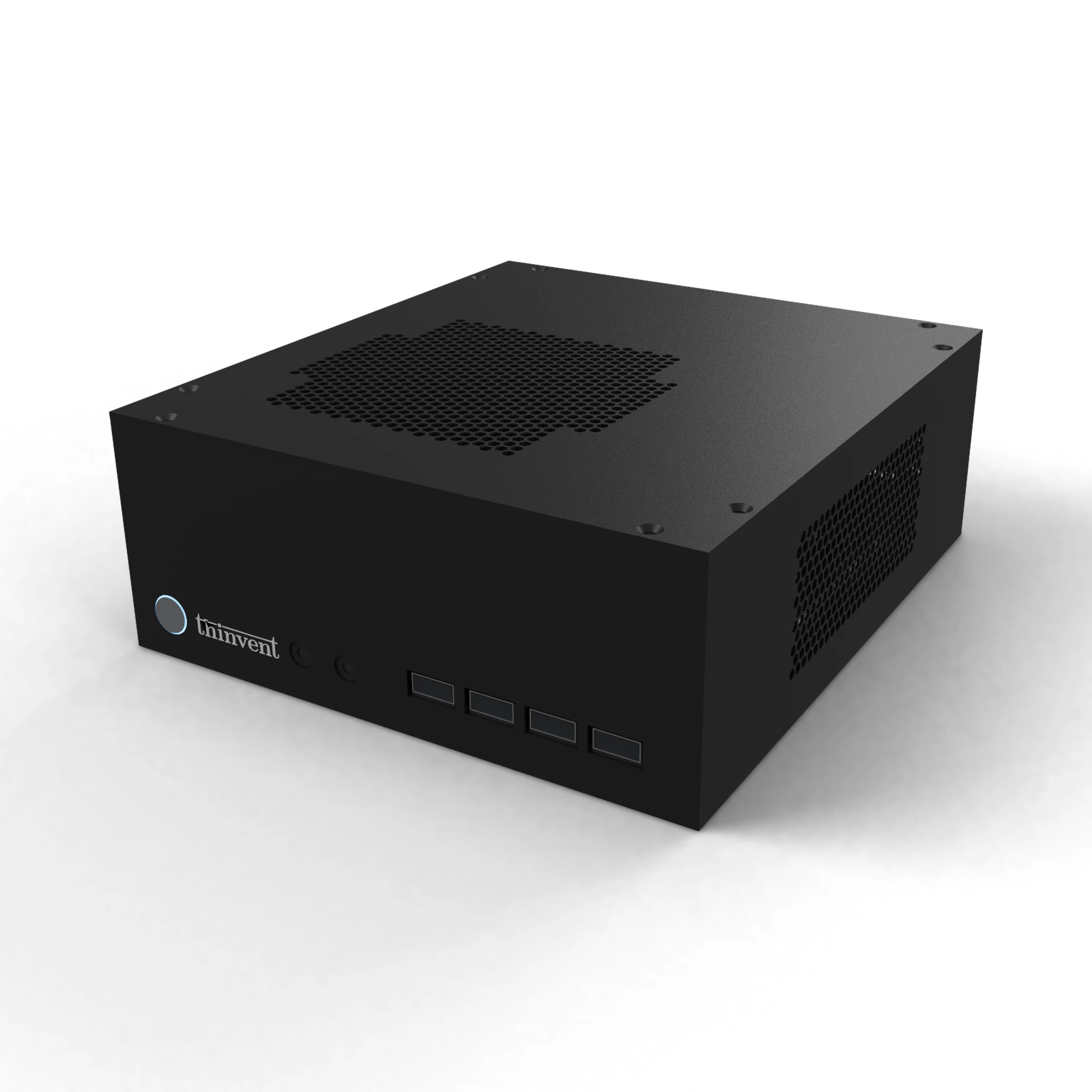
Thinvent manufactures industrial computers, mini PCs, thin clients and all-in-one PCs for deployment worldwide. Our IPC3 series pairs 12th-generation Intel® Core™ i3-1215U processors (6 cores, up to 4.4 GHz, 10 MB cache) with 16 GB DDR4 memory and 1 TB SSD storage, available with or without quad DB9 serial ports. Operating system options include Windows 11 Pro, Windows 11 IoT Value, DOS, and Thinux™ Embedded Linux. Fanless construction, 12 V DC input and flexible mounting make them suitable for automation, kiosks, digital signage and edge data collection.