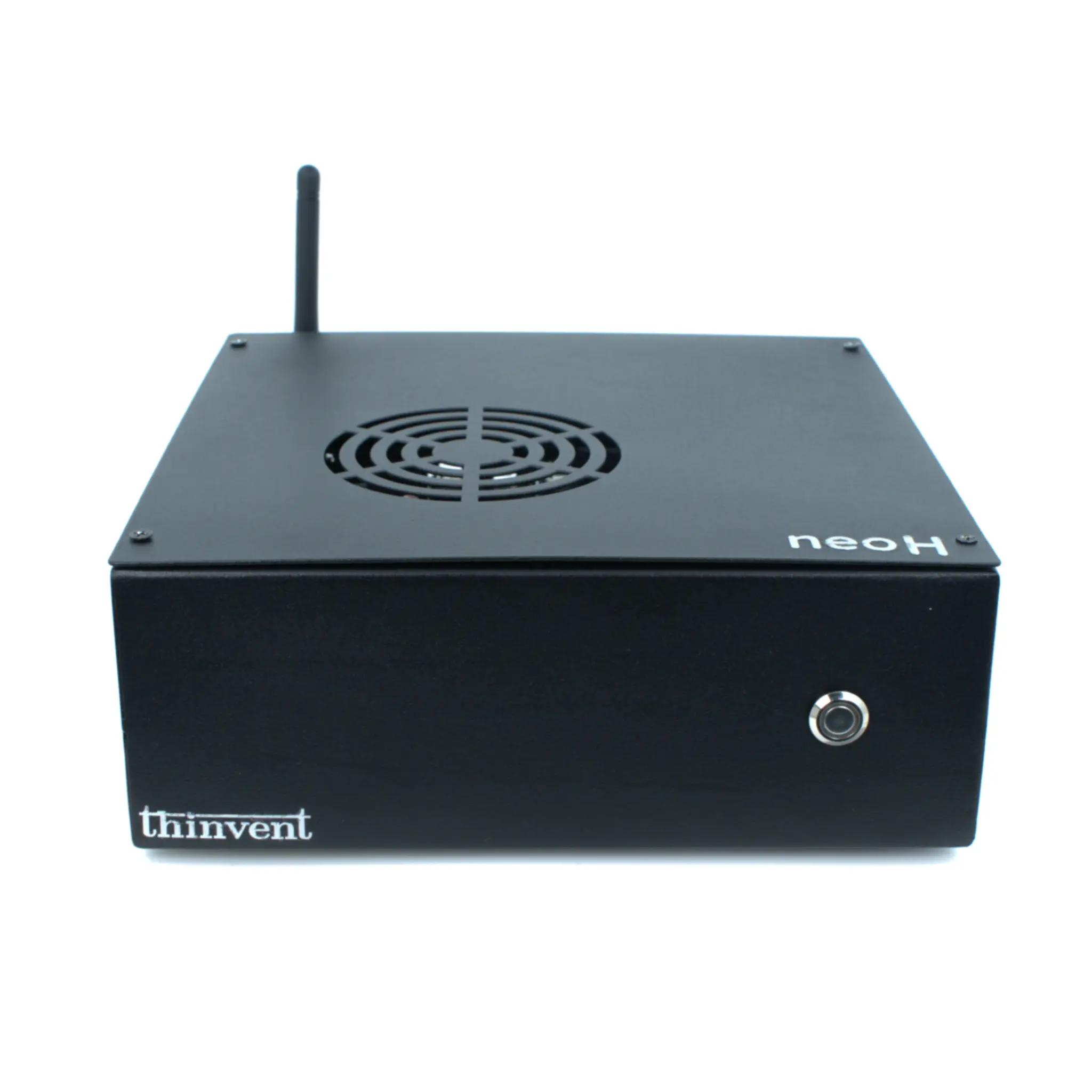
What are AMD-based Industrial Computers?
AMD-based industrial computers are computing systems designed for commercial and industrial environments that utilize processors from Advanced Micro Devices (AMD). These systems are engineered for reliability, performance, and efficiency in demanding applications where consistent operation, thermal management, and long-term stability are critical. AMD processors, particularly their Ryzen and EPYC series, offer strong multi-core performance and integrated Radeon graphics, making them suitable for a wide range of compute-intensive tasks.
Key Specifications and Technical Details
Industrial computers powered by AMD processors are characterized by several key features. They often utilize fanless cooling designs for silent, maintenance-free operation in dusty or harsh environments. These systems support a wide range of operating temperatures, typically from -20°C to 70°C. They offer robust connectivity with multiple Gigabit Ethernet ports, USB 3.2/4.0, and display outputs like HDMI and DisplayPort. Expansion capabilities are provided through PCIe slots and M.2 interfaces for adding specialized industrial I/O, wireless modules, or additional storage. Power delivery is designed for wide voltage input ranges (e.g., 9-36V DC) to accommodate industrial power sources.
Use Cases and Applications
AMD-powered industrial computers are deployed across various sectors due to their balanced performance and graphics capabilities. Common applications include digital signage and kiosks in retail and hospitality, where integrated graphics drive multiple high-resolution displays. In manufacturing, they serve as machine vision systems, PLC controllers, and HMI (Human-Machine Interface) stations. Their performance also makes them suitable for edge computing and IoT gateways in smart city infrastructure, processing data from sensors and cameras. Other uses include in-vehicle computing for transportation, medical imaging devices, and interactive whiteboards in education.
AMD vs. Intel in Industrial Applications
When selecting an industrial computer, the choice between AMD and Intel processors depends on specific application requirements.
| Feature | AMD Processors | Intel Processors |
|---|---|---|
| Core/Thread Count | Typically higher core/thread counts in comparable segments | Strong single-core performance |
| Integrated Graphics | Radeon graphics with good multi-display support | Intel UHD/Iris Xe graphics |
| Power Efficiency | Competitive, with optimized models for low TDP | Established low-power architectures (e.g., Intel N-series) |
| Platform Features | PCIe 4.0/5.0 support on newer platforms | Wide ecosystem support for industrial I/O |
| Typical Use Case | Graphics-intensive tasks, multi-threaded workloads | General computing, legacy software compatibility |
Thinvent's Range of Industrial Computing Solutions
While the current product listings feature Intel-based systems, Thinvent's engineering expertise encompasses a broad spectrum of industrial computing technologies. The company specializes in designing robust, fanless systems built for 24/7 operation in challenging environments. Thinvent solutions focus on key industrial requirements: extended temperature ranges, wide voltage input, multiple connectivity options, and flexible mounting. Their product development process emphasizes reliability testing, component selection for long-term availability, and customization to meet specific project needs. For applications requiring the specific performance profile of AMD processors, Thinvent can provide guidance on suitable configurations and platform options within the industrial computing landscape.