What is an Embedded AMD Motherboard?
An embedded AMD motherboard is a specialized, compact printed circuit board (PCB) that integrates an AMD processor, chipset, memory, and I/O interfaces into a single, ruggedized unit designed for long-term deployment in industrial environments. Unlike consumer-grade motherboards, these are engineered for reliability, extended temperature operation, and resistance to shock and vibration. They serve as the core computing platform for systems where stability, low power consumption, and a small form factor are critical.
Key Specifications and Technical Details
These motherboards are defined by their AMD Embedded processors, which range from low-power APUs (Accelerated Processing Units) to high-performance Ryzen Embedded CPUs. Key specifications include:
-
Processor: AMD Ryzen Embedded V-Series, AMD EPYC Embedded, or AMD Athlon Embedded processors.
-
Form Factor: Common footprints include Mini-ITX, Pico-ITX, and custom board sizes to fit specific enclosures.
-
Memory: Support for soldered or socketed DDR4/DDR5 SO-DIMM or ECC memory for data integrity.
-
Expansion: Multiple PCIe lanes for adding specialized cards (e.g., frame grabbers, GPUs, network cards).
-
I/O: Extensive connectivity including multiple USB ports (2.0/3.2), serial ports (COM), Ethernet (often dual or quad Gigabit), and display outputs (HDMI, DisplayPort, LVDS).
-
Features: Fanless operation capability, wide voltage input (e.g., 9-36V DC), and support for Trusted Platform Module (TPM).
Use Cases and Applications
Embedded AMD motherboards are the backbone of systems requiring robust, continuous operation. Their balanced performance and graphics capabilities make them ideal for:
-
Digital Signage & Kiosks: Driving multiple high-resolution displays in retail, hospitality, and public information systems.
-
Industrial Automation & Control: Acting as the brain for PLCs, HMIs, and machine vision systems on the factory floor.
-
Medical Devices: Powering diagnostic imaging equipment, patient monitors, and surgical systems where reliability is non-negotiable.
-
Transportation & Logistics: Used in fleet management, in-vehicle infotainment, and automated guided vehicles (AGVs).
-
Network Appliances: Serving as platforms for firewalls, routers, and network-attached storage (NAS) solutions.
Comparison: AMD vs. Intel in Embedded Applications
| Feature | AMD Embedded Advantage | Intel Embedded Advantage |
|---|---|---|
| Graphics/Compute | Typically offers superior integrated GPU performance with Radeon Vega/RDNA graphics, ideal for visual applications. | Strong single-threaded CPU performance and widespread ecosystem support. |
| Core/Thread Count | Often provides higher core and thread counts at competitive power envelopes, benefiting multi-threaded tasks. | Established in ultra-low-power (ULP) segments with processors like the Intel Atom series. |
| Platform Longevity | Known for long-term availability and socket compatibility for embedded roadmaps. | Also offers long lifecycle support for industrial segments. |
| Thermal Design | Efficient APUs enable compelling performance in fanless, compact designs. | A wide range of TDP options from sub-10W to high performance. |
Thinvent Products with Embedded AMD Technology
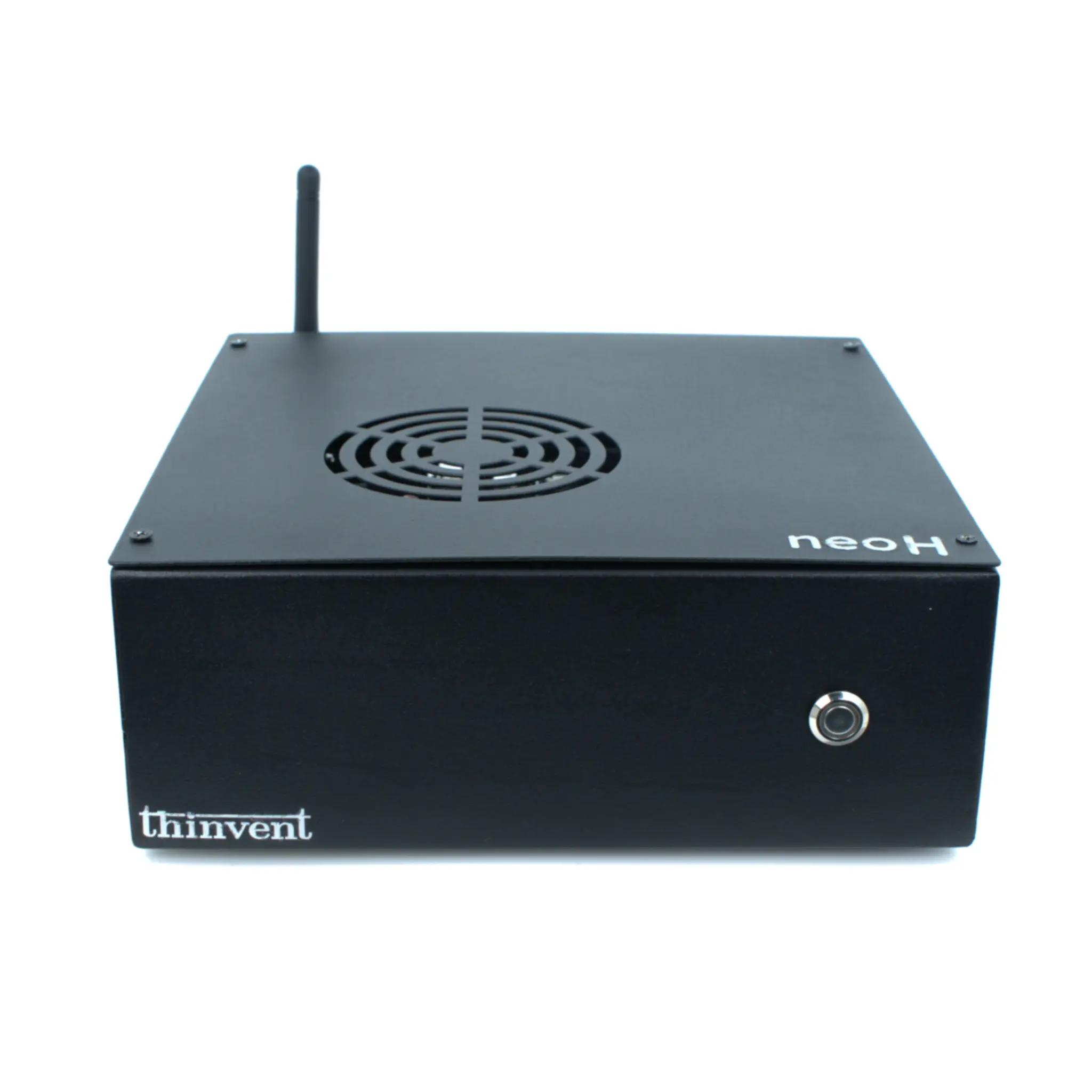
While Thinvent's current showcased range features robust Intel-based industrial computers, our engineering expertise extends to designing systems around embedded AMD platforms. We can develop custom solutions leveraging AMD Embedded processors to meet specific requirements for graphics performance, multi-core processing, or unique thermal and power constraints. For projects demanding the specific advantages of AMD's embedded architecture—such as enhanced parallel processing or superior integrated graphics in a rugged, fanless package—contact our solutions team to discuss a tailored industrial computing platform.