What is an AMD PC Tower?
An AMD PC Tower is a desktop computer system built around a processor from Advanced Micro Devices (AMD). These systems are known for offering excellent multi-core performance, competitive pricing, and robust integrated graphics, making them a popular choice for a wide range of computing tasks. Unlike compact mini PCs, a traditional tower form factor provides ample space for cooling, expansion cards, and multiple storage drives, offering superior upgradeability and thermal performance for demanding workloads.
Key Specifications and Technical Details
Modern AMD-powered towers typically feature processors from the Ryzen series, which are renowned for their high core and thread counts. Key technical aspects include:
-
Processor Architecture: Utilizing AMD's Zen cores, these CPUs deliver high instructions-per-clock (IPC) performance.
-
Integrated Graphics: Many AMD APUs (Accelerated Processing Units) feature powerful Radeon Vega or RDNA graphics, eliminating the need for a discrete GPU for many applications.
-
Platform Support: They use the AM4 or newer AM5 sockets, supporting PCIe 4.0/5.0 for fast storage and graphics.
-
Memory: Support for high-speed DDR4 or DDR5 RAM, which is crucial for CPU and integrated GPU performance.
-
Expandability: Standard ATX or micro-ATX motherboards offer multiple PCIe slots, SATA ports, and M.2 slots for NVMe SSDs.
Use Cases and Applications
AMD PC Towers are versatile systems suitable for various professional and enthusiast applications:
-
Content Creation & Video Editing: High core-count Ryzen processors excel in rendering, encoding, and multitasking within software like Adobe Premiere Pro and Blender.
-
Software Development & Compilation: The multi-threaded performance accelerates code compilation and running virtual machines.
-
General Office Productivity & Business Workstations: Provide snappy performance for office suites, CRM software, and multitasking with dozens of browser tabs.
-
Light to Moderate Gaming & Esports: AMD APUs with capable integrated graphics can handle popular titles at 1080p, while towers easily accommodate powerful discrete graphics cards for high-end gaming.
-
Digital Signage & Kiosk Systems: The reliability and graphics output make them suitable for driving multiple displays in public installations.
Comparison: AMD vs. Intel for Desktop Towers
| Feature | Typical AMD Advantage | Typical Intel Advantage |
|---|---|---|
| Core/Thread Count | Often higher at similar price points | Competitive, especially in hybrid core designs |
| Integrated Graphics | Generally more powerful (Radeon) | Sufficient for basic display output |
| Platform Longevity | AM4 offered long-term socket compatibility | Frequent socket changes can require new motherboards |
| Power Efficiency | Excellent in Ryzen mobile; competitive in desktop | Strong performance-per-watt in recent generations |
| Single-Core Performance | Highly competitive, varies by generation | Historically strong, especially for gaming |
Thinvent's Range of Industrial Computing Solutions
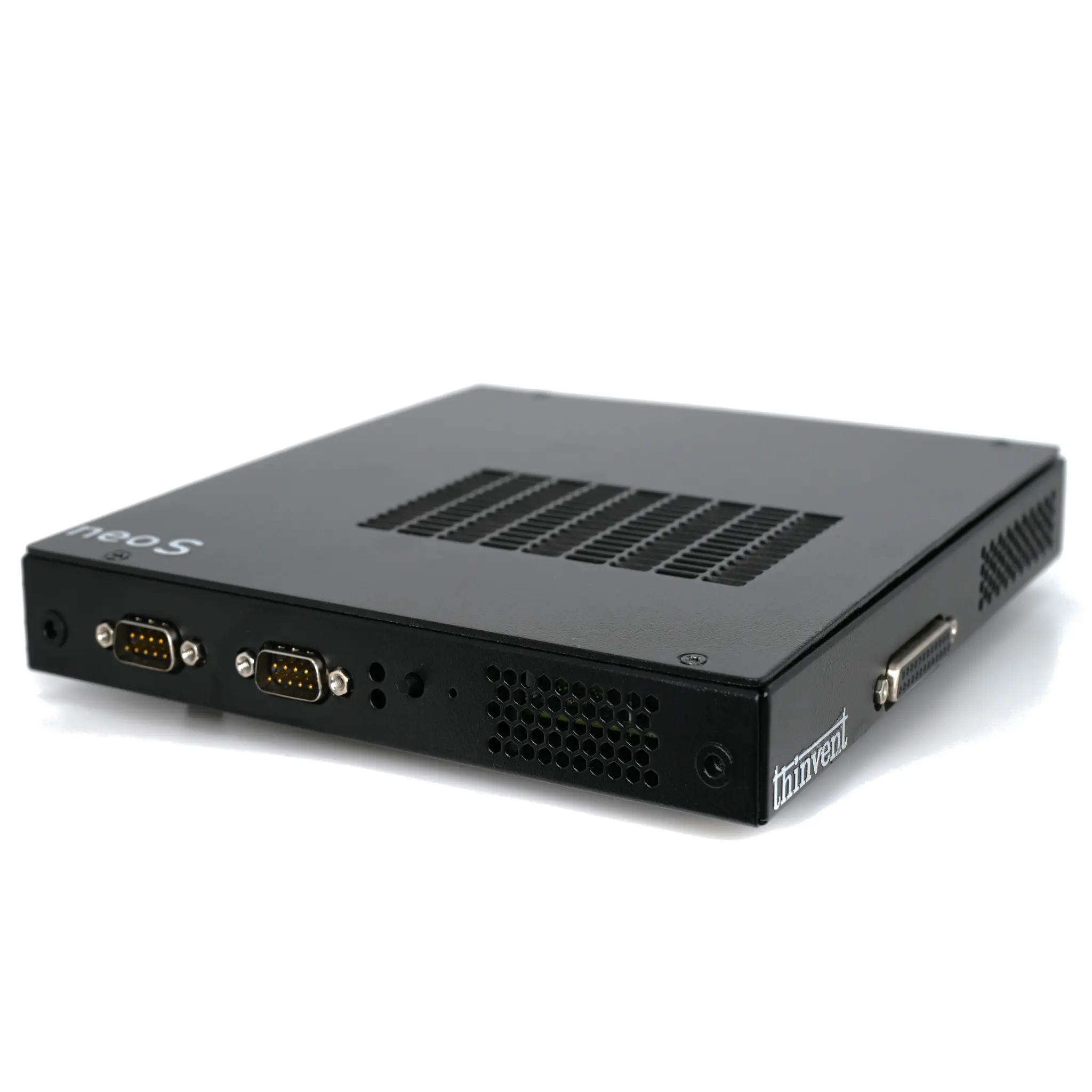
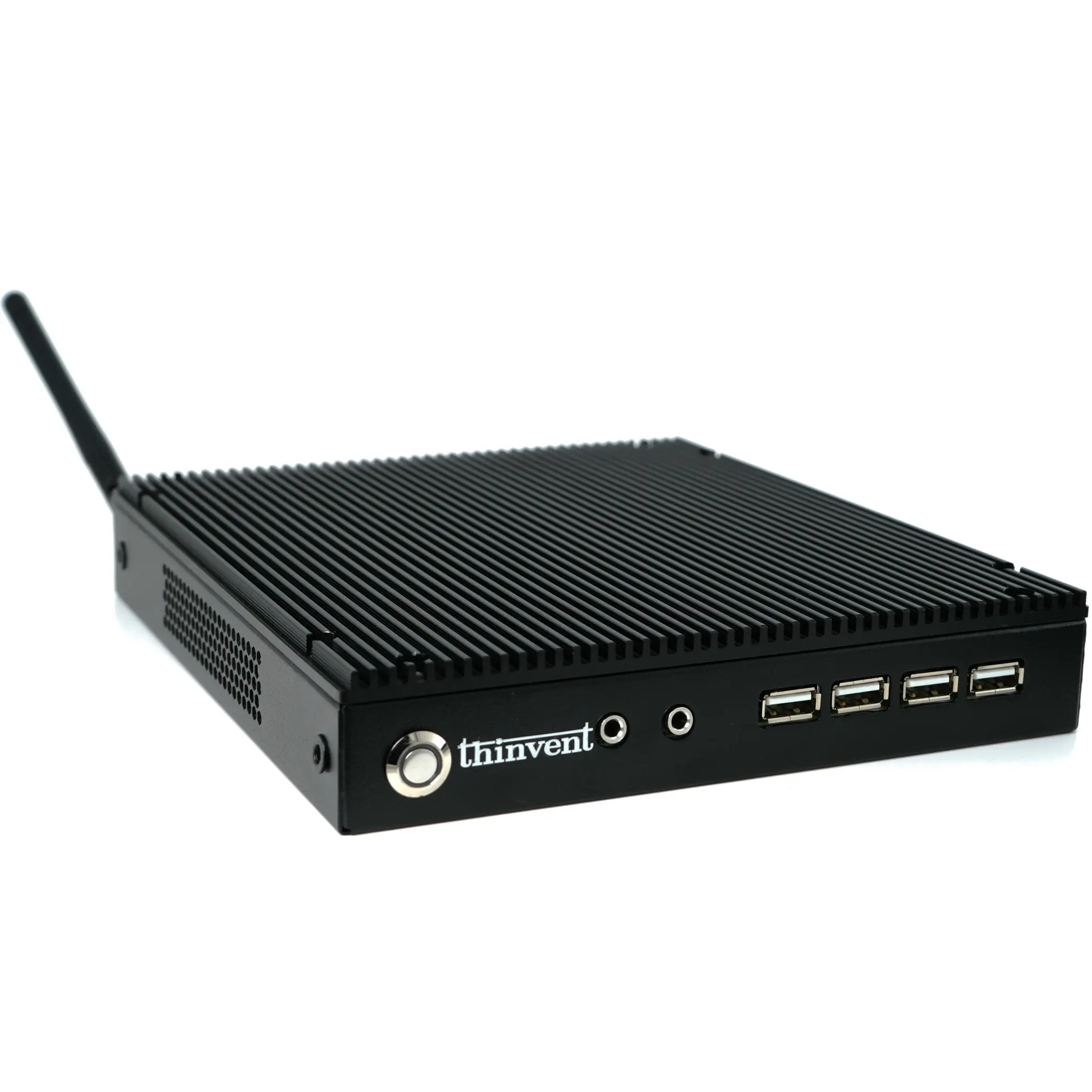
While Thinvent specializes in robust, fanless industrial computers and compact systems powered by Intel processors for embedded and edge computing environments, we understand the demand for various processing architectures. Our engineering focus ensures reliable operation in harsh conditions with wide temperature ranges, shock and vibration resistance, and long-term component availability. For applications requiring the specific multi-threaded performance profile of AMD platforms in a standard tower form factor, we recommend consulting with our technical sales team to discuss custom configured solutions or our partners who specialize in commercial AMD-based workstations.