What Is an ARM-Based Desktop CPU?
An ARM-based desktop CPU is a processor built on the ARM instruction set architecture (ISA) rather than the x86 architecture used by Intel and AMD. ARM chips are known for their high performance-per-watt, meaning they deliver responsive everyday computing while drawing very little power and producing minimal heat. This efficiency is why ARM processors dominate smartphones and tablets, and why they have steadily moved into desktops, thin clients, industrial computers, and all-in-one PCs. Because they run cooler, many ARM-based systems can be designed fanless, which removes a common point of mechanical failure and makes them ideal for dusty, hot, or vibration-prone environments.
Key Technical Characteristics
ARM desktop CPUs typically integrate the processor cores, graphics, memory controller, and I/O into a single system-on-chip (SoC). Common configurations include 4 to 8 cores, soldered LPDDR memory for lower latency and power draw, and support for modern interfaces such as HDMI display output, USB, Gigabit Ethernet, and M.2 or eMMC storage. Because power consumption is often in the single-digit watt range, these systems can run from small DC adapters and operate reliably across wide temperature ranges.
| Attribute | Typical ARM Desktop SoC | Typical x86 Desktop CPU |
|---|---|---|
| Instruction set | ARM (RISC) | x86-64 (CISC) |
| Power draw | Very low (often under 10 W) | Moderate to high |
| Cooling | Usually fanless | Often fan-cooled |
| Native OS | Linux, Android, ARM builds of Windows | Windows, Linux, DOS |
| Best for | Thin clients, kiosks, signage, IoT gateways | Heavy legacy Windows apps, high single-thread loads |
Use Cases and Applications
ARM-based desktops excel where efficiency, silence, and long-term reliability matter more than raw single-thread speed. Typical deployments include virtual desktop infrastructure (VDI) thin clients, point-of-sale terminals, digital signage players, kiosks, industrial control panels, and IoT edge gateways. They are also popular for light office work, web browsing, media playback, and remote desktop sessions. Because they generate little heat and have no moving fan, they suit sealed enclosures, clean-room environments, and locations with unreliable power or high ambient temperatures.
Software Considerations
Operating system choice is the main planning factor with ARM. Linux distributions (including Ubuntu and embedded Linux builds) have broad, mature ARM support, making them the default for most ARM desktop deployments. Android and Android-based kiosk platforms are also common. Windows on ARM exists and runs x86 applications through emulation, but compatibility and performance vary by application, so it is best validated against your specific software stack before deployment. For thin client and VDI workloads, the client OS and remote protocol support usually matter more than the underlying architecture.
Thinvent's Range for ARM and Fanless Desktop Computing
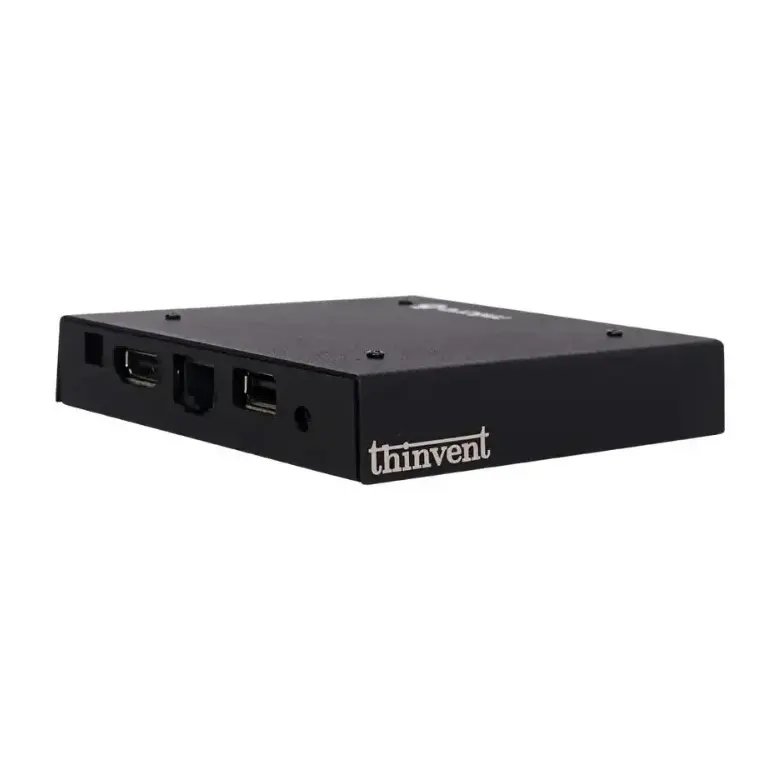
Thinvent designs and manufactures industrial computers, mini PCs, thin clients, and all-in-one PCs for customers worldwide, with options spanning both ARM and Intel platforms so you can match the architecture to your application. Our fanless industrial PCs and thin clients are built for continuous operation in demanding environments, with configurable memory, SSD storage, dual Gigabit Ethernet, HDMI and USB connectivity, and a choice of Microsoft Windows, Ubuntu Linux, embedded Linux, or no-OS configurations. If you need an energy-efficient, silent, always-on desktop platform, our team can help you select the right model and configuration for your deployment.